A control valve actuator moves the valve stem or disk to control flow. It turns an incoming control signal into mechanical movement. The signal can be electric, pneumatic, or hydraulic. The actuator positions the valve exactly to maintain desired process conditions like flow rate or pressure. In a control loop, the actuator gets controller commands and changes the valve opening accordingly. This constant adjustment keeps the process value at its target. The actuator makes sure the valve reacts fast and accurately to changing process demands. Knowing how the actuator works helps in picking the right equipment for industrial uses.
Key Takeaways
- A control valve actuator changes a control signal into mechanical motion to adjust how far the valve is open.
- Actuators are part of a control loop that also has a controller and a positioner. Together, they control flow with precision.
- Pneumatic actuators use air pressure and give quick response and fail-safe operation.
- Electric actuators give high accuracy and use less energy for many jobs.
- Choosing the right actuator depends on process conditions, control signals, and safety needs.
What Is a Control Valve Actuator
Definition and Role
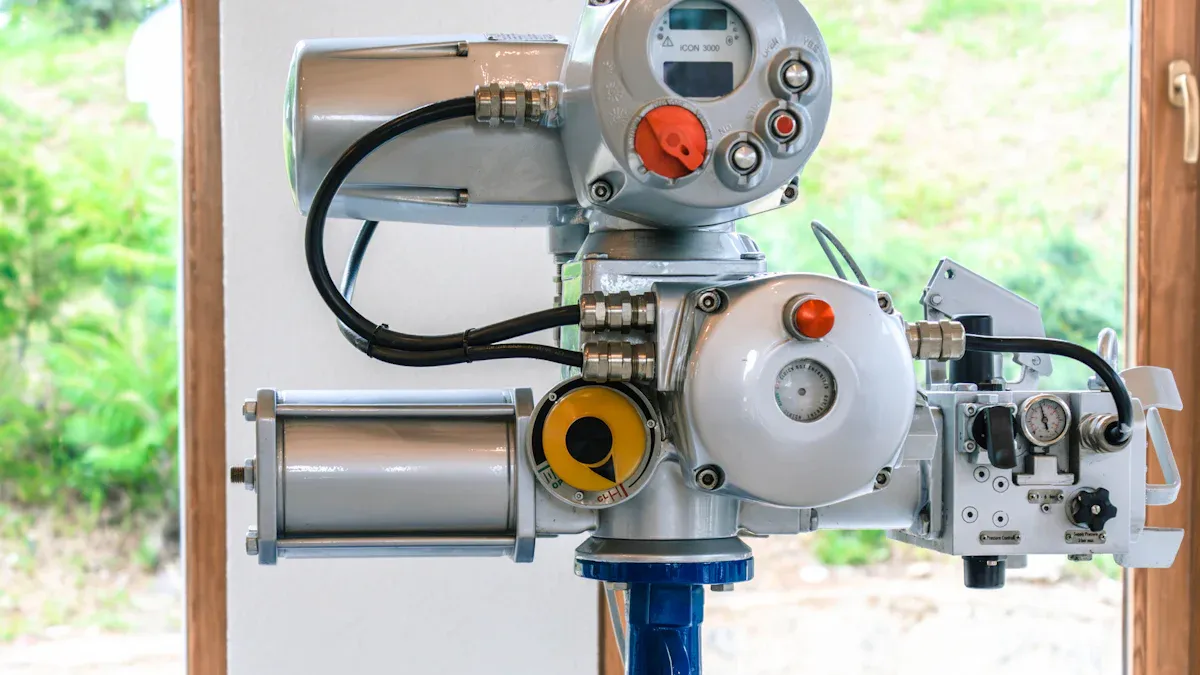
A control valve actuator gives the force to move a stem or disk. It is the mechanism that opens and closes a valve. TANGGONG control valves use pneumatic diaphragm, pneumatic piston, electric motor, or hydraulic actuators. This design lets the unit respond accurately to changing process demands.
The main parts of a valve system are the valve body, the actuator, and the motor.
- The valve body directs the flow of media inside the system.
- The actuator turns power from the motor or compressed air into mechanical motion.
- The motor powers the actuator, often through a gear or belt setup.
Understanding these parts makes the actuator’s job clear: it is the moving force that positions the trim inside the valve. You must pick the valve’s actuator based on the type of control you need. An on-off actuator moves the unit only between fully open and fully closed, with no stops in between. A modulating actuator, in contrast, can place the unit at any point between 0% and 100%. It does this by reading a proportional signal such as 4–20 mA. Modulating actuators give high positioning accuracy. They are used in control loops for things like chemical blending, steam pressure regulation, or temperature control. On-off actuators are simpler and cheaper, but they are not suited for continuous throttling service. Choosing the right type is critical for reliable process control.
Actuator in a Control Loop
Inside a process control system, the control valve actuator does not work alone. It is part of a closed-loop setup that includes a controller and a positioner. The positioner continuously controls and reports the position. The process controller regulates variables such as flow, temperature, pressure, or fill level. It gets commands from this controller and moves the stem accordingly.
The signal chain follows a precise sequence:
- The DCS or controller sends a 4–20 mA analog signal to the positioner.
- The positioner is powered through this same loop using a 2-wire loop-powered setup.
- Inside, the positioner turns the electrical signal into a pneumatic signal of 3–15 psi using an I/P transducer.
- This air pressure acts on the actuator’s diaphragm or piston, moving the stem.
- A feedback mechanism continuously checks the stem position to make sure the opening matches the input signal.
For example, a 4 mA signal makes 3 psi, placing the unit at 0% closed. A 12 mA signal makes 9 psi, placing the unit at 50% open. A 20 mA signal makes 15 psi, placing the unit at 100% open. This proportional relationship allows precise modulation.
It handles both opening and closing a valve in response to controller commands. It also supports fail-safe operation: if the control signal or power is lost, a spring arrangement moves the unit to a set safe position, such as fail-closed or fail-open. This safety feature protects equipment and personnel. Valve actuators must also follow relevant standards. For instance, ANSI/ISA-96.02.01-2024 gives guidance for selecting electric valve actuators. It defines torque requirements, control interfaces, environmental conditions, and duty cycles. Similar standards exist for pneumatic actuators. These valve actuators ensure performance and safety. The combination of valves and actuators creates a reliable system for precise flow control.
How a Control Valve Actuator Works
Signal-to-Motion Conversion
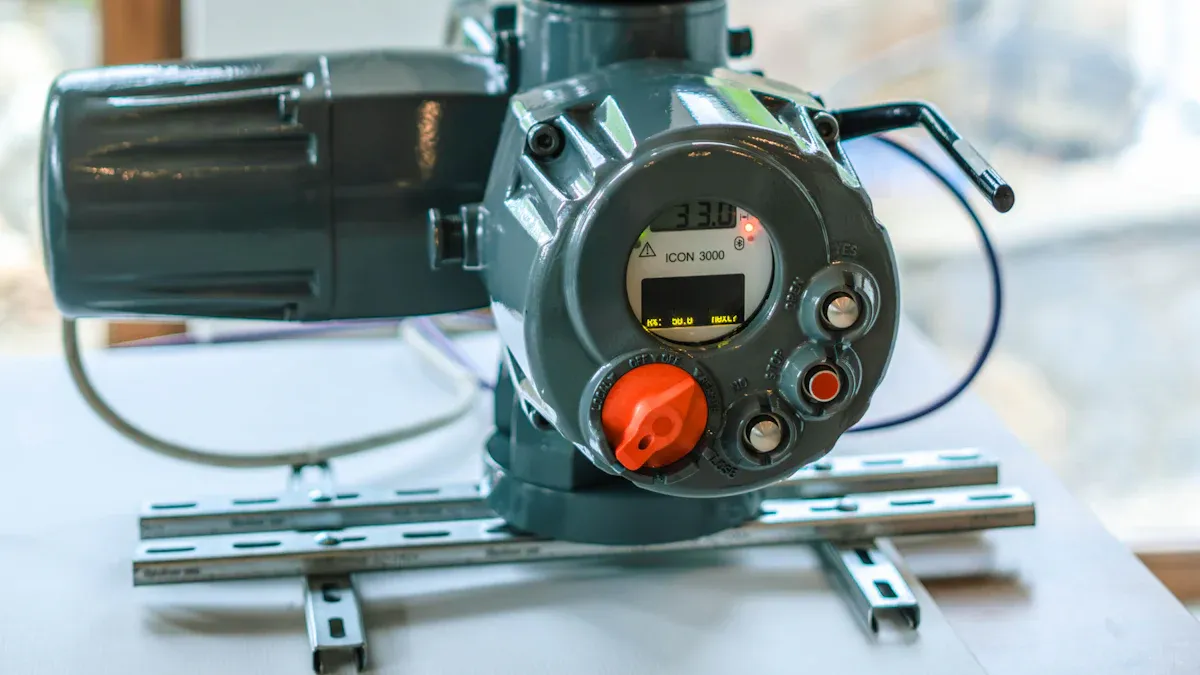
The actuator gets a control signal and turns it into mechanical motion. This starts with the incoming signal, usually a 4–20 mA analog current. The 4 mA level is the live zero, so a broken wire is found right away. The 20 mA level is the highest reading, like maximum flow or pressure. This signal format resists noise well and stays accurate over long distances. It is the most common analog signal in process control for pressure, flow, and temperature.
| Attribute | Description |
|---|---|
| Signal range | 4 mA to 20 mA analog current signal |
| Live zero | 4 mA is the live zero, so a broken wire is found right away |
| Full scale | 20 mA is the highest reading |
| Noise immunity | Very resistant to electrical noise |
| Distance capability | Stays accurate over long distances |
| Primary use | Most common analog signal in process control |
| Actuator relevance | Signals drive actuators and positioners, turning data into motion |
| HART integration | Uses standard 4-20 mA for real-time control and adds digital data for setup and diagnostics |
A pneumatic actuator cannot respond directly to milliamps. It needs air pressure. An I/P transducer works as the link between the electronic controller and the pneumatic actuator. The I/P converter uses the flapper-nozzle method to change the input current into a matching pneumatic signal. Current flowing through an electromagnetic coil makes a magnetic force that moves a flapper plate. The flapper’s movement changes the nozzle opening, which changes the pilot air backpressure. A feedback bellows helps balance the backpressure as the flapper moves. The relationship is linear and proportional: 4 mA makes 3 psi, 12 mA makes 9 psi, and 20 mA makes 15 psi. The air supply should be about 20 psi so the converter can control output between 3–15 psi.
Electric actuators use a different mechanism. A stepper motor gives precise angular positioning through electrical pulses. Each pulse makes a fixed amount of rotary motion. A threaded nut inside the rotor and a lead screw change rotary motion into linear motion. Microstepping drives split full steps into smaller increments, raising resolution. This design fits applications that need high accuracy and repeatability.
Linear Versus Rotary Movement
The actuator of the valve positions the trim through either linear or rotary motion. Linear movement pushes or pulls the stem in a straight line. Globe valves and angle valves use this motion type. Rotary movement turns a shaft through a quarter-turn motion, usually 90 degrees. Butterfly valves and ball valves depend on this action.
A rack and pinion mechanism changes between rotational and linear motion. When the pinion rotates, the rack is driven in a straight line. This meshing gear system lets the actuator deliver strong, steady torque throughout rotation. It gives predictable positioning and minimal backlash, making it good for automated valve control.
Linear actuator movement is preferred in many industrial applications. Robotic systems use linear actuators as extra axes to extend reach or adjust height. Pick-and-place systems move parts along X, Y, and Z axes with sub-millimeter positioning accuracy. Machine tools and CNC equipment handle tool positioning and workpiece clamping. These valve actuators give controlled, repeatable linear motion with minimal maintenance.
TANGGONG control valve actuators, whether pneumatic, electric, or hydraulic, are made for precise throttling control. The choice between linear and rotary depends on the valve type and the process requirements.
Types of Valve Actuators
Three main types make up the valve actuators market: pneumatic, electric, and hydraulic. Engineers often compare these common types of valve actuators when choosing equipment for a process. TANGGONG offers both a pneumatic actuator and an electric actuator in their control valve series. Knowing these different kinds of valve actuators helps match the driver to the right application.
Pneumatic Actuator Overview
A pneumatic actuator uses compressed air to create mechanical motion. Clean instrument air goes into the actuator diaphragm chamber and pushes the stem down. If air pressure drops, a spring brings the valve back to a safe fail-safe position. This simple design removes spark risks in hazardous areas.
Pneumatic and hydraulic actuators work well in explosive environments. Pneumatic and hydraulic actuators (fluid power) – quarter-turn designs serve many on-off applications. An air-actuated control valve is common in refineries and chemical plants. These valve actuators stand up to high temperatures, moisture, and contaminants. Pneumatic and hydraulic actuators (fluid power) – quarter-turn models keep growing in use across industries.
Electric Actuator Overview
An electric actuator uses an electric motor for precise positioning. An electric actuator gives better modulation than pneumatic units. Internal circuits compare the input signal to the actual shaft position. This mechanism keeps hysteresis low. Electric valve actuators – quarter-turn models suit ball and butterfly valves. Multi-turn valve actuators handle gate and globe valves. A multi-turn electric actuator builds high thrust for large valve applications.
Electric actuators reach high energy conversion efficiency. Pneumatic systems reach only a fraction of that. An electric actuator pulls power only during the stroke. Self-locking gears hold position with zero power. This cuts energy use compared to compressed air systems. Electric valve actuators – quarter-turn designs also support advanced digital control. The energy savings cover the initial investment in many applications.
Electric valve actuators – quarter-turn designs give better resolution for throttling control.
TANGGONG provides electric valve actuators – quarter-turn and electric actuators – multi-turn options. Each control valve actuator is factory-tested before shipment. The correct control valve actuator ensures reliable pipeline modulation.
Selecting a Valve Actuator
Operating Conditions
Matching a valve actuator to its surroundings starts with a clear view of the process. Temperature, pressure, and the chemical makeup of the media all affect the choice. A corrosive chemical service requires careful material selection. Engineers study process chemistry, including pH, temperature, concentration, and oxidizing agents. Galvanic corrosion happens when body, trim, and fastener materials form a bad pair. Austenitic stainless steels are at risk of stress corrosion cracking in chlorides, while duplex grades hold up better. High-velocity combined mechanical and chemical attack needs hard-facing or ceramic protection.
Extreme ambient temperature also changes performance. Permanent magnets in electric actuators lose magnetic strength as heat goes up, which lowers torque. Electrical windings face more resistance and power losses at high temperatures. At low temperatures, lubricants freeze and insulation turns stiff. These effects weaken performance across a wide temperature range. TANGGONG offers a free sizing service to match the actuator to these conditions.
| Selection Area | Critical Criteria | Key Considerations |
|---|---|---|
| Material Selection | Chemical compatibility | Analyze pH, temperature, concentration, oxidizing agents |
| Material Selection | Galvanic corrosion | Match body, trim, and fastener materials |
| Actuation Technology | Electric actuators | Best for remote locations, precise positioning |
| Actuation Technology | Pneumatic actuators | Fast response, fail-safe operation, explosive atmospheres |
| Sizing & Performance | Flow coefficient (Cv) | Undersizing causes erosion and cavitation |
Control and Fail-Safe Needs
The control signal has to match the actuator’s input. TANGGONG control valves support 4–20 mA, 0–10 V, HART, and Modbus. A pneumatic actuator responds to a pneumatic signal of 3–15 psi. The torque or thrust you need depends on valve size and pressure drop. Undersizing causes too much speed and erosion. Oversizing hurts control accuracy.
Fail-safe mode protects the process when power or signal is lost. A spring return mechanism drives the valve to a safe position right away. Capacitor discharge gives reliable action with lower maintenance. Battery backup works for longer outages but needs routine replacement.Pneumatic and hydraulic actuators stay the top choice for emergency shutdown. Electric actuators with springs or brakes work where air is not available. The right mechanism ensures safety and reliability.
Benefits of Control Valve Actuators
Precision and Automation
A control valve actuator gives exact control that manual operation cannot match. Automated systems let you control and coordinate many valves from a distance in a process system. This removes the problem of adjusting valves by hand. Actuators allow quick automated responses to process changes, which improves efficiency and cuts down on human effort. They also help lower risk by quickly stopping critical failures in dangerous or remote places. These benefits are truly useful for valves in areas that are hard or unsafe to reach by hand.
Precision depends on actuator resolution and deadband. Deadband hurts the control system’s ability to respond to signal changes. This can stop it from keeping process variables within tight limits. Deadband adds a delay in how the valve responds to process conditions. Such delays can cause waste, safety risks, and instability in fast-changing environments. Deadband also increases hysteresis, meaning actuation points shift based on the signal’s direction of change. This leads to control errors. Energy efficiency drops when deadband causes too much or too little operation. The chance of oscillations and system instability also grows unless control strategies account for these effects.
TANGGONG Control Valve Actuator Advantages
TANGGONG control valve actuators offer features that solve these precision problems. Cage-guided trim spreads pressure evenly to reduce cavitation-related erosion and vibration. This design lowers fluid velocity, which cuts turbulence and noise. Cage ports release energy in multiple stages, lowering turbulence and helping meet noise rules. The symmetric cage layout spreads forces evenly, reducing vibration. Some designs use multi-path, multi-turn labyrinth structures for the most energy release.
TANGGONG actuators also provide SIL capability for safety-critical applications. The company holds ISO 9001:2015 and CE certifications. These credentials confirm reliable performance and long service life. A pneumatic actuator from TANGGONG provides fast response and fail-safe positioning on power loss. An electric actuator offers high precision and easy integration with control systems. Both options ensure dependable operation across demanding industrial environments.
A control valve actuator is essential for precise flow control in industrial processes. It works by converting a control signal into mechanical motion. Different types exist, including pneumatic and electric designs. Selecting the right valve actuator depends on process requirements such as temperature, pressure, and fail-safe needs. Advanced actuators from TANGGONG VALVE are improving process automation, safety, and efficiency. Emerging trends include feedback-ready actuators with sensors that verify actual position, energy-efficient designs that draw power mainly when moving, and predictive maintenance capabilities that monitor current and travel time to warn of binding before failure. These valve actuators help plants run smarter and more reliably.
FAQ
What does a control valve actuator do?
A control valve actuator moves the stem or disk to control flow. It gets a control signal and turns that into mechanical motion. This action positions the valve trim for exact throttling. The actuator keeps process values like flow or pressure at their target levels.
How does a pneumatic actuator differ from an electric actuator?
A pneumatic actuator uses compressed air to move and gives fast response with fail-safe action. An electric actuator uses a motor for exact positioning and easy connection to control systems. Both types meet different industrial needs. TANGGONG sells both choices in their control valve series.
What is fail-safe operation in a valve actuator?
Fail-safe operation moves the valve to a safe spot when power or signal is lost. A spring return pushes the valve to fail-closed or fail-open. This safety feature protects equipment and people. Pneumatic and hydraulic actuators give fast response and built-in safety for emergency shutdown.
How do I select the right actuator for my process?
Choice depends on working conditions like temperature and pressure. The control signal must match what the actuator needs. Needed torque or thrust depends on valve size and pressure drop. TANGGONG offers free sizing to match the actuator to your process needs.
What certifications do TANGGONG control valve actuators have?
TANGGONG control valves hold ISO 9001:2015 and CE certifications. SIL‑capable designs are on hand for safety‑critical uses. These certifications confirm reliable performance and long life in tough industrial settings.