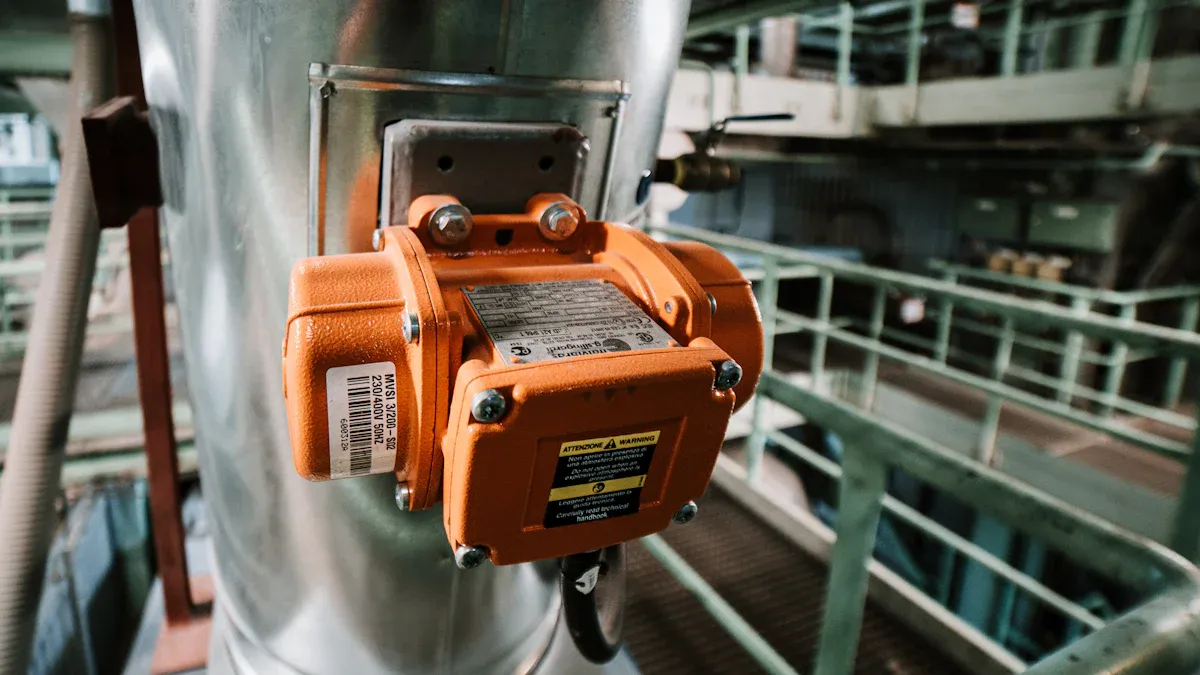
Think of a light switch. You flip it on, and the light shines. You flip it off, and the light goes dark. An on off control valve works the same way. It can allow or stop flow completely. This on-off device does not throttle or regulate. It starts or stops the stream. You use it for isolation, not for fine-tuning. A throttling valve, by contrast, adjusts the stream to many positions. The on-off type only has two states: fully open or fully closed. Understanding how these valves operate, what parts they contain, where you see them, and how they differ from control valves helps you choose the right hardware.
Key Takeaways
- An on-off control valve has two positions: fully open or fully closed.
- This valve shuts off flow. It does not control flow.
- An actuator makes the valve work. A control signal starts the movement.
- Factories use on-off valves to shut off flow. They also use them to keep people safe.
- Control valves adjust flow. On-off valves stop flow.
What Is an On-Off Control Valve?
Definition and Binary Function
An on off control valve has only two states. It is either fully open or fully closed. You use it to start or stop the movement of a fluid. It does not throttle, regulate, or modulate. The valve simply allows full flow or blocks it completely. This binary nature defines its entire purpose. The valve stays in one position or the other. It never holds a partial opening. This two-state operation makes it simple and reliable. The valve does not need to maintain a specific opening percentage. It does not respond to small changes in control signals. This makes it a great choice for systems that only need to start or stop flow.
Technical documents call these devices by several names. You might see them listed as shut-off valves, stop valves, or an isolation valve. Another common term is diaphragm isolation valve, also known as a membrane valve. All these names describe the same function: they isolate a section of pipe or equipment from the rest of the system. The specific name often depends on the industry or the valve design. Regardless of the name, the job stays the same.
The on/off functionality makes these valves easy to operate and maintain. They do not need complex control algorithms. They only need a signal to open or close. When closed, they create a reliable seal. When open, they permit unrestricted flow. This simplicity reduces the chance of failure. There are no intermediate positions to hold or adjust. You can rely on them for years of service.
These valves perform full open/close duty in many industries. You find them in gas pipelines, water distribution systems, and chemical processing plants. Their straightforward design means fewer parts and longer service life. They prioritize reliable shut-off over fine flow control. High-demand industrial processes use them for their dependability.
On-Off Valve vs. Throttling Valves
The main difference between an on-off valve and a throttling valve comes down to their function. An on-off valve isolates. A throttling valve regulates. Throttling valves are a type of control valve. They adjust the flow rate to many positions between open and closed. A control valve can hold any intermediate opening to maintain a desired process variable. An on off control valve cannot do this. It only opens fully or closes completely.
The table below shows how these two valve types differ in their design and behavior.
| Aspect | Modulating Valves (Control Valves) | Binary On-Off Valves |
|---|---|---|
| Flow characteristic curves | Use engineered curves like linear, equal percentage, and quick-opening | Do not use engineered curves because they never throttle |
| Range of motion | Designed to hold any intermediate position | Only operate at fully seated or fully unseated positions |
| Throttling behavior | Smooth and predictable flow adjustment | Attempting to hold at 50% open causes erratic flow and damage |
| Consequence of misuse | Not applicable since throttling is the design | Throttling erodes soft polymer seats, ruining shut-off capability |
A control valve uses flow characteristic curves such as linear or equal percentage. These curves define how the valve responds to changes in position. An on-off valve does not need such curves. It never holds an intermediate position. Its job is to be open or closed. The flow curve is irrelevant because the valve never throttles.
If you try to use an on-off valve for throttling, you cause problems. The flow becomes erratic and unpredictable. The soft seats inside the valve erode quickly. You permanently destroy the valve’s ability to seal tightly. That is why you should never use an on-off valve for regulation.
On-off valves excel in applications that need reliable shut-off. Gas pipelines depend on them for safety. Water distribution systems use them for isolation. Industrial processes with high flow demands and rapid shut-off needs prefer these valves. Systems that prioritize reliable shut-off over fine flow control choose them. Applications requiring high pressure tolerance benefit from these valves. They provide simple, repeatable shut-off without complex controls. Installations with no access to power also favor them because manual versions work without electricity.
How Does an On-Off Valve Work?
The Actuator and Control Signal
An actuator drives the valve. A control signal tells the actuator what to do. The signal can be electric or pneumatic. An electric signal is usually a digital open or close command. A pneumatic signal goes through a solenoid valve and uses compressed air. The table below shows how each actuator type responds to its signal.
| Actuator Type | Operating Principle | Fail-Safe Mechanism | Control Signal |
|---|---|---|---|
| Electric On/Off | Moves only to fully open or fully closed; limit switches keep the end positions. | No built-in fail-safe; depends on external control or mechanical stops. | Electric signal (usually digital open/close command). |
| Pneumatic Single-Acting (Spring-Return) | Compressed air moves the actuator one way; a spring returns the valve to fail position when air is lost. | Built-in spring gives passive mechanical fail-safe. | Pneumatic signal through solenoid valve; air supply needed only for one stroke. |
| Pneumatic Double-Acting | Compressed air moves the piston from both sides, allowing active movement both ways without a spring. | Needs external fail-safe mechanism (like a solenoid valve, volume tank, or lock-up relay). | Pneumatic signal through four-way solenoid valve; air supply needed for both strokes. |
Pneumatic actuators need a pilot solenoid valve. You can place this valve on a control panel, at the actuator, or directly with the NAMUR standard and a built-in air manifold. Coil options have different voltages and temperature classes. You can also add a manual override for emergencies.
Signal types differ by use. Electric valve positioners get signals like 4-20 mA, 1-5 VDC, 2-10 VDC, or 0-10 VDC. Electro-pneumatic positioners change a 4-20 mA electric signal into a pneumatic output of 3-15 PSIG or 6-30 PSIG. Pneumatic positioners take 3-15 or 6-30 PSIG directly. Digital ON/OFF signals work for simple start/stop commands. Smart protocols like HART, Profibus, and Modbus allow remote diagnostics.
Movement to Fully Open or Fully Closed
The actuator moves the valve stem to one of two places. Limit switches notice when the stem reaches a set travel point. These switches send a separate electrical status signal for indication, alarms, or interlocks. They do not control valve travel. The control circuit decides the next action.
A closed signal only shows the mechanism reached its set switch point. It does not prove there is no seat leakage or zero process flow. You need separate valve testing or process measurement to check tight shutoff. A closed status with flow still going may mean coupling failure, incomplete travel, trim blockage, or seat damage.
A limit switch confirms the valve reached a preset position. A valve positioner compares commanded travel with actual stem or shaft position and changes actuator output to reduce the difference while the valve moves.
This difference matters for every on-off valve. The actuator moves the stem until the limit switch trips. The switch then tells the control system. The valve stays there until a new command comes. This simple cycle happens for each on-off operation. The design gives reliable isolation without complex positioning. Each on-off cycle needs the actuator, the signal, and the limit switch to work together. You get repeatable performance for tight shutoff and safe flow isolation.
Key Components of an On-Off Valve
Valve Body and Trim
The valve body holds the inside parts and links to your pipes. It must deal with the pressure, temperature, and chemical makeup of your process fluid. The trim has the plug, seat, and stem. These parts work together to start or stop flow. For an on-off valve in corrosive chemical service, picking the right material is key. Common body materials are 316 stainless steel, Hastelloy, Monel, and PTFE-lined setups. These materials stand up to acids, caustics, solvents, and chlorinated compounds.
Your choice relies on the specific medium. Sulfuric acid at up to 20% concentration and 150°C works with SS316. Hydrochloric acid needs PVDF, PTFE, Hastelloy C, or titanium. Ammonia service often uses stainless steel 316 or PTFE. Plastic valves like PVC and CPVC give good corrosion resistance but only work up to about 60°C. Soft-seated valves with FKM, FFKM, or EPDM seal better in these settings. You must also think about temperature, pressure, and chemical concentration as a group.
Actuator and Positioner
The actuator powers the valve. It turns a signal into mechanical motion. Electric actuators use a motor. Pneumatic actuators use compressed air. The actuator drives the stem to move the trim between fully open and fully closed positions. This movement is what makes an on-off valve work.
A positioner is not always found on an on-off valve. Simple on-off valves count on limit switches to confirm end positions. A control valve, in contrast, uses a positioner to hold intermediate positions. For tight shutoff, the actuator must push the trim firmly against the seat. The actuator size relies on the force needed and the supply pressure you have. You should match the actuator to the valve torque or thrust needs for reliable isolation.
Common Applications of On-Off Valves
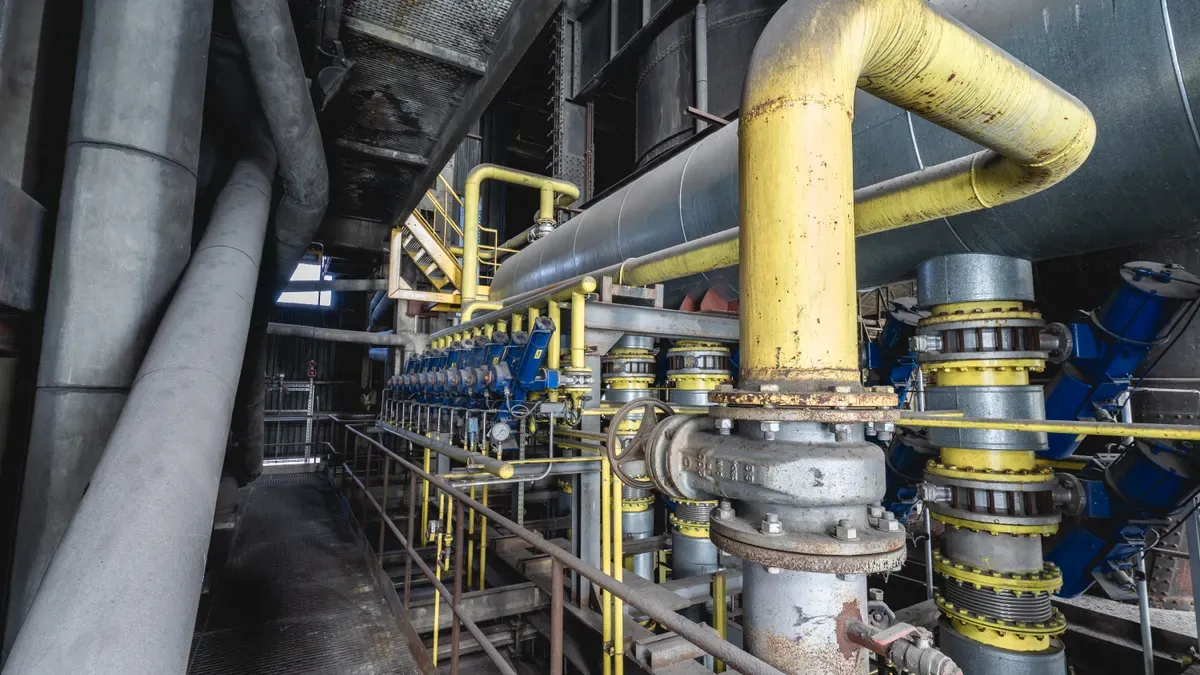
Isolation and Safety Functions
You can find on-off valves in safety systems at many plants. These valves shut off equipment when emergencies happen. A safety system can make the actuator react right away. The valve then stops the flow to prevent danger. This action occurs on its own, with no person needed. The on-off valve works as a failsafe device. It responds to unsafe changes in pressure, temperature, or flow rate. For instance, a high-pressure reading can tell the valve to close at once. This keeps your equipment and your workers safe.
Emergency shutdown systems count on these valves. When a fire or gas leak happens, the system sends a signal. The on-off valve then closes to cut off the fuel source. Fire and gas detection systems work with shutdown logic. A flame detector might trip a turbine and start a CO2 system at the same time. The valve controller checks the movement and confirms it closed all the way. This feedback returns to the safety system. You get dependable protection against disasters.
Industries Using On-Off Valves
Many industries need these valves for their daily work. You see them in oil and gas pipelines, water treatment plants, and chemical processing sites. Power plants use them for steam and cooling water lines. HVAC and plumbing systems depend on them for zone control. Food and drink makers need them for clean-in-place steps. Drug and biotech companies use them for sterile isolation.
Every industry has its own needs. Oil and gas crews use on-off valves to isolate equipment during pipeline upkeep. Water treatment plants use them to stop flow during filter swaps. Chemical plants rely on them for emergency shutdown. Power plants use them for boiler isolation. These valves give simple, reliable shut-off in every case. You can count on them for tight sealing and long service life.
Difference Between a Control Valve and an On-Off Valve
Purpose and Operation Differences
The main difference between a control valve and an on-off valve comes down to what they do. An on-off valve separates or isolates. A control valve adjusts or modulates. You use a control valve to regulate a process, not just to shut things off.
Think about a system that needs exact pressure or level control. You cannot use an on-off valve for that task. It only has two settings. A control valve acts as a modulating device. It can stop at any position. This lets it adjust flow to hold a setpoint. A control valve constantly changes flow based on signals from a controller. This makes it perfect for regulating things like pressure, level, or temperature.
The table below shows how they perform differently.
| Performance Metric | On-Off Valve | Modulating Control Valve |
|---|---|---|
| Primary function | Fully open or closed; isolates equipment | Continuously varies flow |
| Leakage | Built for tight sealing; bubble-tight key metric | High shutoff classes but optimized for controllability |
| Response time | Fast, fixed-speed stroke | Variable, smooth speed |
| Control accuracy | Not designed for mid-stroke accuracy | Precision matters; sits in feedback loop |
Control valves adjust flow to keep a process steady. A control valve follows ANSI/FCI 70-2 leakage standards. Class IV allows up to 0.01% of rated capacity to leak when fully closed. Class VI requires a soft seat for bubble-tight shut-off. A control valve can seal tightly. But its main design is throttling, not isolation.
TANGGONG control valves are an example of precise modulating devices. They use cage-guided trim for low noise. They support 4-20 mA, HART, and Modbus signals. These features work well for continuous modulation in refining and power generation.
When to Use Each Type
Pick an on-off valve when you need clear open or closed positions. Choose it for isolation jobs. Use it for emergency shutdown actions. Apply it for batch transfer operations. Knowing the role of control and isolation helps you select the right valve.
The control valve vs on-off valve choice depends on your regulation needs. Use a control valve for temperature, pressure, flow, and level control loops. These need constant adjustment. When you need exact flow control, a control valve is the right pick.
Cost also shapes your decision. The cost gap between a control valve and an on-off valve can be big. On-off valves have simpler construction. Manufacturing costs are about 50% lower. Control valves need complex electronics and regular calibration. However, they cut energy consumption. Bosch technology lowers energy use by up to 30%.
Deere & Company studies show proportional valves boost productivity by 18–30%. Economy lines use on-off valve systems with about 50% lower costs.
When comparing a control valve and an on-off valve, think about your process. Avoid using a control valve for simple isolation. This weakens shutoff capability. Avoid using an on-off valve for modulation. This damages seats and ruins sealing.
An on off control valve is a simple two-state device. It starts or stops flow all the way. An actuator gets a signal and moves the valve to fully open or fully closed. Its parts are easy to understand: a body, trim, and actuator. You see these on-off valves in many places for isolation and safety. They separate equipment during upkeep and stop processes during emergencies. The big difference from a control valve is modulation. A control valve changes flow all the time. An on-off valve cannot do that. Knowing this difference helps you pick the right valve. An on-off valve does isolation. A control valve does regulation. Look into on-off actuator types and on-off valve sizing next.
FAQ
Can you use an on-off valve for throttling?
No. It only works fully open or closed. Throttling damages the seats. A control valve handles flow regulation better.
What does fail-safe mean?
Fail-safe means the valve moves to a safe position when power stops. A spring-return actuator provides this on-off action.
How do you know if an on-off valve is properly closed?
A limit switch confirms the closed position. It does not prove zero leakage. You need separate testing for tight on-off shutoff.
What is the main function of an on-off valve?
Isolation. It starts or stops flow completely. It does not regulate. A control valve modulates. Use it for safety and equipment shutoff.