
A fluorine lined butterfly valve is a butterfly valve with a fluorine-based lining on its wetted parts. Inside, a rotating disc controls the flow. The lining protects the metal body from corrosive media. Maybe a plant tour or a catalog page made you wonder what makes these valves special. The idea is simple enough: one part moves, and a protective skin does the guarding. That is the whole trick. This article explains what the valve is, how it works, where people use it, and how it compares with other valve types. Readers need no engineering background to follow along.
Key Takeaways
- A fluorine lined butterfly valve uses a simple disc that turns a quarter of the way to control flow.
- The fluorine lining keeps harsh fluids away from the metal body. This helps the valve last longer.
- These valves work well in chemical plants, water treatment, and other industries that use harsh fluids.
- Pick the right seat material and size for your fluid and temperature needs.
- Lined butterfly valves fit large pipes and save space better than other valves.
What Is a Fluorine Lined Butterfly Valve?
Definition and Parts
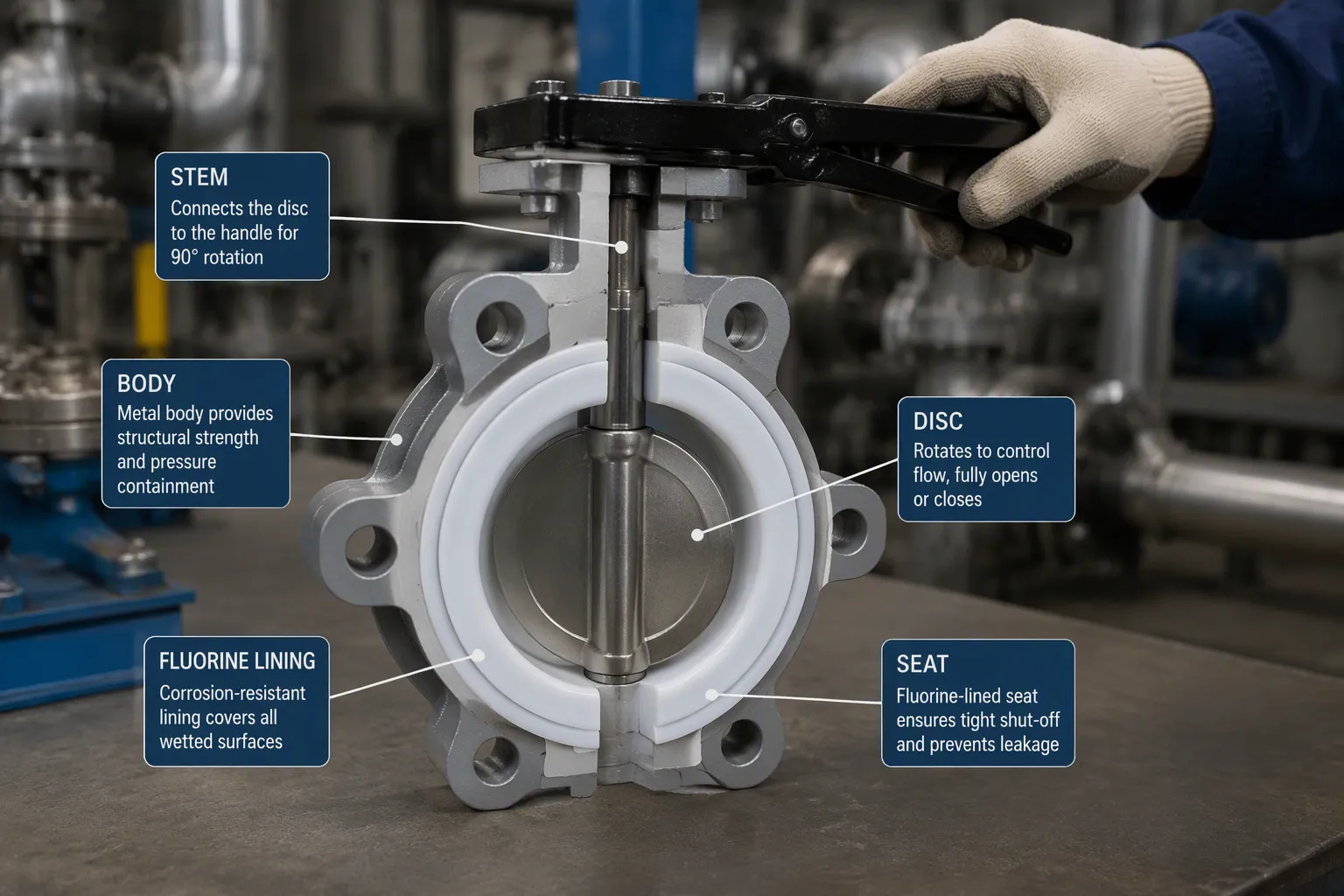
A fluorine lined butterfly valve is a quarter-turn valve. A flat, circular disc sits inside the pipe and rotates on a shaft to start or stop the flow. Five main parts make up the design. The body is the outer shell that holds everything together and connects to the pipeline. The disc is the round plate that swings across the flow path. The stem is the shaft that links the disc to the handle or actuator on the outside. The seat is the sealing ring that the disc presses against when the valve closes. The fluorine lining is the protective layer that covers the wetted surfaces, meaning every part that touches the fluid.
Each part has a clear job. The body carries the pressure. The disc does the moving. The stem transfers the turning force from the operator. The seat stops leaks at the closed position. The lining stands between the fluid and the metal. A simple picture helps: think of a coin on a stick inside a pipe. Turn the stick a quarter turn, and the coin blocks the pipe or opens it wide.
TANGGONG VALVE is one manufacturer of butterfly valves and fluorine-lined valves. The company started in 1990 in Wenzhou, China. Its butterfly valves carry API 609, CE, and ISO 9001 certifications.
Role of the Lining
The lining is the heart of this valve type. It uses a fluorine-based plastic, typically PTFE or FEP. These materials resist attack from most acids, bases, and solvents. The lining covers the wetted surfaces of the body, disc, and stem. It forms a continuous barrier, so the corrosive fluid never touches bare metal.
This barrier matters for two reasons. First, it protects the body from chemical attack. A steel body alone would corrode quickly in an acid line. The lining blocks that attack and keeps the body strong. Second, it extends valve life. A protected body lasts far longer in harsh service than an unprotected one. The lining also keeps the fluid clean, because the metal cannot react with the medium and contaminate it.
The seat works with the lining to complete the seal. Many designs use a PTFE or RTFE seat, which shares the lining’s chemical resistance. The disc presses against this seat at the closed position, and the two soft surfaces mate tightly. The result is a valve that handles aggressive media without giving up tight shutoff.
One practical point deserves attention. The lining must stay intact across the whole wetted area. A scratch or gap opens a path for the fluid to reach the metal. Careful handling during installation protects the lining and preserves the barrier. Buyers who understand this detail get more service life from every valve they install.
How a Fluorine Lined Butterfly Valve Works
Flow Control Mechanism
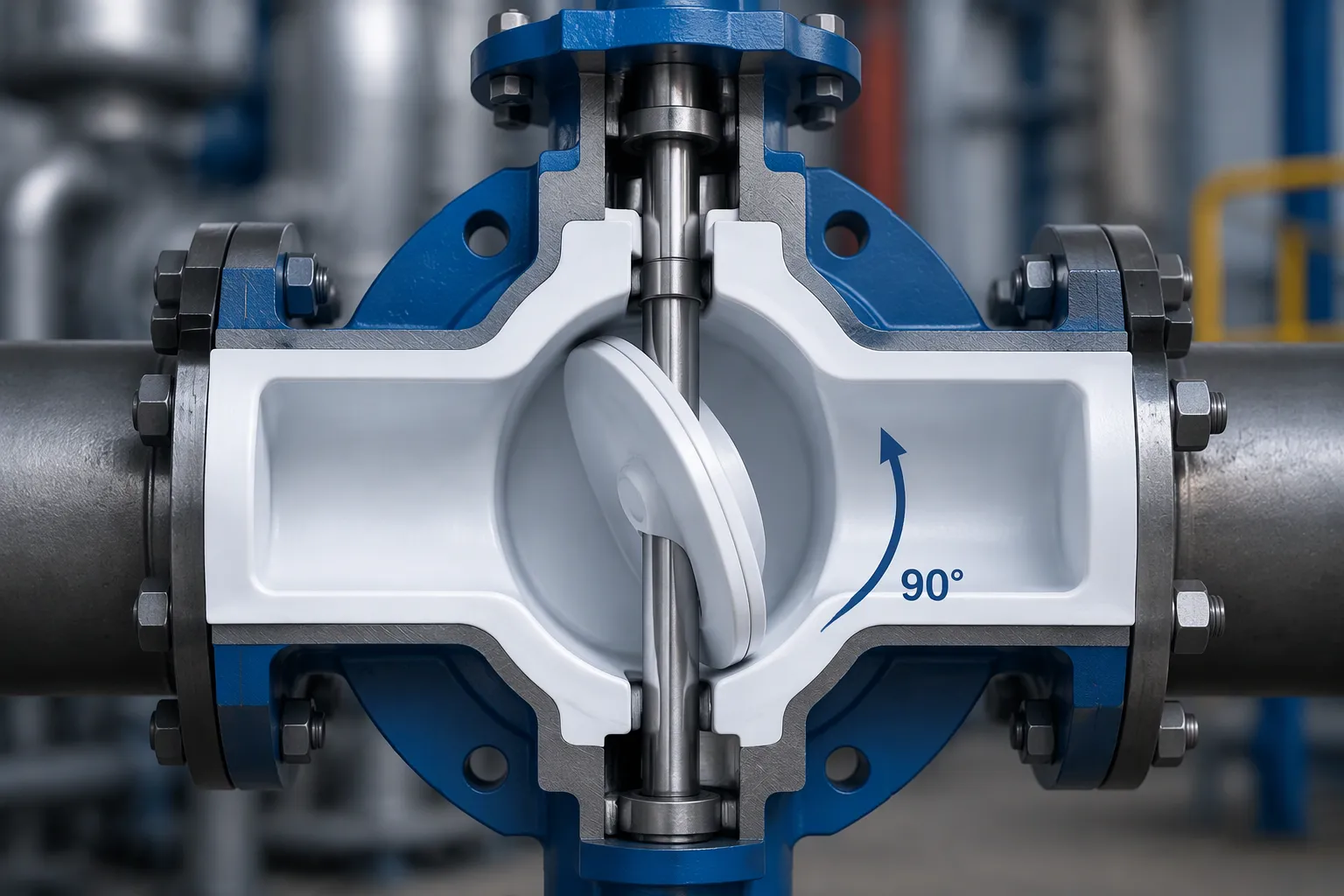
The disc does all the moving. A quarter turn of the stem swings the disc from one position to another. That is the entire operating cycle, and it takes only a moment.
Three positions matter. In the open position, the disc stands parallel to the pipe. Fluid flows past both flat faces with little resistance. In the closed position, the disc turns perpendicular to the flow. Its edge presses against the seat, and the seal stops the fluid. In between sits the throttling range. The disc tilts at a partial angle, and the flow narrows to a controlled rate. Operators use this middle ground to regulate how much fluid passes through.
The motion is easy to picture. Imagine a coin mounted on a thin rod inside a garden hose. Turn the rod a quarter turn, and the coin faces the stream and blocks it. Turn it back, and the coin lies flat and lets water rush by. A fluorine lined butterfly valve follows the same logic, just with a sealed body and a corrosion-resistant skin.
Actuators handle the turning in larger systems. A manual lever works for smaller sizes. Worm gears, electric motors, pneumatic cylinders, and hydraulic units take over as the valve grows. Each option delivers the same quarter-turn action, so the flow behavior stays predictable.
How the Lining Protects
The lining works as a shield. It wraps the wetted surfaces in a continuous layer of PTFE or FEP. Corrosive fluid touches only this layer. The metal body, disc, and stem stay dry and untouched behind it.
This barrier changes the life of the valve. An unprotected steel body would react with acids or solvents and slowly wear away. The lining blocks that reaction at the surface. The body keeps its strength, and the valve keeps its shape through years of harsh service. The fluid also stays clean, because no metal can dissolve into it.
A lining only protects what it covers. Any scratch or gap during installation opens a path to the metal and shortens valve life.
The seat completes the barrier. PTFE and RTFE seats share the lining’s chemical resistance, so the seal and the shield work as one system. The disc presses against this soft seat at the closed position, and the two surfaces mate tightly.
Maintenance stays simple for the same reason. The lining resists buildup and chemical attack, so cleaning and inspection take less effort. Operators who handle the valve with care during installation protect the barrier and get the full service life from every unit.
TANGGONG Butterfly Valve Features
Corrosion and Temperature Range
TANGGONG makes its butterfly valves with different seat materials to choose from. PTFE and RTFE seats give the valve strong chemical resistance. These seats protect the valve much like a fluorine lined butterfly valve does, so harsh fluids meet a soft, stable surface. Sizes run from DN40 to DN3000, and pressure ratings go from Class 150 to Class 600. That range covers small utility lines and large process pipes alike.
How much temperature the valve handles depends on the seat and body material you pick. The full product line reaches from -196°C to +650°C. A PTFE seat works well for moderate service, while a metal-to-metal seat handles the hotter end. Buyers choose the seat that matches their fluid and their operating temperature. This flexibility lets one valve family serve many jobs.
Cost and Maintenance
TANGGONG offers several actuator options. Manual levers work for smaller sizes, and worm gears take over as the valve grows. Electric, pneumatic, and hydraulic actuators cover automated systems. Each option gives the same quarter-turn action, so flow behavior stays predictable across the lineup.
The compact wafer and lug designs save space in the pipe rack. A slim body means less structural support and lower installation cost. The lining and seats resist chemical attack, so cleaning and inspection take less effort. Fewer replacements mean lower long-term spending. These traits make the valve a cost-effective choice for corrosive service.
Typical Applications
Chemical and Water Treatment
Chemical plants work with harsh fluids every day. Acids, bases, and solvents eat away at normal metal parts. A fluorine lined butterfly valve fixes this problem. The lining protects the body from the fluid, so the valve keeps working through years of tough service. Plant operators use these valves on acid lines, solvent transfer pipes, and dosing systems. The PTFE or RTFE seat adds another layer of chemical resistance where the valve seals.
Water treatment facilities also depend on this valve type. Treatment plants move water that carries chlorine, lime, and other treatment chemicals. These substances corrode metal that has no protection. The lining blocks that attack and keeps the water clean. The quarter-turn action also helps operators open and close lines fast during backwash cycles or filter changes. Large water mains benefit from the compact wafer design, which saves space in crowded pipe racks.
Other Industries
Many other industries use lined butterfly valves for similar reasons. Power plants install them on cooling water lines and flue gas desulfurization systems. These systems carry corrosive slurries and acidic condensates. Oil and gas facilities use lined valves on produced water lines and chemical injection points. Marine systems rely on them for ballast water and scrubber circuits, where saltwater and acidic wash water would damage bare metal.
HVAC systems and fire-safe services also appear on the list. Steam isolation lines need tight shutoff, and the soft seat delivers it. Fire-safe certified models protect critical isolation points in petrochemical plants. Energy storage and metallurgy operations use these valves on cooling circuits and process water lines. Each application shares one trait: the fluid would attack plain metal, and the lining prevents that attack. The valve adapts to many duties because the lining handles the chemistry while the disc handles the flow.
How It Compares
Performance and Fit
Every valve type has a job it does best. A gate valve slides a flat plate up and down, and it works well for simple on/off isolation on straight runs. A ball valve turns a drilled sphere a quarter turn, and it fits tight shutoff and quick operation on smaller lines. A globe valve moves a plug against a seat, and it gives fine throttling control on lines that need steady adjustment. A fluorine lined butterfly valve fills a different role. Its compact body fits large pipes, and the quarter-turn disc handles both isolation and moderate throttling. The lining adds chemical resistance that plain metal versions of any type cannot match.
Size and space tell a similar story. Butterfly valves cover DN40 to DN3000 in the TANGGONG line, and their slim wafer bodies save room in crowded pipe racks. Gate and globe valves grow heavy and tall as the pipe widens. Ball valves stay compact but often cost more in large sizes. A lined butterfly valve gives good flow capacity with a light, short body, so it fits where space is tight and the fluid is aggressive.
Cost and Compliance
Cost depends on the duty, not on one winner. Small ball valves often cost less than lined butterfly valves. Large gate valves may cost more once the body and actuator grow. A lined butterfly valve earns its place in corrosive service, where its protective layer prevents early replacement. Buyers weigh purchase price against service life, and the lined option often wins on total cost in chemical lines.
Compliance gives buyers a common yardstick. Butterfly valves follow API 609 for design, and API 598 covers pressure testing. Fire-safe models meet API 607 or ISO 10497. Gate, ball, and globe valves carry their own standards, so buyers should check the spec sheet for each type. A fair comparison matches the standard to the service, and every valve family has a code that fits.
A fluorine lined butterfly valve pairs a simple quarter-turn disc with a protective plastic lining. The disc controls the flow. The lining shields the metal from harsh chemicals. Together, they give tight shutoff and long service life in corrosive lines. Chemical plants, water treatment facilities, power stations, and marine systems all depend on this design. Each valve type has a job it does best. Gate valves work for simple isolation, ball valves fit quick shutoff, and globe valves give fine throttling. A lined butterfly valve fits large pipes with aggressive fluids. Readers should match the valve to their fluid, temperature, and space. That simple check leads to the right choice.
FAQ
What does the fluorine lining actually do?
The lining puts a layer of PTFE or FEP over every wetted surface. Corrosive fluid only touches this plastic skin. The metal body stays safe behind it. This barrier blocks chemical attack and keeps metal from getting into the fluid.
Can this valve handle throttling, or only on/off service?
The disc can stop at partial angles between open and closed. That middle range slows the flow to a controlled rate. Operators use it for moderate throttling. For fine flow adjustment, a globe valve often works better.
Which seat materials are available?
Buyers can pick PTFE or RTFE seats for strong chemical resistance. EPDM, NBR, and Viton seats cover other media and temperature needs. Metal-to-metal seats handle the hottest service. The right choice depends on the fluid and the operating temperature.
What sizes and pressure classes does TANGGONG offer?
TANGGONG butterfly valves range from DN40 to DN3000. Pressure ratings go from Class 150 to Class 600. That range covers small utility lines and large process pipes. Manual levers, worm gears, and electric, pneumatic, or hydraulic actuators are all available.
How does a lined butterfly valve differ from a ball or gate valve?
A gate valve slides a plate for simple isolation. A ball valve turns a drilled sphere for quick shutoff on smaller lines. A lined butterfly valve fits large pipes with aggressive fluids. Its slim body saves space, and the lining adds chemical resistance the others don’t have.