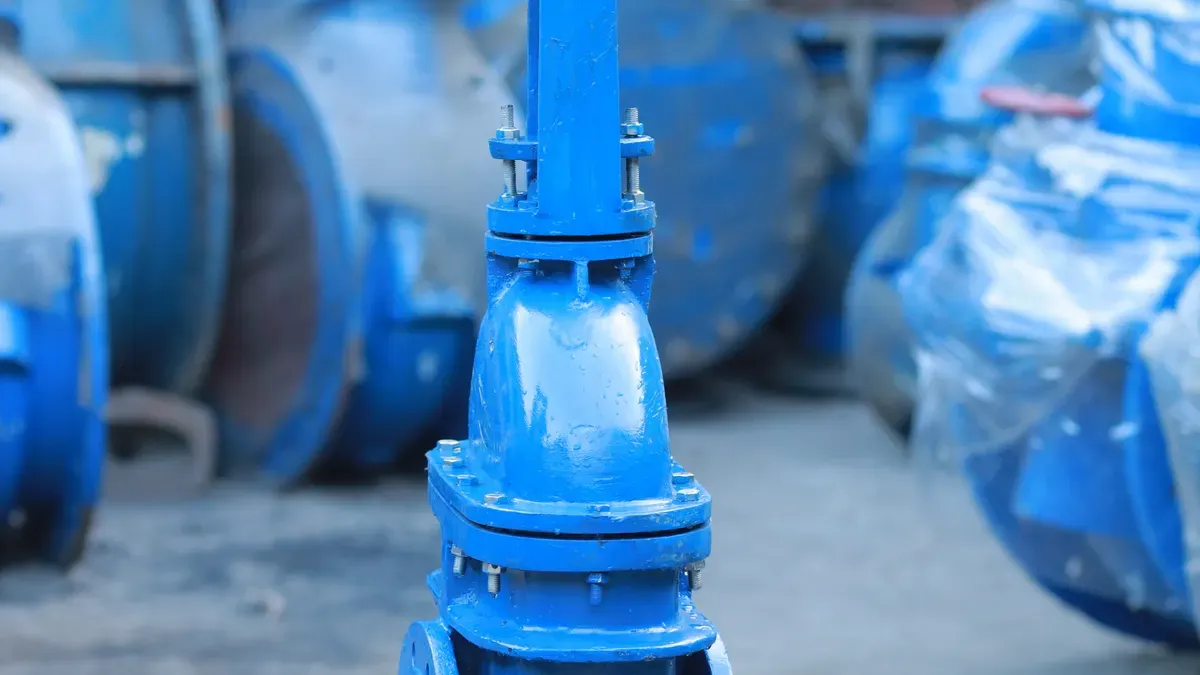
A fluorine lined ball valve is a ball valve with a metal body and inner parts covered by a fluoroplastic lining. This lining protects the metal from harmful fluids. The article explains two things. First, it describes how it works: a turning ball with a flow channel controls the flow, and the lining blocks the process medium. Second, it shows why these features matter in real use. Fluorine-lined ball valves protect the metal parts that touch the fluid in harsh service. A fluorine-lined ball valve also keeps operation simple and sealing reliable. Readers will see how the design supports both chemical resistance and clean flow.
Key Takeaways
- A fluorine lined ball valve has a plastic lining that keeps harsh chemicals away from its metal parts.
- Turning the ball 90 degrees opens or closes the flow fast and with ease.
- The lining gives great protection against rust and keeps the valve closed tightly.
- These valves work well in chemical plants, water treatment, and high-purity lines.
- Pick a lining material and pressure rating that fit your fluid. This helps the valve work safely and reliably.
How a Fluorine Lined Ball Valve Works
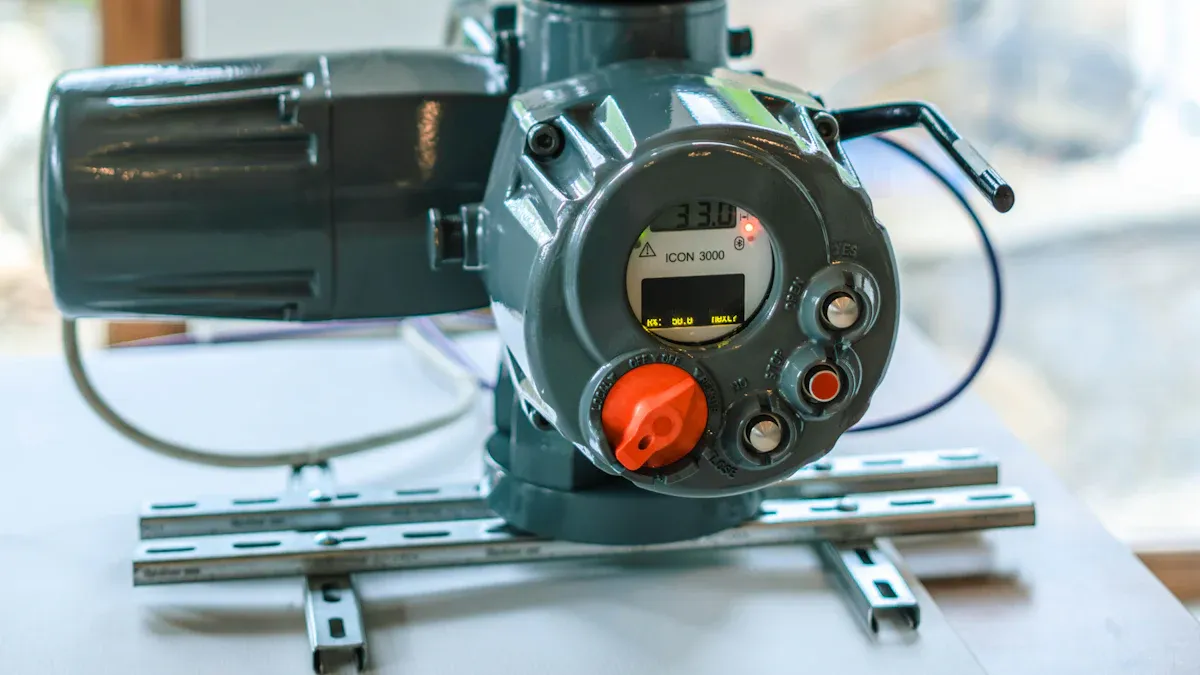
The way a fluorine lined ball valve works combines two jobs. A turning ball controls the flow. A protective layer keeps the metal safe from the process medium. Each job helps the other during building and use.
The Rotating Ball Mechanism
A ball with a hole sits inside the valve body. The stem turns this ball a quarter turn, or 90 degrees. The hole makes a flow channel through the ball. When the hole lines up with the pipeline ports, the path is open and fluid passes through. Turning the ball 90 degrees puts solid ball material across the ports. This action blocks the flow completely against flexible seats.
A full port design keeps the hole the same size as the pipe. Full port means the opening inside the ball matches the pipeline diameter. This design gives very little fluid resistance. A full-flow floating ball valve structure lets the ball press against the downstream seat under line pressure. This pressing action improves sealing when the valve is closed. Operation needs only a small torque, so a lever or actuator moves the ball quickly. The quarter-turn action makes this valve good for fast on/off duty.
Turning the handle 90 degrees rotates the ball so the hole lines up with the pipeline (open, minimal resistance), and turning it back 90 degrees puts the hole across the flow, blocking it completely against flexible seats for a tight shut-off.
The Lining as a Corrosion Barrier
The metal body gives mechanical strength. A plastic lining gives chemical resistance. Fluoroplastic is a plastic family with outstanding resistance to chemicals. The lining is the barrier between the process fluid and the metal. A continuous, seamless layer of 2.5–3 mm covers the parts that touch the fluid. These parts include the body interior and the ball exterior. The thick layer of fluoroplastics keeps the reactive metal casting away from acids, alkalis, and salts. The wetted surface then acts fully as fluoropolymer rather than metal.
PTFE and PFA are the two common fluoroplastic materials for this duty. Both resist nearly all industrial chemicals, including strong acids, bases, salts, and organic solvents.
| Property | PTFE Lining | PFA Lining |
|---|---|---|
| Resistance | Excellent against nearly all industrial chemicals | Excellent against nearly all industrial chemicals |
| Max temperature | Moderate | Higher |
| Permeability | Standard | Lower, superior barrier |
| Surface finish | Good | Smoother, less porous |
| Ideal for | General corrosive service | High-purity, high-temperature media |
PTFE is the industry standard for general corrosive service. PFA suits high-purity and high-temperature lines. The barrier must stay continuous and compatible with the specific chemistry, temperature, and pressure. A breach exposes the metal to corrosion. Common defects include blistering, cracking, thin spots, and abrasion. Careful specification and handling protect the barrier.
| Parameter | Specification |
|---|---|
| Temperature range | -50°C to 150°C (higher temperatures may deform or fail the lining) |
| Pressure rating | Standard, medium, and high-pressure versions |
| Suitable service | Highly corrosive chemical media |
Fluorine-lined ball valves protect metal parts in these harsh services. The typical service window runs from -50°C to 150°C. Higher temperatures may deform or fail the lining. A floating ball structure keeps closure leak-tight across the pressure range. These limits guide material selection for each line.
Advantages of Fluorine-Lined Ball Valves and Their Features
The advantages of fluorine-lined ball valves come straight from the two-part design described earlier. The flexible lining does more than block chemicals. It also presses against the ball to close the flow path tightly. The same plastic surface slides easily against the ball, so the valve turns with little effort. These two traits explain most of the advantages and features users notice in service.
Excellent Corrosion Resistance and Sealing
The lining delivers excellent corrosion resistance because it covers every wetted metal surface with a continuous plastic layer. This layer offers resistance to most chemicals, including strong acids, strong bases, salts, and solvents. The plastic family behind this performance is the fluoroplastic group, and its high chemical stability keeps the barrier intact in aggressive media. PTFE and PFA behave almost the same against chemicals. The real difference lies in physical traits. PFA has a denser structure with fewer voids, so it resists permeation better. In tests with chlorine gas and hydrochloric acid, PFA linings showed permeation rates 50% to 70% lower than standard PTFE linings.
| Feature | PTFE | PFA |
|---|---|---|
| Processing method | Sintering / isostatic molding | Injection / transfer molding |
| Permeation resistance | Good | Excellent (low void content) |
| Vacuum resistance | Fair (tends to collapse) | Superior (mechanically locked) |
| Creep resistance | Moderate (cold flows) | High (retains shape) |
| Cost | Lower | Higher |
Sealing benefits from the same soft, flexible surface. The lining conforms to the ball and seats under pressure, which gives excellent sealing and lowers leakage risk. A fluorine lined ball valve therefore combines outstanding corrosion resistance with a tight shut-off. Buyers should note that these valves carry a cost premium. Specialized materials and processes raise production costs, so adoption tends to concentrate in industries with substantial budgets and high-end applications.
Low Friction and Clean Flow
The self-lubricating property of fluoroplastic is the second key feature. PTFE has a very low coefficient of friction, so only a small force rotates the ball between open and closed positions. Low torque allows smaller, cheaper actuators in automated systems and makes manual operation easier. The smooth and residue-free surface also supports cleanliness. Media do not cling to the lining, which suits high-purity lines where contamination matters. Maintenance becomes simpler as well, because the non-stick surface resists buildup and cleans quickly.
TANGGONG VALVE‘s ball valve series applies these principles with PTFE, RPTFE, and PEEK seat options, plus fire-safe and anti-static designs. The range complies with API 6D and API 607, which supports reliable performance in demanding corrosive service. A highly corrosion-resistant valve like this is one option among several for chemical duty. Each valve type fits different priorities, and matching the choice to the fluid and operating conditions remains the deciding step.
Common Applications of Fluorine-Lined Ball Valves
Chemical Processing and Water Treatment
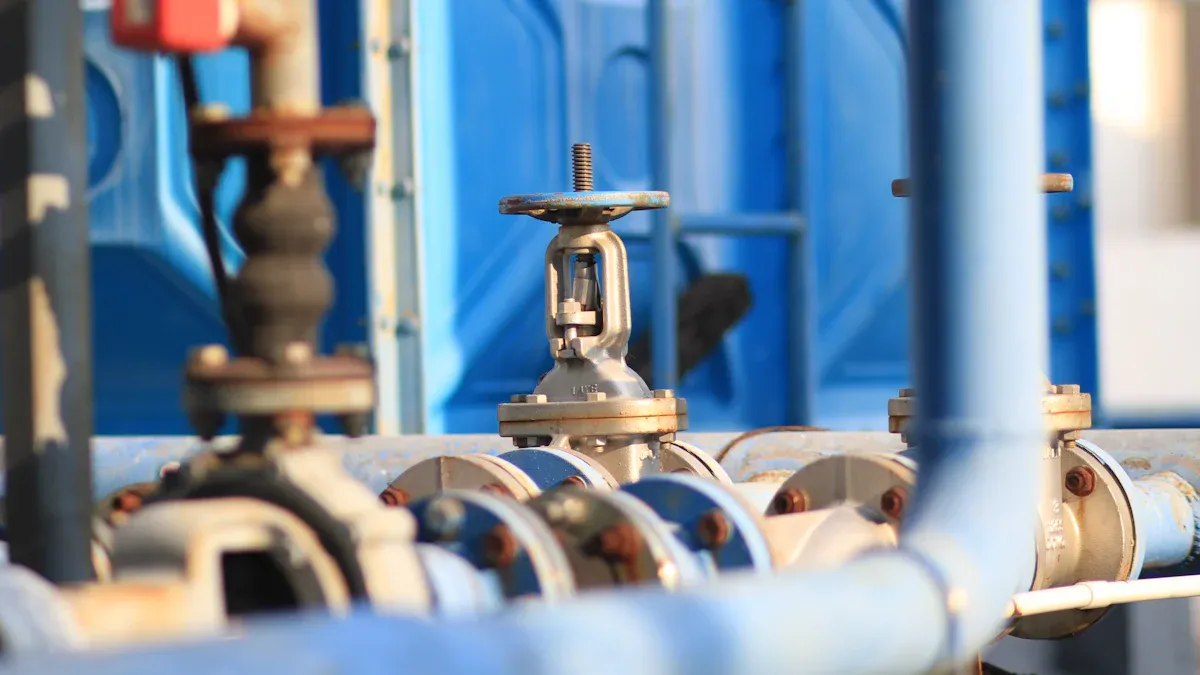
Chemical plants are the main users of these valves. The lining stands up to strong acids like sulfuric, hydrochloric, and hydrofluoric acid. It also handles aqua regia, organic acids, and strong oxidizers at many different strengths. Steam and solvent lines get the same protection from this barrier. Because the lining tolerates so many chemicals, industrial and chemical processing sectors depend on lined ball valves for pipes carrying harsh fluids. Water treatment plants use them on dosing and transfer lines. There, acids, caustics, and disinfectants would eat away at bare metal.
Operating limits show where each lining works best. Standard fluorine-lined ball valves are available in standard, medium, and high-pressure versions. They fit working conditions up to 150°C. The choice of lining then sets the temperature range.
| Lining material | Operating temperature |
|---|---|
| PTFE (F4) | −200 to 180°C |
| FEP (F46) | −85 to 150°C |
| PCTFE (F3) | −195 to 120°C |
| PVDF (F2) | −70 to 100°C |
| RPP | −14 to 80°C |
| Rigid PVC | 0 to 55°C |
| PO | −58 to 80°C |
High-Purity and Demanding Lines
Handling high-purity media puts cleanliness and low friction first. The smooth, non-stick lining lets media flow out without leaving residue. This keeps the risk of contamination low. A fluorine lined ball valve also turns with little torque, which helps with precise automated control on demanding lines. These traits make it a good fit for pharmaceutical, electronic-grade chemical, and fine chemical service.
TANGGONG VALVE’s ball valve series covers DN15–DN2000 and Class 150–2500. It comes with manual, electric, and pneumatic actuation. That range fits many of these different applications. Matching the lining material, pressure class, and temperature to the actual fluid is still the key step. Excellent corrosion resistance only holds inside the rated window.
Selecting and Maintaining the Right Valve
Matching Valve to Service Conditions
Good selection starts with the fluid. Check chemical compatibility first using data that matches the real conditions: makeup, strength, phase, and temperature. A basic polymer chart entry does not mean the assembled valve is approved. The whole wetted barrier must fit its exposure. Body liner, ball, seats, packing, and gaskets all count.
Pressure and temperature come next. Ask for a pressure-temperature curve for the exact setup. A metal body class rating does not automatically approve the lined valve. Liner thickness, support, and attachment control the usable range. Check temperature, pressure differential, and vacuum together, because heat changes stiffness, creep, and sealing load. A chemical-resistant liner can still let permeation through, so judge strength, liner thickness, and exposure time. Solids and cycling also matter. Particle size, hardness, and the smallest passage affect abrasion and seat damage. Last, choose between manual and automatic operation, and confirm the standards that apply.
| Selection Factor | What to Verify |
|---|---|
| Fluid compatibility | Condition-matched data, not a raw polymer chart |
| Pressure rating | Pressure-temperature curve for the exact configuration |
| Temperature and vacuum | Stiffness, creep, and sealing load under combined effects |
| Permeation | Liner thickness, concentration, and venting arrangements |
| Solids and cycling | Abrasion risk and actuator-load requirements |
Basic Care and Installation Notes
Routine checks protect the lining and make it last longer. Daily or weekly visual checks look for leaks, damage, and correct position indication. Monthly or quarterly tasks include cleaning outside surfaces, checking bolt torque, and partial stroke testing on automated valves. Yearly overhauls inspect the ball, seats, and seals for scoring or pitting. These schedules should fit system risk, with more frequent checks for critical or hazardous media.
Installation needs care around the lining. Follow these practices:
- Protect the lining surface during handling and assembly.
- Check pipeline alignment before tightening, so a pipe does not pull the valve sideways.
- Avoid sharp tools near lined areas.
- Follow manufacturer torque tables to prevent uneven compression.
- Inspect the body, lining, and seat before installation.
Proper alignment prevents undue stress on the body and supports reliable sealing. Record inspection findings after commissioning and planned shutdowns. These habits keep fluorine-lined ball valves working well and limit corrosion risk over time.
A fluorine lined ball valve is a ball valve with a fluoroplastic lining that shields its metal parts from corrosion. A 90-degree turn of the ball controls the flow, and the lining forms the barrier between the process fluid and the metal body. The advantages of fluorine-lined ball valves, including strong chemical resistance, tight sealing, and low friction, suit chemical processing, water treatment, and high-purity lines. Fluorine-lined ball valves perform best when the lining material, pressure class, and temperature match the actual fluid. Readers should match the valve to their fluid and operating conditions, then confirm those applications before final selection.
FAQ
What makes a fluorine lined ball valve different from a standard ball valve?
The lining is the difference. A standard ball valve leaves metal open to the fluid. A lined valve covers every wetted surface with a fluoroplastic layer, usually PTFE or PFA. That plastic barrier resists acids, bases, salts, and solvents. The metal body still holds the pressure load, so strength and chemical resistance work together.
Which lining material should I choose, PTFE or PFA?
PTFE works well for general corrosive service and costs less. PFA handles higher temperatures and high-purity media. PFA also blocks permeation better because its structure has fewer voids. Match the choice to your fluid, temperature, and purity needs. Both materials resist nearly all industrial chemicals.
What temperature range can these valves handle?
The typical service window runs from -50°C to 150°C. Higher temperatures may deform or fail the lining. The exact limit depends on the lining material and the pressure class. Always confirm the pressure-temperature curve for your specific setup before installation.
Where are fluorine-lined ball valves most commonly used?
Chemical processing is the main use case, especially lines carrying strong acids, caustics, steam, and solvents. Water treatment plants also depend on them for dosing and transfer lines. High-purity service in pharmaceutical and fine chemical work fits as well, because the smooth lining resists residue buildup.
How do I select the right valve for my line?
Start with fluid compatibility using condition-matched data, not a raw polymer chart. Then check the pressure-temperature curve, vacuum exposure, permeation risk, and solids content. Confirm the actuation type and applicable standards. TANGGONG VALVE’s ball valve series covers DN15–DN2000 and Class 150–2500 to fit many of these duties.