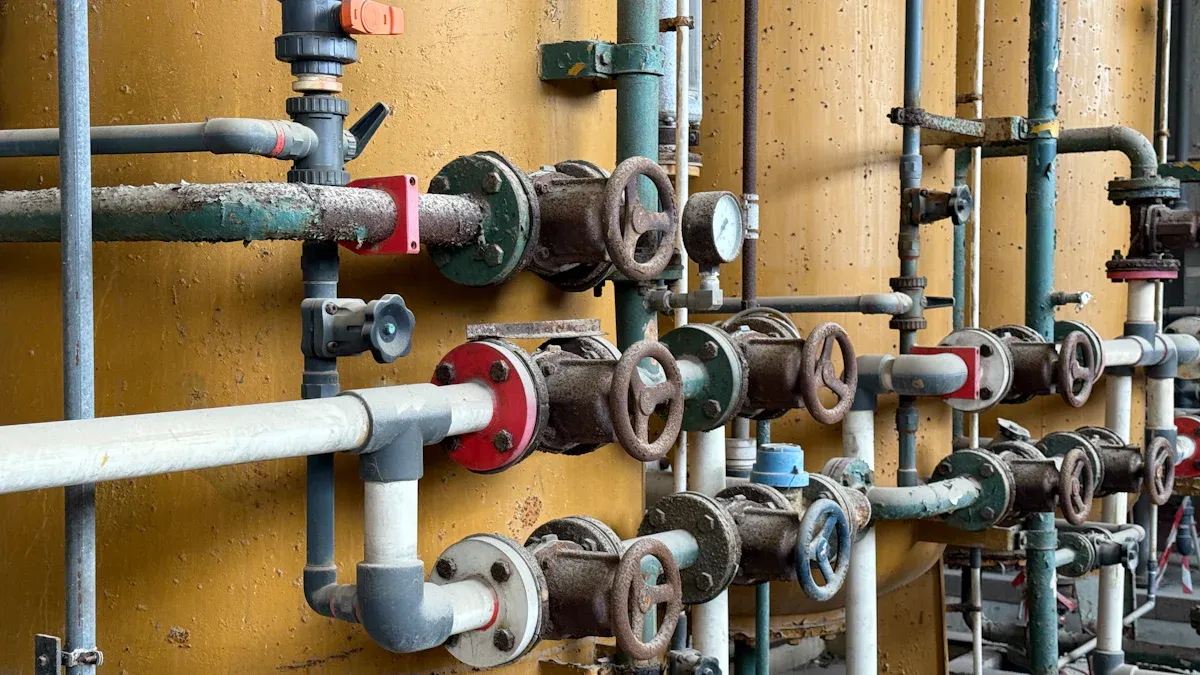
A PFA lined check valve stops reverse flow by closing on its own. Forward flow pushes the disc, ball, or diaphragm off its seat. When flow stops or reverses, the closing part seats itself and seals the line. This simple mechanical action gives reliable backflow prevention without actuators, sensors, or outside power.
The fluoropolymer lining adds a second layer of protection. It shields the wetted metal from corrosive media, so sealing surfaces and moving parts stay intact. A lined check valve prevents backflow consistently because the seat geometry survives harsh chemical service. Two connected ideas explain the result: one-way closure and a lining that protects the sealing interface.
Key Takeaways
- PFA lined check valves stop backward flow on their own by using the pressure of the flow and gravity. They do not need power or sensors to work.
- The PFA lining keeps the valve’s metal parts safe from harsh chemicals. This helps the seal stay tight and work well over time.
- Design features like a one-piece liner and a covered spring make sure the valve works well even in harsh chemical conditions.
- PFA lining can handle higher temperatures and has a smoother surface than other linings. This makes it a great choice for tough chemical jobs.
- Chemical plants use these valves to stop backflow. Backflow can damage pumps, contaminate products, or cause safety problems.
How a PFA Lined Check Valve Achieves Backflow Prevention
Automatic closure on flow reversal
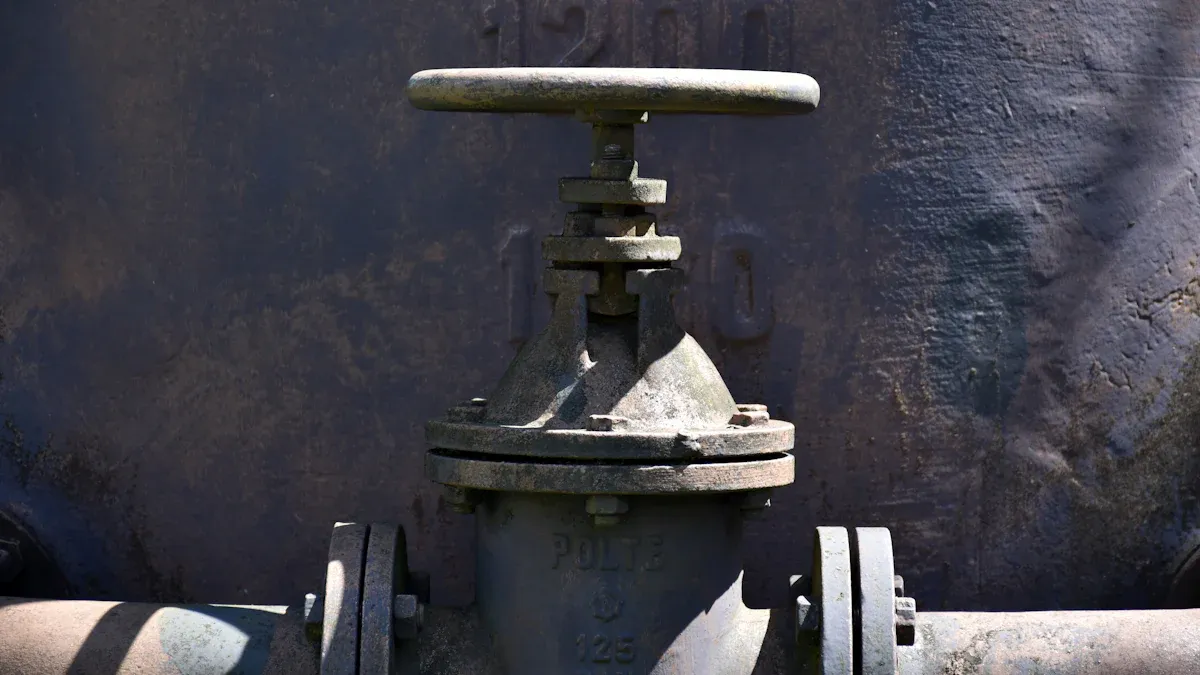
A PFA lined check valve opens only when inlet pressure is strong enough to lift the closing part off its seat. The disc, ball, or diaphragm moves out of the flow path and lets media pass downstream. As soon as forward flow stops or tries to reverse, the closing part moves back and seats itself against the seat. This action makes a tight seal against reverse flow without any actuator, sensor, or operator input. So the valve gives automatic backflow prevention just through its shape and the forces already in the line.
Three forces drive closure. Gravity pulls a swing disc down onto the seat in horizontal installations. Backpressure from downstream media pushes the closing part home when flow reverses. Spring help adds a third force and closes the part faster than gravity or backpressure alone. Spring-assisted designs reduce slam and water hammer, which protects piping and nearby equipment from pressure spikes. Each mechanism supports the same automatic check function, and the choice depends on orientation, flow speed, and the results of a sudden stop.
The PFA lining as a corrosion barrier
The PFA lining acts as a shield between corrosive liquids and the metal body. Harsh chemical media never touch the cast or forged metal underneath. The seat and disc shape therefore stay intact through years of service. An unprotected metal seat would pit and wear away in corrosive service, and the sealing surface would lose its shape. A worn seat cannot close cleanly, and backflow would slip past the part. The pfa lining removes that failure path. It keeps the sealing interface stable in size, so the valve keeps sealing over time and maintains reliable backflow prevention.
The lining also protects the moving parts. A lined disc and lined seat pair up so the whole wetted sealing interface carries the fluoropolymer barrier. Corrosive media touch only the lining, never the base metal. This protection matters most at the seat, where the closing part meets the body and where a small gap would allow leakage. A lined check valve prevents backflow through the mix of one-way closure and lining-protected sealing surfaces. The mechanical action stops reverse flow, and the pfa lining keeps that action dependable in harsh chemical service. Neither part works as well alone. Together they give automatic one-way flow with long service life.
Design Features That Prevent Backflow Reliably
Solid one-piece liner and lined disc
A solid one-piece liner covers the whole inside of the body as one continuous shell. The liner has no seams, joints, or gaps where corrosive media could reach the metal below. This matters because a seam gives chemicals a path to attack. If media seeps behind the lining, the metal body rusts and the lining can blister or pull away. A one-piece liner removes that risk completely. The wetted surface stays fully protected from inlet to outlet, and the valve body keeps its strength for years of service.
The lined disc and lined seat form a matched pair at the sealing interface. Both surfaces carry the pfa barrier, so the closing part and the seat meet lining to lining. Corrosive media never touch base metal where the valve seals. This pairing keeps the seat shape stable and supports reliable backflow prevention. A corrosion-resistant check valve depends on this detail. If either surface loses its lining, the seal weakens and backflow can slip past the disc.
Encapsulated spring and liner retention
Spring-assisted designs need protection too. An encapsulated spring seals the spring coil inside a fluoropolymer shell, so corrosive media cannot attack the spring wire. The spring keeps its force and closes the disc quickly, which cuts slam and water hammer. Liner retention features lock the lining in place against the body. Pressure cycling and thermal movement try to pull the lining away from the metal. Retention rings, dovetail grooves, and flared liner ends hold it tight. These features keep the lining locked in place through repeated pressure swings and temperature changes.
TANGGONG VALVE builds these features into its production check valves. The company offers spring-assisted non-slam closure, which closes the disc before reverse flow builds speed. Each valve undergoes testing to API 598 and ISO 5208, the named standards for valve pressure testing and seat leakage. These tests confirm that the seat holds tight and the lining stays intact. A lined check valve from this range therefore combines one-piece lining coverage, a protected sealing interface, and verified seat tightness. The design features work together to prevent backflow in demanding chemical service.
Comparing Lining Materials: PTFE, PFA, and FEP
Performance and application fit
The three fluoropolymer linings are different in temperature range, permeability, surface smoothness, and stress-cracking resistance. The table below sums up the key technical data.
| Material | Temperature Range (°C) | Temperature Range (°F) | Notes |
|---|---|---|---|
| PTFE | -240 to 260 | -400 to 500 | Most difficult to process; not field fusible |
| FEP | -240 to 204 | -400 to 400 | High-purity liner option when PTFE processability is limiting |
| PFA | -200 to 260 | -328 to 500 | Rivals PTFE; high-purity grades; low friction, abrasion resistant; field fusible |
PTFE gives almost universal chemical resistance and a little better performance at high temperatures against very reactive chemicals such as concentrated acids and alkalis. A ptfe lined check valve fits a wide range of chemical service and projects with tight budgets. PFA matches PTFE on temperature limit and adds a smoother surface that lets less through, plus field-fusible repair options. Lines that are demanding, corrosive, and high-purity gain the most from PFA. FEP handles moderate duty well. Its chemical resistance is almost equal to PTFE against most media, though a little weaker in high-temperature and highly reactive service. A lined check valve in FEP fits applications where its properties suit the duty.
Compliance and cost considerations
All three resins appear under FDA 21 CFR 177.1550 for food contact, and each meets EU 1935/2004 with migration testing. USP Class VI reports are available on request for pharmaceutical use. 3-A Sanitary Standard 18-03 and EHEDG accept all three in hygienic designs, subject to surface roughness Ra ≤ 0.8 μm on product contact surfaces. Cost follows how hard a material is to process. PTFE is hardest to process and not field fusible. PFA costs more upfront but allows field fusion. FEP sits between them. Buyers should weigh chemical compatibility, temperature, and purity needs against budget. No single lining wins everywhere. A ptfe/pfa-lined construction covers most chemical processing needs, and the right choice depends on the specific chemical service.
Where PFA Lined Check Valves Fit in Chemical Processing
Chemical processing applications
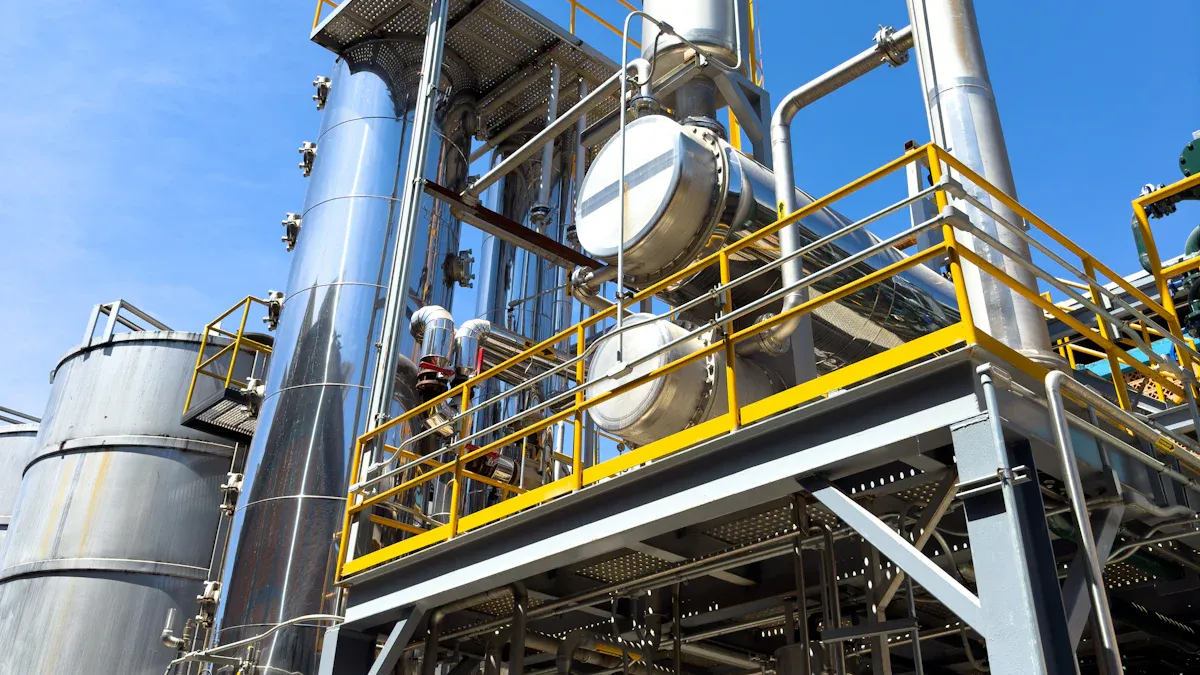
Chemical plants put check valves on pump discharge lines, mixing stream lines in P&ID designs, dosing lines, and transfer lines. These are the spots where reverse flow can dirty a stream, harm a pump, or stop production. A pfa lined check valve works well in these places because it closes without a control signal.
A check valve opens when flow moves forward and closes by itself when flow stops or turns around. It runs on the pressure difference between inlet and outlet, so no outside control signal is needed. Reverse flow can harm pumps, stop production, dirty media, and cause unsafe pressure events.
The table below shows common causes of reverse flow and how a lined check valve stops each one.
| Reverse flow cause | How the PFA/fluoropolymer-lined check valve prevents it |
|---|---|
| Pump stops (forward flow ceases) | Disc or ball drops back to its seat by gravity and seals the valve on its own, with no outside signal |
| Downstream pressure drops or reverses | Backpressure pushes the disc harder against the seat, so the seal gets tighter |
| Low-flow or horizontal installation where gravity closure is unreliable | An encapsulated spring (FEP/PFA-coated stainless steel) gives a steady closing force |
| Corrosive acid attacking wetted metal parts | A solid one-piece PTFE/PFA liner (min. ~3/32 in / 2.38 mm) covers all wetted surfaces—body interior, flange faces, guide surfaces—so corrosion and permeation cannot start |
| Media contacting the closing element | A fully encapsulated fluoropolymer disc/ball seals against a lined seat for a tight shutoff |
A fluoropolymer-lined vertical lift check valve fits vertical upward-flow lines, where a solid PTFE ball closes without a spring. Horizontal setups use an encapsulated spring so the valve closes reliably. PTFE-lined versions handle steady corrosive duty up to about 180 °C. PFA-lined versions reach about 200 °C for hot acids and oxidizers.
Other industries and service conditions
PFA lined check valves also fit petrochemical, water treatment, power generation, and high-purity media handling. Each service sets its own demands on chemical resistance and chemical compatibility. A ptfe lined check valve covers a wide range of corrosive duty at lower cost. A ptfe lined wafer check valve fits piping with little space. A ptfe-lined wafer check valve closes fast and limits water hammer. Both aggressive chemical handling and general chemical handling gain from the smooth, low-permeability pfa surface.
TANGGONG VALVE offers swing, wafer, dual plate, piston, and ball types. Sizes run from DN15 to DN1200 (½” to 48″), with pressure classes from Class 150 to Class 2500 (PN10 to PN420). These options let engineers match a valve to the media, pressure, and temperature of each line.
A PFA lined check valve fixes two problems at the same time. The closing part sits back on its seat the moment forward flow stops, so reverse flow never finds a way upstream. The lining then keeps that seat and disc shape intact in corrosive media. This pairing explains why PFA lined check valves keep their seal over a long service life.
The PFA lining works well for corrosive chemical duty. Smooth surfaces that let little through resist attack and keep the sealing interface stable. A lined check valve therefore gives dependable backflow protection without constant attention.
Readers should check their media, pressure, and temperature conditions before choosing a valve. Confirm the right setup with the supplier to match the line.
FAQ
How does a lined check valve handle reverse flow when a pump stops?
The closing part sits back on its seat as soon as forward flow stops. Gravity, backpressure, or an encapsulated spring pushes the disc or ball onto the seat. This automatic action blocks backflow without any signal or operator input. The pfa lining keeps the seat and disc intact so the seal holds in corrosive service.
Which installation orientation suits a PFA lined check valve?
Vertical upward-flow lines accept a vertical lift design with a solid ball and no spring. Horizontal lines need an encapsulated spring so the valve closes reliably at low flow. Engineers should confirm the orientation with the supplier before ordering, since the closing mechanism depends on it.
How do operators verify seat tightness on a lined check valve?
TANGGONG VALVE tests each valve to API 598 and ISO 5208, the named standards for pressure testing and seat leakage. These tests confirm the seat holds tight and the lining stays intact. Buyers should request test reports with each order to confirm compliance.
What temperature range fits PFA lined valves in chemical service?
PTFE-lined versions handle steady corrosive duty up to about 180 °C. PFA-lined versions reach about 200 °C for hot acids and oxidizers. Engineers should match the lining to the actual media temperature and confirm the limit with the supplier before selection.
Which valve type fits a tight piping layout?
A wafer or dual plate design fits piping with little space. Both close fast and limit water hammer. Swing types suit larger diameters and low-velocity lines. TANGGONG VALVE offers sizes from DN15 to DN1200 and pressure classes from Class 150 to Class 2500, so engineers can match the type to the line.