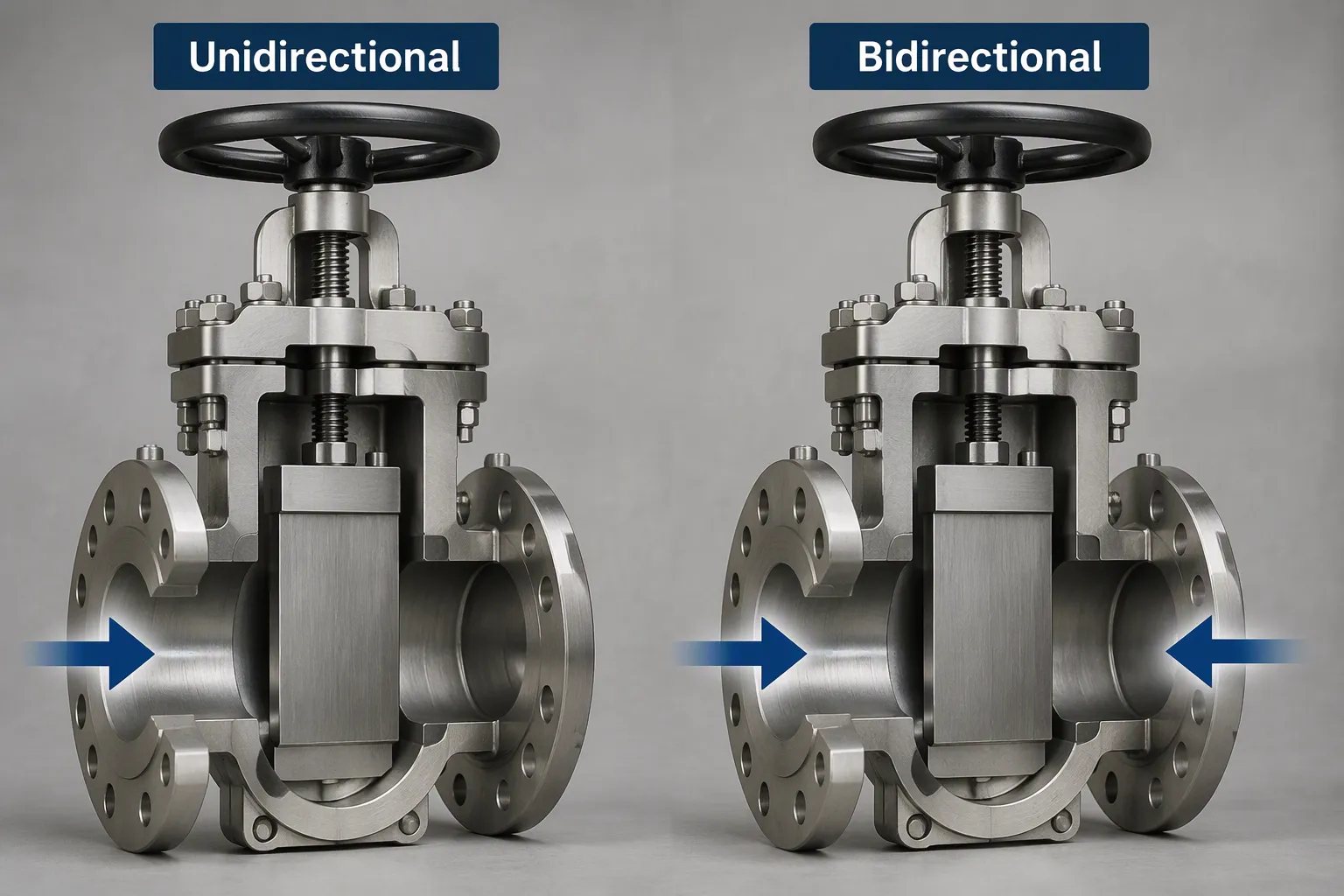
A unidirectional knife gate valve seals against pressure from only one direction, while a bidirectional knife gate valve seals from both directions. The main differences are the sealing direction and how the seat is set up. You’ll find unidirectional valves in simple slurry lines with one-way flow, whereas bidirectional valves work best in systems with flow reversal or backflow prevention. Knowing these differences helps you pick the right one. This guide compares how they work, their pros and cons, and what to look for when choosing. You’ll see how seat design affects pressure handling and where you can install them. We’ll also look at costs and how well they run. By the end, you can confidently judge bi-directional vs uni-directional knife gate valves for your needs. Let’s check the technical details that set these two designs apart.
Key Takeaways
- Unidirectional valves only seal from one side. They must be installed correctly with the flow arrow. They are cheaper but not as flexible.
- Bidirectional valves seal from both sides. They manage flow reversal and backflow. They cost more but give dependable performance.
- Pick a unidirectional valve for basic, single-direction systems. Pick a bidirectional valve for complicated systems where flow changes direction.
- Bidirectional valves often have higher pressure ratings. Some can handle up to 750 psi. Unidirectional models usually handle only 150 psi.
- Think about the total cost of owning the valve. Bidirectional valves might cost more at first. But they can save money by cutting downtime and maintenance.
Sealing Direction: The Core Difference
The main difference between uni- and bidirectional knife gate valves is where the seat is placed and how it reacts to pressure. This one design choice affects everything about the valve’s performance, installation, and operating costs.
Unidirectional Knife Gate Valve: One-Way Sealing
A unidirectional knife gate valve has a single seat on the downstream side of the gate. When flow comes from the upstream side, line pressure pushes the gate against this seat, squeezing it to form a seal. This system depends fully on that pressure difference. If you remove the upstream pressure, the sealing force disappears.
This design means you must install the valve facing the correct way relative to the flow direction. The valve body usually has an arrow showing which way the flow should go. If you install it backward, the valve cannot seal at all. This limitation reduces your flexibility when designing piping and installing the valve. You cannot just flip the valve to fit your layout.
The seat setup table below sums up how it works:
| Seat Configuration | Sealing Direction | Mechanism |
|---|---|---|
| Single seat (Uni-directional) | One direction only | Seals when flow comes from the upstream side; pressure compresses the seat against the gate |
| Dual seats (Bi-directional) | Both directions | Two seats allow compression from either side, providing bubble-tight shutoff regardless of flow direction |
For simple slurry lines where flow goes one way for sure, this design works well. The unidirectional knife gate valve offers a simple, low-cost solution. However, you must check your system’s flow direction before buying and installing.
Bidirectional Knife Gate Valve: Dual-Sealing Capability
A bidirectional knife gate valve uses seats on both sides of the gate. This dual-sealing design lets the valve seal against pressure from either direction. When flow comes from the upstream side, the upstream seat compresses. When pressure reverses, the downstream seat takes over. The result is full sealing on both sides of the gate.
The rubber seat seals around the edge of the gate, giving drip-tight shut-off. This perimeter-seated design means the valve achieves full tightness on both sides without needing to know which side is upstream or downstream. You can install a bi-directional knife gate valve in either direction, removing all installation worries.
This true bidirectional sealing ability makes the valve perfect for systems where flow may change, like manifold piping, transfer lines, or processes with occasional backflow. The bi-directional knife gate valve handles flow from either direction equally well.
One key operational point involves torque and thrust. Bidirectional knife gate valves face higher stem forces than unidirectional valves. Because the valve must handle pressure from both sides, the stem must push against resistance from two seats. These higher stem forces lead directly to greater thrust and torque needs during operation. As a result, you may see higher operating costs for the actuator and drive parts.
The production seat test for bidirectional valves confirms their dual-direction ability. Pressure-assisted seats are tested in both directions at 40 psi, or at the max rated pressure if below 40 psi. Perimeter non-pressure-assisted seats undergo testing to full rated pressure with no visible leaks. This strict testing ensures the valve delivers flow in both directions reliably.
When comparing bi-directional vs uni-directional knife gate valves, think carefully about your system’s flow pattern. The unidirectional vs. bidirectional choice comes down to whether you need flow from one direction or flow in both directions. For systems with reversible flow, the bidirectional knife gate valve gives you the flexibility you need. For simple one-way systems, the unidirectional knife gate valves offer good performance at lower cost. Understanding this core difference in sealing direction helps you pick the right valve for your application.
Comparing Uni- and Bidirectional Knife Gate Valves
Seat Design and Pressure Handling
The seat setup creates the first big difference between these two valve types. A unidirectional knife gate valve has one seat on the downstream side. Upstream pressure pushes the gate against that seat to form a seal. A bidirectional knife gate valve uses two seats, one on each side of the gate. This dual-sealing setup gives bubble-tight shutoff from either flow direction. The ITT Fabri C67S shows this design with a patented bidirectional seat that seals reliably no matter how it is installed.
Pressure ratings also set these designs apart. Standard MSS SP-81 knife gate valves have a 150 psi cold working pressure rating. Unidirectional models like the E5400 series meet this baseline at 150 psi. Bidirectional options cover a wider range. The E5100 series handles 150 psi, while the E5200 reaches 250 psi. For tough jobs, the E6300 series supports up to 750 psi. You can see this range in the table below:
| Valve Series | Directionality | Pressure Rating |
|---|---|---|
| E5400 | Unidirectional | 150 psi (MSS SP-81) |
| E5100 | Bidirectional | 150 psi |
| E5200 | Bidirectional | Up to 250 psi |
| E6300 | Bidirectional | Up to 750 psi |
Higher-pressure bidirectional designs often use a through-going body. This build removes internal cavities and cuts down turbulence during operation.
Installation Flexibility and Orientation
Installation needs differ greatly between the two types. A uni-directional knife gate valve must face the right way relative to the flow direction. The body has an arrow showing correct orientation. Install it backward, and the valve cannot seal at all. This limit narrows your piping layout options.
A bi-directional knife gate valve removes this worry completely. You can mount it in any orientation without checking the flow direction. The one-piece cast body supports bidirectional sealing with full structural strength. The sealing mechanism uses pre-tightened friction between the wear-resistant rubber seat strip and the gate edge. This design keeps effective sealing whether the medium flows from one side or the other.
The bidirectional sealing structure gives reliable sealing no matter the flow direction, making it perfect for complex pipeline systems where flow direction may change.
When you compare bi-directional vs. uni-directional knife gate valves, think about your system’s flow patterns. For simple lines with flow in one direction, a unidirectional knife gate valve gives adequate performance. For manifold piping or systems with possible backflow, bi-directional knife gate valves offer the flexibility you need. The bi-directional vs. uni-directional knife gate choice finally depends on your operational needs. Uni- and bidirectional knife gate valves each serve different purposes, so match the design to your application.
Pros and Cons of Each Valve Type
Advantages and Disadvantages of Unidirectional Valves
Choosing a unidirectional knife gate valve saves money upfront, but you must think about its limits. The table below shows the main trade-offs:
| Aspect | Uni-Directional Knife Gate Valve |
|---|---|
| Cost | Usually cheaper; bi-directional valves cost up to 30% more |
| Sealing | Seals on one side; can leak if debris builds up |
| Torque/Thrust | Needs more torque/thrust to operate |
| Application Suitability | Good for water, paper, pulp slurries; not good for changing flow direction or back pressure |
| Solid Build-Up Prevention | Not as good at stopping solid build-up |
The purchase price is only one part of the total cost. You also need to think about maintenance, downtime, and how long the valve lasts. A knife valve usually costs much less than a gate valve of the same size because it has a simpler design and lighter build. But total costs can go up if you use it in rough jobs that wear out parts quickly. You must balance lower upfront costs against possibly higher repair costs later. For many industries, quick fixes and less downtime make the knife valve a smart choice, even with part replacements now and then.
Advantages and Disadvantages of Bidirectional Valves
Bidirectional knife gate valves give you more options for complex piping systems. You can put them in without worrying about flow direction, since dual seats seal from either side. This design handles flow both ways just as well, making it great for manifold piping, transfer lines, or processes with occasional backflow. You also get lower torque needs compared to unidirectional models, which eases stress on the actuator and boosts efficiency.
But these benefits come with a higher price. Bi-directional knife gate valves usually cost up to 30% more than unidirectional ones. The dual-seat setup adds complexity, and you may need more maintenance over time. The more detailed seat design requires careful checks and regular part swaps, especially in abrasive materials. For simple systems with one-way flow, this extra capability may not be needed. You must decide if the added flexibility is worth the higher cost and upkeep. When your system needs reversible flow or backflow prevention, the bi-directional knife gate valve gives reliable performance that justifies its price.
Key Differences at a Glance: A Comparison Table
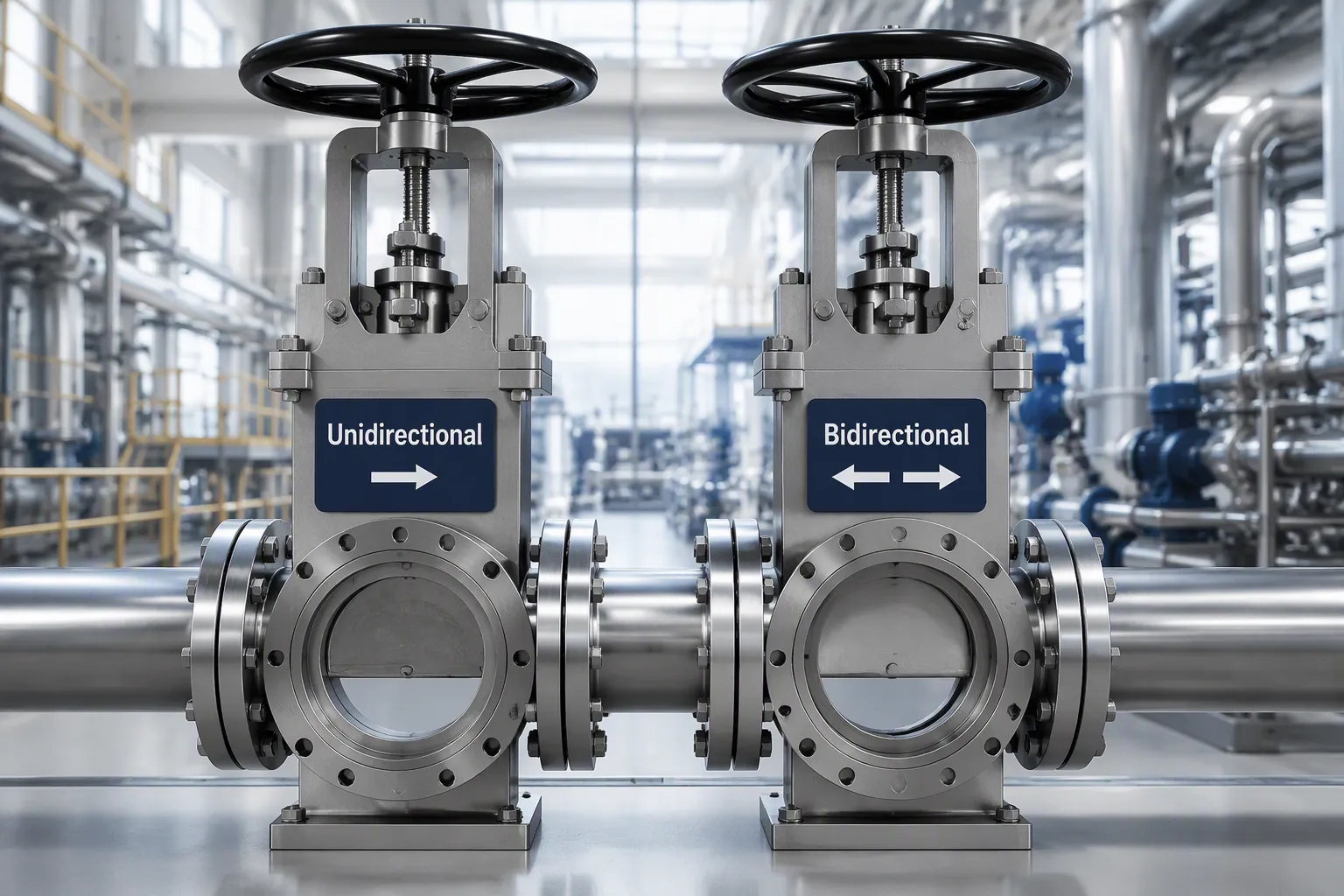
When you compare unidirectional knife gate valves with bidirectional knife gate valves, looking at them side by side makes the technical and cost differences clear. The table below shows the key details you need to think about for your application.
| Parameter | Unidirectional Knife Gate Valve | Bidirectional Knife Gate Valve |
|---|---|---|
| Seat Configuration | Seat located on downstream side only | Seats on both upstream and downstream sides |
| Sealing Direction | Seals against flow from one direction only | Provides tight shut-off in both directions |
| Sealing Mechanism | Single-side sealing; gate may leak if flow reverses | Wedge or elastomer seats close on both sides, independent of flow direction |
| Pressure Handling | Suited for low-pressure systems and conventional fluids | Handles higher pressures and complex fluid conditions reliably |
| Stem Forces | Lower stem forces due to single-direction pressure | Higher stem forces; requires more thrust and torque |
| Body Design | Standard body construction | Symmetrical body design to handle pressure from both sides |
| Installation | Must align with flow direction (arrow marked on body) | No directional restriction; flexible installation |
| Initial Cost | Lower cost due to simpler design and reduced material usage | Slightly more costly due to improved construction and enhanced sealing mechanisms |
| Maintenance Cost | Lower production and maintenance costs | Higher initial investment but designed for increased lifespan in fluctuating conditions |
| Weight | Lightweight; simpler to install and move | Heavier construction due to symmetrical design and dual seating |
| Operational Reliability | Excels where flow is ever-changing from a single direction | Improved safety by blocking backflow and leakage even when reversed under pressure |
| Typical Applications | Simple slurry lines, water treatment, one-way transfer systems | Manifold piping, transfer lines, systems with flow reversal or backflow prevention |
This comparison shows that bidirectional valves are often the better pick for systems that need flow reversal or backflow prevention. The dual-seat design gives you confidence that the valve seals properly no matter which direction pressure comes from. For steady, constant one-way flow, unidirectional knife gate valves give good performance at a lower price.
Summary of Technical and Cost Differences
The technical differences between uni-directional knife gate valves and bi-directional knife gate valves go beyond just how many seats they have. The sealing method itself is different. A unidirectional valve uses a wedge block that pushes the gate against a single sealing ring. This simple setup keeps costs low but limits flexibility. A bidirectional valve uses two movable valve seats with elastic U-shaped strips. This design creates a stronger seal under higher loads and handles pressure from either side.
You also need to think about maintenance. No matter which type you choose, regular upkeep keeps your knife gate valves working well:
- Lubricate the stem and cylinder rod monthly with grease
- Inspect the packing gland for leaks; tighten bolts evenly if leakage occurs
- Check the cylinder for audible air leaks indicating worn seals
- Flush the valve body periodically to prevent solid accumulation
- Verify the flow arrow on the body and install the valve matching the flow direction
Seat material choice also matters. Resilient seats made from EPDM, NBR, or PTFE provide bubble-tight zero leakage. Metal seats made from stainless steel or Stellite offer high durability and resistance to abrasion and high temperatures. Your media type and operating conditions determine which seat material fits your needs.
Actuator selection follows a similar logic. A double-acting pneumatic cylinder works well for general process control. A single-acting spring return provides fail-safe operation for safety systems. Match the actuator to your control requirements and fail-safe needs.
TANGGONG VALVE offers both unidirectional and bidirectional knife gate valves across their product range. Their large portfolio includes over 500 series of valves designed for industries such as oil and gas, petrochemical, and marine. Whether you need a simple one-way isolation valve or a versatile bidirectional solution, you can find options that meet your specs. Their engineering team can help you match the right valve design to your flow direction, pressure rating, and media characteristics.
The cost difference between these two valve types reflects how complex they are to build. A bidirectional valve costs more upfront because of the symmetrical body and dual-seating mechanism. However, this higher investment often pays off in systems where flow conditions change. The longer lifespan and better safety in unpredictable situations justify the extra expense. For simple, stable systems, the lower initial cost of a unidirectional valve makes it an attractive choice.
Bi-Directional vs Uni-Directional Knife Gate Valves: A Practical Selection Guide
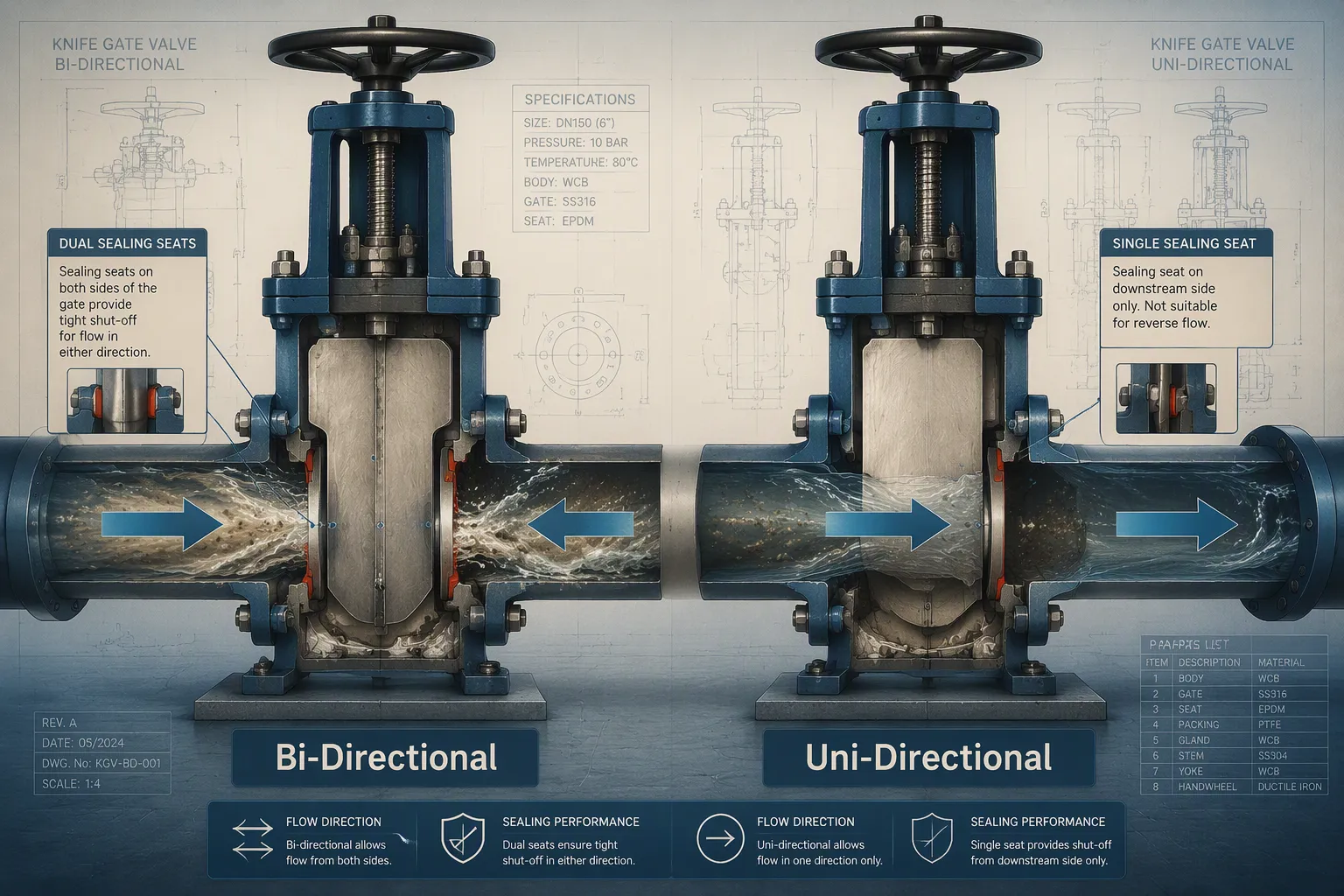
Choosing between a bi-directional knife gate valve or a uni-directional knife gate valve comes down to understanding what your system needs. You must look at several factors before you buy. The right choice depends on how your piping works, what media flows through it, and what pressures you expect. This guide walks you through the decision process step by step.
Matching Valve Type to Application Requirements
Start by checking your flow direction. Ask yourself if media moves one way only or if flow may reverse during operation. A unidirectional knife gate valve seals against pressure from one side only. If your system has backflow or pressure from either direction, you need a bidirectional design. The bi-directional vs uni-directional knife gate comparison starts with this basic question.
Think about these decision points when you evaluate your needs:
- Flow direction requirement: Pick a bidirectional valve if you need upstream and downstream flow control. Pick a unidirectional valve if flow only goes one way.
- Fluid type: Bidirectional valves handle abrasive or thick materials like slurries and wastewater. Unidirectional valves may work fine for standard fluids.
- Pressure and temperature: Check both against the valve’s rated limits to ensure safe operation.
- Installation configuration: Bidirectional valves allow flexible blade orientation, whether horizontal or vertical. This flexibility may affect your choice based on space and piping layout.
The media type plays a big role in your selection. Systems handling slurry, thick and abrasive media need strong sealing from both sides. A bidirectional knife gate valve provides dual-seat protection that stops leaks even when particles wear against the sealing surfaces. For clean liquids or gases in steady one-way lines, unidirectional knife gate valves give good performance at a lower price.
Pressure ratings also guide your choice. Standard unidirectional models usually handle 150 psi. Bidirectional designs cover a wider range, with some series supporting up to 750 psi. If your system runs at higher pressures or faces changing pressure and flow directions, you need the stronger build of a bidirectional valve. The symmetrical body design spreads stress evenly, preventing deformation under changing loads.
Cost-Benefit Analysis and Long-Term Considerations
The purchase price tells only part of the story. You must think about total cost of ownership, which includes maintenance, downtime, and operational efficiency. A unidirectional knife gate valve costs less upfront due to its simpler single-seat design. However, this savings may vanish if your system has flow reversals that cause early wear or leakage.
Bidirectional knife gate valves cost more at first, sometimes up to 30% more than unidirectional models. The dual-seat construction and symmetrical body add material and manufacturing complexity. Yet this higher investment often pays for itself in demanding applications. Consider a real-world example from a gold mine in Western Australia handling ore slurry with 40% solids content:
| Metric | Value |
|---|---|
| Valve cycling frequency | Every 30–40 minutes |
| Previous valve lifespan | 7–10 days before replacement |
| Cost of unplanned downtime | Over $43,000 per month |
| New bidirectional valve service life | 8+ months without repair |
| Installed cost per valve | Less than $27,000 |
| Payback period | Just over 2 weeks |
| Ongoing savings | Nearly $10,000 per week |
This case shows how a bidirectional valve removes frequent replacements and unplanned shutdowns. The payback period of just over two weeks makes the higher upfront cost minor in high-cycle applications. You gain nearly $10,000 per week in ongoing savings while improving system reliability.
Operational efficiency improves with precision automation. Bidirectional designs reduce unnecessary wear on valve internals, extending equipment lifespan. One copper mine confirmed a 30% drop in maintenance costs within the first year of operation. The removal of unexpected shutdowns, combined with self-cleaning action, gives you real-time control over slurry flow.
The market shows these advantages. Bidirectional valves represent the fastest-growing segment in the slurry knife gate valve market. Their versatility in handling flow in both directions makes them ideal for systems with frequent flow changes. You remove the need for reorientation or extra piping, supporting operational efficiency in dynamic flow environments.
When you compare bi-directional vs. uni-directional knife gate valves, think about your long-term operational goals. For simple, stable systems with one-way flow, a unidirectional knife gate valve offers cost-effective performance. For complex systems with variable flow patterns, bidirectional knife gate valves deliver reliability that justifies their higher price.
TANGGONG VALVE specializes in providing tailored solutions for industries like oil and gas, petrochemical, and marine. Their engineering team helps you match the right valve design to your flow direction, pressure rating, and media characteristics. With over 500 series of valves and 36 years of experience, they understand the nuances of both unidirectional or bi-directional knife gate valves. Consulting with their specialists ensures you select the optimal valve for your application, balancing upfront costs against long-term operational savings.
The core difference between these valves comes down to sealing direction and seat configuration. Unidirectional knife gate valves seal on one side only. Bidirectional knife gate valves seal on both sides. Your choice depends on flow direction, pressure, media type, and budget.
For simple one-way systems, unidirectional knife gate valves offer cost-effective performance. For reversible flow or backflow prevention, bi-directional knife gate valves prove essential. Verify certifications like ISO9001, ISO14001, and MSS-SP81 compliance before purchasing.
Evaluate your system requirements carefully. Consult with valve specialists like TANGGONG VALVE for optimal selection. Their expertise ensures you match the right design to your operational needs.
FAQ
Can I install a unidirectional valve backward?
No. A unidirectional knife gate valve has an arrow on the body showing correct flow direction. Install it backward and the gate cannot seal against pressure. You must verify orientation before mounting. Bidirectional knife gate valves eliminate this concern entirely since they seal from either side.
How do I know if my system needs bidirectional sealing?
Check whether flow can reverse during operation. If your piping allows backflow, pressure surges, or media movement in both directions, you need a bi-directional knife gate valve. Systems with manifold piping, transfer lines, or pump shutdown scenarios benefit from dual-seat protection.
Do bidirectional valves cost more to maintain?
Initial cost runs higher, but maintenance costs often balance out. The dual-seat design requires periodic inspection of both sealing surfaces. However, bidirectional knife gate valves reduce unplanned downtime in systems with flow changes. You trade higher upfront expense for longer service intervals and fewer emergency replacements.
What pressure ratings should I expect?
Standard unidirectional models typically handle 150 psi. Bidirectional designs cover a wider range, with some series supporting up to 750 psi. Always match the valve rating to your system’s maximum operating pressure. Check the manufacturer’s specifications before purchasing.
Which valve type suits slurry applications better?
Bidirectional knife gate valves handle abrasive slurries more effectively. The dual-seat design maintains sealing integrity even when particles wear against surfaces. Uni-directional knife gate valves work for simple slurry lines with constant one-way flow. For thick media or variable flow patterns, choose the bidirectional option.