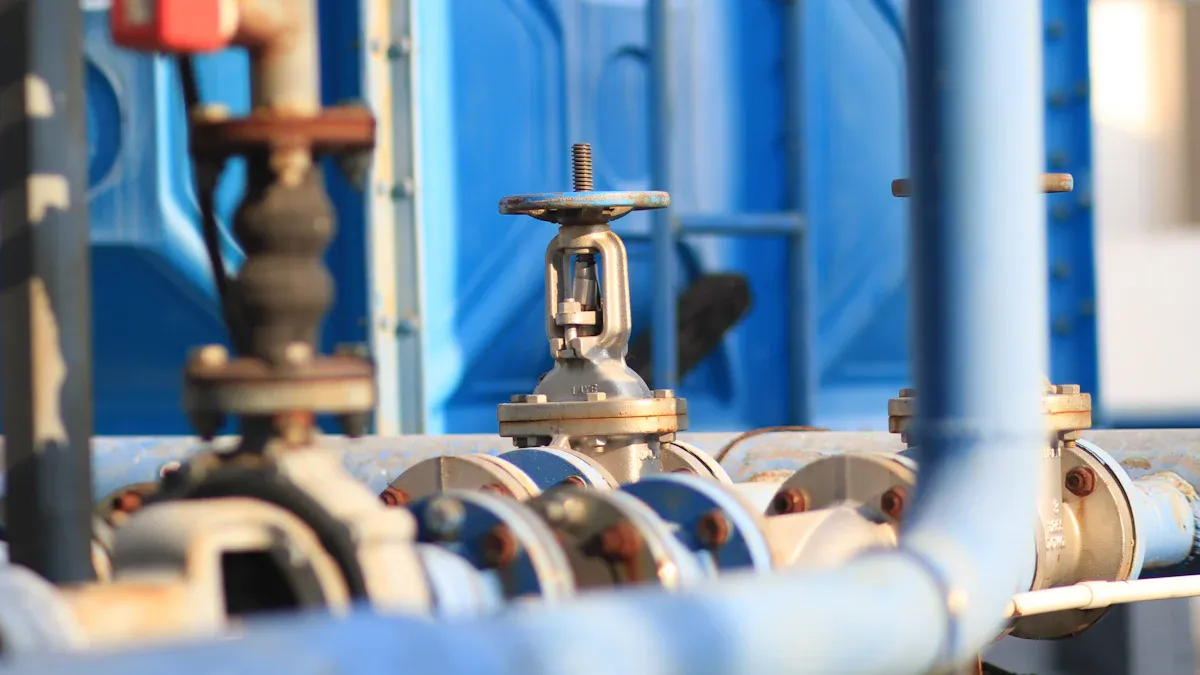
A resilient seated knife gate valve handles the toughest materials in factories and plants. This valve controls rough slurries, thick wastewater, and stringy materials that ruin normal equipment. The resilient seated knife gate valves give a bubble tight seal even in harsh conditions. A soft rubber seat presses against the knife edge to make this tight seal. Metal-seated knife gate valves cannot do this as well because hard surfaces leak when bits get stuck between them. The resilient design shuts off well in hard materials like slurry and heavy sludge.
Plant workers face a big choice when picking shut-off equipment. Why pick this valve over other choices? The answer is in its special sealing power. Wastewater treatment plants and mining sites depend on this knife gate valve for steady work. The soft seat bends around junk to keep it closed. This stops leaks that would otherwise harm equipment further down the line.
Key Takeaways
- Resilient seated knife gate valves use a soft rubber seat to make a tight seal, even with tough materials like slurry and wastewater.
- These valves resist wear and blockages because the sharp gate cuts through solids and the soft seat shapes itself around debris.
- Checking the seat every 6 to 12 months is a simple upkeep task. It keeps these valves working well and saves money.
- Industries such as wastewater treatment, mining, and pulp and paper depend on these valves for dependable flow control.
- TANGGONG VALVE has 36 years of experience and certified quality, so they are a trusted choice for knife gate valve needs.
What Is a Resilient Seated Knife Gate Valve?
Definition and Basic Mechanics
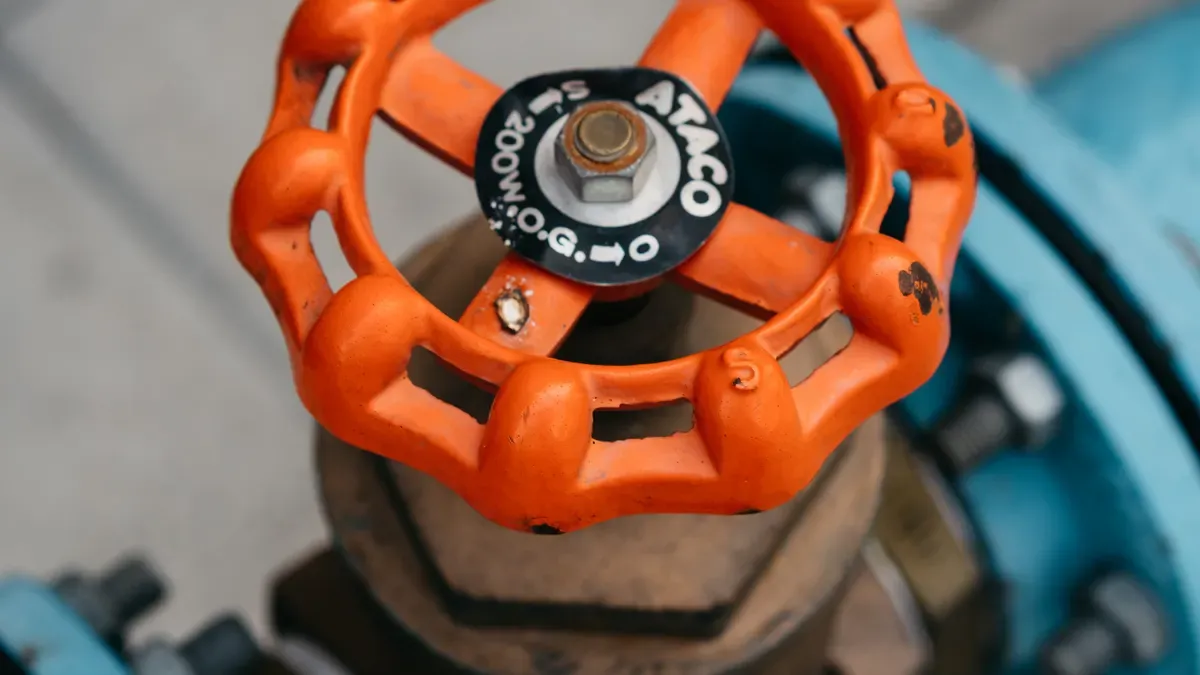
A resilient seated knife gate valve is a linear motion isolation device made for tough flow control jobs. The build starts with a strong body made from cast stainless steel or ductile iron. Inside the body, a sharp knife-edge gate slides up and down to control the flow. A resilient seat, usually made from rubber or a synthetic elastomer, lines the seating area. This soft part presses against the knife edge when the valve closes.
The way it works is simple. The gate moves down to seal tightly against the seat, which stops fluid from passing. The gate moves up to pull away from the seat, which lets fluid pass through. This metal-to-non-metal sealing method achieves closure with fairly low sealing surface precision needs. So the design is easy to make and reliable in service.
These valves show excellent wear resistance because their sealing surfaces use hard materials. They work well with high-speed flow, high-viscosity media, and fluids that contain particles. The through-conduit, no-pocket design is purpose-built for conditions with solids, fibers, or high-viscosity fluids. This makes the knife gate valve the practical choice in such applications. Specialty knife gate valves even handle high-viscosity products like molasses, honey, and fruit pulp, where a standard gate’s pocket would cause sanitation issues.
Resilient vs. Metal-Seated Valves
A comprehensive guide to different knife gate valve types must compare soft seats against hard seats. Resilient seated knife gate valves use a rubber or elastomer seat that deforms slightly under pressure. This deformation creates a bubble-tight seal for liquids. Metal-seated valves rely on metal-to-metal contact, which cannot compress around trapped debris. Particles caught between hard surfaces create leak paths.
The soft seat design excels with abrasive and high-viscosity fluids. Slurries, wastewater, and fibrous materials flow through without jamming the closure. The resilient seat absorbs small particles and still maintains a tight seal. Metal-seated alternatives struggle in these conditions because they lack the flexibility to conform around obstructions.
Pressure and temperature capabilities vary by model. The KGN-RSB resilient seated model handles 100 or 150 psi CWP and temperatures up to 400°F. The KGC BD bi-directional model with a resilient seat also rates at 150 psi CWP and up to 400°F. Standard specifications include a 150 PSI CWP pressure rating, a temperature range up to 400°F, valve sizes from 2″ to 24″, and seat material options of EPDM, NBR, or FKM.
These ratings make resilient seated knife gate valves suitable for many industrial isolation duties. The soft seat delivers reliable sealing across a broad range of abrasive and viscous media. Plant operators choose this design when leak prevention matters most.
Key Features of a Knife Gate Valve
Resilient Seat Design
The resilient seat is one of the most important key parts of knife gate valves. A patented perimeter seal gives bi-directional, bubble-tight shutoff, even on dead end service. The trapezoidal seat shape holds the seat in the valve body and stops leakage from seat rollover and seat pullout. A cast-in body relief area behind the seat greatly lowers compression set, which keeps a tight seal over changing service conditions. When the gate closes, the resilient seat pushes into this relief area. This action lowers compression set of the rubber and keeps a long-term, effective seal. The seat stays flush with the valve body when the gate is open, which lowers turbulence and media build-up.
These soft seats can be replaced, which gives positive shut-off in both directions. A one-piece rubber molded seat with insert, spline, and puck locks the seat firmly into the valve body. A secure seat locking mechanism stops buckling or dislodging that can happen with other perimeter seat designs. A premium packing system with high-performance packing material and anti-extrusion segments boosts sealing and extends packing life. This drip-tight design ensures reliable performance across different knife gate valve types.
Knife-Edge Gate and Body Configurations
The knife-edge gate has a sharp, beveled edge that cuts through stringy materials and solids. Knife gate valves were first designed for the pulp and paper industry, where a knife gate was ideally suited to cut through stringy pulp. The sharp gate edge slices through solids, which stops clogging and ensures reliable operation. The perpendicular up and down movement fully opens or closes the valve, enabling reliable handling of high-velocity flows. This sharp edge in slurry handling stops build-up of solids in the valve, ensuring smooth flow. A full port design gives minimal pressure drop.
Body configurations include wafer and lugged styles. Material options include stainless steel, carbon steel, and ductile iron, which suit different operating conditions and media types in slurry service. Fusion bonded epoxy coating adds corrosion protection for harsh environments. A pneumatic knife gate valve offers automated operation for demanding applications. These features make slurry knife gate valves a practical choice for abrasive media.
Benefits for Industrial Applications
Tight Shutoff and Abrasion Resistance
The resilient seated knife gate valve gives a bubble tight seal that plant workers trust in the hardest conditions. The soft elastomer seat presses against the knife edge to fully block flow. This tight seal holds even when the line carries rough media like mining slurry or fibrous pulp. Metal-seated valves cannot match this because hard surfaces leave gaps when particles get stuck between them.
Durability is another main strength. The knife gate valve body handles high temperatures and rough service without losing its shape. The gate cuts through solids instead of pushing them to the side. This cutting action stops clogging and keeps the flow path clear. A resilient seated knife gate valve keeps a reliable seal across thousands of cycles. The elastomer takes in shock and vibration that would crack rigid parts. Plants that move rough slurries report far fewer leaks after switching to this design.
The sealing surface resists wear because the elastomer bends rather than breaks. Small particles embed in the soft seat and pass through without scoring the metal. This self-clearing action extends service life in dirty service. A knife gate valve with this design also handles bidirectional pressure without leaking. The seat locks into the body to prevent rollover or pullout under load.
Low Maintenance and Cost Savings
Simple structure and replaceable parts make these valves cheap to own over time. The seat, packing, and gate are the main wear items. Technicians can swap a worn seat without cutting the valve from the line. This design cuts downtime and labor costs by a lot.
A preventive maintenance schedule keeps these valves running for years. Plant teams should schedule seat inspections every 6 to 12 months if the valve cycles often. They must track gate edge condition because minor burrs can damage elastomer seats. Predictive checks include monitoring flow or pressure drops across the valve to detect partial blockage or seat erosion. If a digital positioner is installed, torque or force data reveals early signs of seat friction changes. Documentation matters too. Teams should record each seat replacement date, elastomer type, and operating hours to refine future intervals.
Routine tasks follow a clear rhythm. Adjust the packing once per month. Lubricate the valve stem and valve stem nut every three months using a grease gun at the grease filler port on top of the bracket. Lubricate the gear operating mechanism once per year. For valves with four or more packing gland bolts, tighten using the cross-torque method and avoid overtightening. For resilient seated knife gate valves, fix packing leakage by tightening the gland bolts evenly and slowly, usually only 1/8 to 1/4 turn, and only enough to stop the leak. Seat leakage may clear by opening the gate to 1/4 open and then closing it fully to remove an obstruction.
These practices deliver minimal leakage and long service life. Less downtime and fewer replacement parts create real cost savings. TANGGONG VALVE brings 36 years of experience to this field. The company stands as a global leader in providing reliable valve solutions for critical applications. Their expertise helps plants achieve reliable sealing and effective seal performance across demanding industries.
Typical Applications for Knife Gate Valves

Wastewater and Water Treatment
Wastewater treatment plants use the knife gate valve to shut off flow in primary, secondary, and sludge handling steps. Raw sewage carries rags, grit, and semi-solids that clog other valve types. The sharp gate edge cuts through these materials instead of trapping them. A resilient seat then presses closed to make a tight seal. Plant workers use these valves on influent lines, digester feed, and return activated sludge service.
Water treatment plants also count on knife gate valves for filter backwash, lime slurry dosing, and leftover handling. The full port design lets thick slurries pass without clogging. This keeps flow steady and puts less strain on pumps. City plants like the low pressure drop and easy upkeep. These features matter when the line must stay running for long periods.
Mining, Pulp, and Paper Processing
Mining work deals with abrasive slurries and sludge every day. Knife gate valves are built to handle the abrasive slurry, sludge, and process water found across many mining sectors. Phosphate processing adds scaling and abrasive conditions. Thru-gate designs let crews hydro blast piping without taking out the valve, which saves time and money. Bidirectional slurry knife gate valves with cone deflectors push abrasive media inward and away from the soft seat. This shields the seat and keeps a bubble-tight shutoff.
Pulp and paper mills bring a different set of problems. Chemical pulping with kraft, sulfite, NSSC, or soda processes uses strong acids and caustic alkaline bases. Valves must handle white liquor, green liquor, black liquor, lime slurry, caustics, and steam in digester systems, washers, evaporators, and recovery boilers. Pulp bleaching adds peroxide and chlorine, which are harsh oxidizing chemicals. Slurry knife gate valves fight corrosion across screening, cleaning, bleaching, and washing steps. Recycling and reject handling also need shutoff for effluent, reuse water, and streams that hold solids. TANGGONG VALVE supplies a wide product line to these industries worldwide. Their knife gate valves serve mining, pulp and paper, petrochemical, and power generation clients around the globe.
How to Choose the Right Knife Gate Valve
Key Selection Criteria
Picking the right valve starts with knowing your process well. Buyers need to write down the medium type, particle size, and how much solid it has. They also check viscosity and how likely particles are to settle. Next, they confirm normal and maximum pressure and temperature. This includes the pressure difference across a closed valve. Shutoff needs also matter. Teams set the allowed leakage level and decide if sealing must work one way or both ways. Not every knife gate valve gives a bubble-tight close, so this step avoids costly errors.
Material compatibility covers the body, gate, seat, packing, and all wetted parts. A stainless steel knife gate valve fits wastewater and chemical service. Ductile iron works well for general duties. Duplex steel handles high chloride or very abrasive conditions. Actuation depends on the duty cycle. Manual handwheels fit low-frequency use. A pneumatic knife gate valve gives fast response and automation. Hydraulic or electric units serve large sizes or remote control. Installation checks include nominal size, face-to-face dimensions, and flange drilling. They also cover orientation and actuator clearance. Maintenance planning should confirm that replacement seats and packing are easy to find and inspect.
Why Choose TANGGONG VALVE
TANGGONG VALVE backs its products with well-known certifications. The company holds ISO9001:2015, CE, TUV, SGS, API 6D, and API 607 approvals. These credentials prove that quality control, pressure testing, and safety performance meet international standards. The company also follows rules like MSS-SP-81 for knife gate valves and API 598 for inspection and testing.
Quality control runs through every production stage. CNC machining holds tight tolerances. Robotic welding gives consistent joints. Third-party testing checks performance. TANGGONG VALVE has more than 2,200 professionals and holds over 200 national patents. Its valves serve customers in more than 35 countries. This global reach and engineering depth make the brand a dependable partner for any complete guide to different knife gate valve types.
A resilient seated knife gate valve gives a tight seal even in the toughest conditions. The soft seat presses around debris, so slurry and fibrous media cannot cause a leak. This design also lowers maintenance costs. Replaceable seats and simple parts mean less downtime and a longer service life.
Plant teams should pick a resilient seated knife gate valve when abrasive or high-viscosity media needs reliable sealing. Metal-seated knife gate valves work better for cleaner duties. TANGGONG VALVE offers 36 years of expertise and proven resilient designs. Readers can ask their team for tailored guidance on any knife gate valve need.
FAQ
What makes a resilient seated knife gate valve different from a metal-seated one?
A resilient seated valve uses a rubber or elastomer seat. This soft seat presses around debris to create a bubble-tight seal. Metal-seated valves depend on hard surfaces touching each other. They leak when particles get stuck between the metal faces. The soft seat design works better for abrasive media and slurry service.
How often should plant teams inspect the seat?
Teams should check the seat every 6 to 12 months if the valve cycles a lot. They need to look at the gate edge for burrs. Small damage can hurt the elastomer seat. Regular checks keep knife gate valves working well. Writing down each inspection helps plan better maintenance schedules later.
Can these valves handle both directions of flow?
Yes. A patented perimeter seal gives bi-directional, bubble-tight shutoff. The trapezoidal seat shape holds the seat inside the body. This stops leaks from seat rollover and pullout. A strong locking mechanism keeps it from buckling. These knife gate valves work well on dead end service.
What industries benefit most from these valves?
Wastewater treatment, mining, pulp and paper, petrochemical, and power generation all depend on these valves. They handle abrasive slurry and high-viscosity fluids with ease. The sharp gate edge cuts through solids. The full port design lets thick media pass without clogging. TANGGONG VALVE serves these industries around the world.
Why choose TANGGONG VALVE for knife gate valves?
TANGGONG VALVE holds ISO9001:2015, CE, TUV, SGS, API 6D, and API 607 certifications. The company has 36 years of experience and over 200 national patents. Their valves serve customers in more than 35 countries. This global reach and engineering depth ensure reliable sealing for critical applications.