Flanged knife gate valve types fit into six groups: connection, flow, actuation, seat, body, and service severity. The table below shows each knife gate valve classification basis and its common options.
| Classification Basis | Common Options |
|---|---|
| Connection | Flanged, lug, wafer |
| Flow direction | Unidirectional, bidirectional |
| Actuation | Manual, gear, pneumatic, electric, hydraulic |
| Seat | Resilient, metal |
| Body design | Rising stem, non-rising stem, split, integral |
| Service severity | Conventional, through conduit, push-through, lined, V-port |
This guide covers each basis for knife gate valves. It ends with steps for choosing a knife gate valve, an RFQ checklist, and a common mistakes table. By the end, you will know how to match a valve type to your media, pressure, temperature, and operational needs.
Key Takeaways
- Knife gate valves are grouped in six ways: connection, flow direction, actuation, seat, body design, and service severity.
- Pick unidirectional valves for flow in one direction. Use bidirectional valves for flow that reverses or has back pressure.
- Pick a seat material that fits the temperature and the media. Use resilient seats for lower temperatures. Use metal seats for high heat and abrasion.
- Choose actuation based on automation needs: manual for simple isolation, pneumatic or electric for remote control, hydraulic for high thrust.
- Use a step-by-step process to pick the right valve: first, define the application parameters, then match the valve type, and finally confirm the specifications against the standards.
Flanged Knife Gate Valve Connection Types
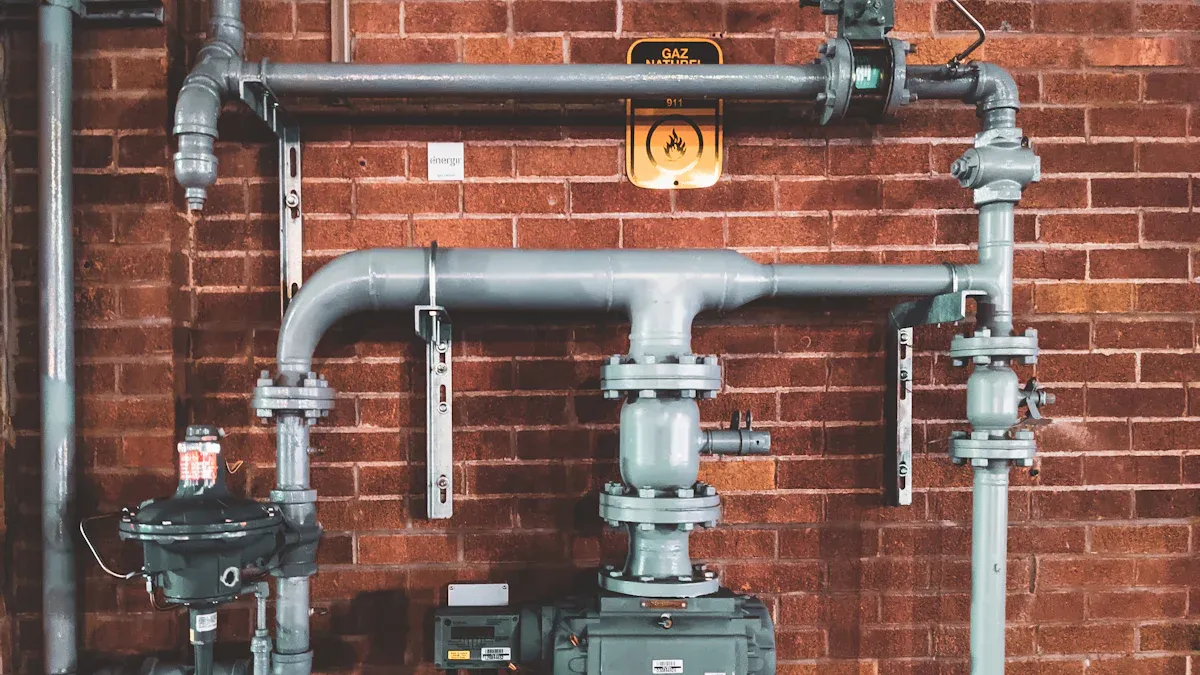
A flanged knife gate valve connects with flange ends bolted right onto matching pipe flanges. This makes a strong, clear joint. This section looks at knife gate valve types by connection. Among knife gate valve connection types, the flanged connection gives a clear interface. Flange standards like ASME, DIN, and EN set face dimensions, bolt patterns, and pressure ratings.
Flange vs. Lug vs. Wafer Connections
A wafer knife gate valve sits between two pipe flanges. It installs in a small space and comes out easily without moving the pipeline. But a wafer body by itself does not mean it seals correctly. Engineers must check pressure direction, seat design, and actuator access. Picking a wafer just because it is small can lead to maintenance or sealing problems.
A lug knife gate valve uses threaded inserts or lugs on the body. Bolts go through the pipe flanges into these lugs. This design gives stronger bolting support and makes maintenance separation easier. Still, not every lug design works for dead-end service. Both knife gate valves need a careful review of bolting and sealing direction.
A flanged-style knife gate valve has full flange ends. It gives a stronger connection for demanding layouts. Projects that need a strong interface often pick this type. Yet a flanged type does not automatically meet every service condition. Seat material and actuator limits must match the application.
These knife gate valve types differ in mounting, but connection does not define full capability. In the broader knife gate valve classifications, connection is only one basis.
ASME, DIN, and EN Flange Standards
These flanged types follow recognized standards. North American plants usually choose ASME flanges. European plants usually choose DIN or EN flanges. Mixing standards can cause misalignment and leakage.
Rectangular and square knife gate valves also exist with customized drilling patterns and dimensions. Proper flange alignment and fastener tightening are critical. Workers should draw flanges together evenly and tighten fasteners in a cross pattern. Flange standard selection alone will not protect the valve if installation is careless.
Knife Gate Valve Types by Flow Direction
Flow direction puts knife gate valve types into two groups. A unidirectional knife gate valve seals against pressure from just one side. A bidirectional knife gate valve seals against pressure from either side. This difference between unidirectional and bidirectional knife gate valves changes installation, cost, and how long they last.
Difference Between Unidirectional and Bidirectional Knife Gate Valves
A unidirectional knife gate valve lets flow move in only one direction. An arrow on the body shows the pressure side. This arrow must point toward the upstream flow when you install it. Pressure then pushes the gate against the seat to shut off tightly. These unidirectional knife gate valves cost less and use fewer parts than bidirectional models. They stay popular for strong, low-pressure-drop isolation. But many unidirectional models may leak a little when flow reverses.
A bidirectional knife gate valve lets flow move in both directions. Its bidirectional sealing structure lets the gate face either direction of medium flow. The body has no flow arrow. A one-piece cast body can hold a steel-reinforced elastomer seat that is kept in place by mechanical and geometric means. This design gives bidirectional zero-leakage shutoff. Because more force acts on the stem, the stem diameter is usually larger than that of unidirectional sealing valves.
| Aspect | Unidirectional | Bidirectional |
|---|---|---|
| Seat sealing design | Seals in one direction only | Seals in both directions |
| Allowable flow direction | One direction; arrow marks pressure side | Either direction; no arrow needed |
Installation Orientation and When to Choose Each
Installation orientation directly affects sealing performance and service life. A unidirectional valve installed backward cannot seal the right way. The gate loses seat contact, and leakage follows. Workers must make sure the arrow points upstream before bolting the valve into the line.
A bidirectional valve works well for systems with back pressure or reversing flow. It also fits lines where workers cannot easily check flow direction. These knife gate valves handle either orientation without losing shutoff. Engineers should still review seat material and pressure class for the application. Picking the right one among these knife gate valve types protects the whole system.
Actuation Types for Flanged Knife Gate Valves
Manual and Gear-Operated Valves
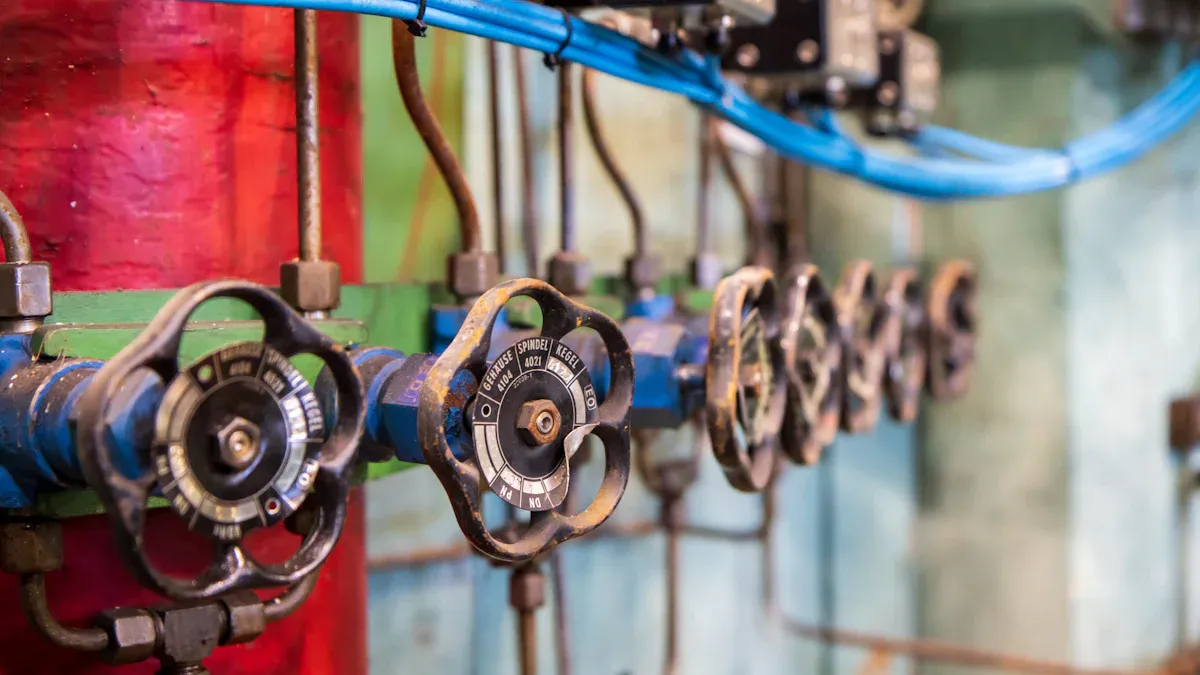
Manual actuation uses a handwheel or lever. This is the most basic way to operate a knife gate valve. Workers turn the handwheel to raise or lower the gate. Manual operation works well for infrequent use. It costs little and has a simple design. The system needs no electricity or compressed air. This makes manual valves dependable in remote areas.
Bevel gear operators serve larger valves. A handwheel turns a gearbox instead of the stem directly. This cuts down the effort needed to move the gate. Gear-operated knife gate valves fit high-pressure lines and bigger sizes. Workers still control the valve by hand. The gear ratio multiplies their force. This design costs more than a simple handwheel. It also makes the assembly taller. However, it stops operator fatigue during regular use.
Pneumatic, Electric, and Hydraulic Actuators
Pneumatic actuators use compressed air to move the gate. They give fast open-close cycles. This makes them popular for automated systems. Pneumatic actuation fits slurry and wastewater lines. Quick response matters in these services. A solenoid valve directs the air flow. This allows remote operation from a control room.
Electric actuators use a motor to drive the gate. They give precise control and steady torque. Electric actuation fits applications needing gradual opening or closing. These knife gate valves can link with PLC systems for automated sequences. Electric actuators cost more than pneumatic types. They run cleaner. They do not need an air compressor system.
Hydraulic actuators use fluid pressure for very high thrust. They power heavy-duty knife gate valves through thick slurries and high-pressure lines. Hydraulic systems give smooth, powerful motion. They work well in heavy industrial environments. Other actuators often fail in these settings. However, hydraulic kits need more supporting equipment, such as pumps and reservoirs.
Each actuation type has trade-offs in cost, speed, and automation needs. Manual valves serve simple isolation tasks. Pneumatic and electric types support remote control. Hydraulic types handle extreme forces. TANGGONG VALVE offers a broad portfolio of industrial valves and actuator-ready designs. These designs let customers match the knife gate valve types to their existing control infrastructure.
Difference Between Resilient Seated and Metal Seated Knife Gate Valves
The difference between resilient seated and metal seated knife gate valves comes down to the seat and sealing design. Resilient seats use elastomers or sleeves. They give tight shutoff at lower temperatures. Metal seats handle high heat and abrasion. Each seat and sealing design fits a different job.
Resilient Seats and Sleeve/Soft Seal Designs
A resilient seat uses a soft elastomer or sleeve. The gate presses into the rubber and forms a bubble-tight seal. This seat and sealing design works well with suspended solids. It also minimizes leakage in low-pressure lines. Material choice sets the temperature limit.
| Elastomer | Temperature Limit | Chemical Resistance |
|---|---|---|
| NBR | 180°F (83°C) | Petroleum oils, gasoline, mineral oils |
| EPDM | 250°F (121°C) | Oxygen, ozone, water |
| FKM | 400°F (204°C) | Oils, fuels, most mineral acids |
| PTFE | 450°F to 500°F (232°C to 260°C) | Most non-abrasive fluids |
Urethane suits dry solids and abrasive slurries. It resists wear and tearing. These knife gate valves serve wastewater and slurry lines well.
Metal-Seated Valves for High-Temperature and Abrasive Service
Metal-seated knife gate valves use metal-to-metal sealing surfaces. They are robust but generally less bubble-tight than elastomer seats. Their strength lies in extreme service. Some industrial-grade valves handle temperatures above 1000°F (538°C). Hardened seats and gates resist sand and mineral tailings. Mining operations favor these types for abrasive slurries.
TANGGONG VALVE applies strict quality control and third-party testing to support reliable sealing. Buyers should match seat material to media and temperature before ordering. Both knife gate valve types have a place. The right choice depends on the application.
Different Types of Knife Gate Valves by Body Design
The body and stem design affects how workers install, maintain, and protect the valve. These details are just as important as seat material or actuation. Buyers who compare knife gate valve body designs often find the right fit for their space and service needs.
Rising Stem vs. Non-Rising Stem
A rising stem valve lifts the stem as the gate opens. The stem rises above the handwheel or actuator. Workers can see the gate position at a glance. This design shows clearly whether the valve is open or closed. But it needs extra room above the valve. Low ceilings or overhead pipes may make it hard to install.
A non-rising stem valve keeps the stem still. The gate moves along the stem threads inside the body. This design saves vertical space. It also shields the stem from dirt, weather, and damage. Workers need an indicator to see the gate position. Many non-rising models have a position marker on the actuator or handwheel.
| Feature | Rising Stem | Non-Rising Stem |
|---|---|---|
| Vertical clearance | High | Low |
| Stem protection | Exposed | Enclosed |
| Position visibility | Direct | Indicator needed |
Split vs. Integral and Bonneted vs. Bonnetless
A split body design comes in two or more parts. Workers can open the valve to inspect it or replace the seat without taking the whole valve out of the pipeline. This cuts downtime in slurry and wastewater service. An integral body is one solid piece. It has fewer leak paths and a stronger structure. These flanged designs work best in high-pressure lines where body strength matters most.
A bonneted valve has a cover that encloses the stem and gate mechanism. The bonnet protects internal parts from the environment. It also lets workers adjust packing for a better seal. A bonnetless valve leaves the gate and stem exposed. This open design works well where solids could clog a bonnet cavity. TANGGONG VALVE makes a broad range of valves, including gate valves for on/off isolation. Its portfolio includes many knife gate valve types for different industrial needs.
Knife Gate Valve Types by Service Severity
Service severity groups knife gate valve types by how much wear the valve must handle. Some lines carry clean fluids. Others move thick solids, fibers, or corrosive chemicals. The knife gate valve design must fit the worst conditions in the line.
Conventional, Through Conduit, and Push-Through Designs
A conventional knife gate valve has a standard body cavity. The gate slides down into this cavity to stop flow. This design works well for light slurries and general isolation. Solids can build up in the cavity over time. Workers must flush the valve during maintenance.
A through conduit knife gate valve has a full-bore port with no cavity. The gate pulls back completely out of the flow path. Nothing traps solids inside the body. This makes through conduit types perfect for mining slurry pipelines and thick fibrous media. The full port also lowers pressure drop across the valve.
A push-through design lets the gate push solids out of the seat area as it closes. The gate reaches past the seat into a recess. This action clears debris from the sealing surface. Push-through knife gate valves handle heavy solids and sticky materials. They work well in wastewater and pulp lines.
| Design | Best For | Key Feature |
|---|---|---|
| Conventional | Light slurries, general isolation | Simple body cavity |
| Through conduit | Mining slurry, fibers | Full-bore, no cavity |
| Push-through | Heavy solids, sticky media | Gate clears debris |
Lined, V-Port, and High-Pressure Valves
A lined flanged knife gate valve has a protective liner inside the body. Materials like rubber or PTFE shield the metal from corrosive fluids. These knife gate valves serve chemical plants and acid lines. The liner also resists abrasion from slurry, viscous fluids and abrasive media.
A V-port knife gate valve has a V-shaped gate opening. This shape allows partial opening for throttling flow. Workers can control flow rate instead of just opening or closing. V-port types fit applications needing flow regulation.
A high-pressure flanged knife gate valve uses a heavier body and stronger stem. These types handle elevated pressure classes. They serve power plants and high-pressure process lines. Among all knife gate valve classifications, service severity often decides the final choice.
Application and Service Conditions
Media Type: Slurry, Powder, Wastewater, and Corrosive Fluids
What the media is like decides which knife gate valve types you pick. Engineers match the valve type to how abrasive the media is, how corrosive it is, and how many solids it has. A metal seat works for high pressure, high heat, corrosive media, and media with solid bits. A resilient seat fits clean media at lower heat and pressure. For abrasive media, a rubber-lined resilient seated flanged knife gate valve does a good job. These knife gate valves handle slurry, thick fluids, and abrasive media in tough plants.
Wastewater from cities with rags and fibers needs a sharpened tapered gate. This gate works like a cutting blade and slices through fibrous stuff. It breaks up solid clumps and stops clogging. A 304 or 316 stainless steel body fights rust and chemical damage. An EPDM or PTFE primary seal fits around surface bumps and keeps a tight shutoff. For mining slurry pipelines with hard mineral bits, a heavy-duty body and a Stellite 6 hard seal last longer. These knife gate valves serve slurry and abrasive jobs across many industries.
Pressure, Temperature, and Cycling Requirements
Pressure rating, temperature range, and cycle frequency make the choice smaller. A unidirectional knife gate valve seals against pressure from one side only. A bidirectional knife gate valve seals from either side. High cycle rates need seats that last and strong stems. A unidirectional knife gate valve costs less and fits simple isolation. Bidirectional types suit reversing flow or back pressure. Workers should look at all types before ordering.
Temperature limits also matter. Resilient seats cannot handle high-heat service. Metal seats stand up to heat and abrasion. Frequent cycling wears soft seats faster. Hardened seats make service life longer in these cases. Buyers should check pressure class, temperature, and cycle count with the supplier. This step protects the valve and the pipeline.
Step-by-Step Selection Guide for TANGGONG VALVE Products
Picking the right valve takes a clear plan. Buyers who follow a set process avoid pricey mistakes. This section walks through two main steps for knife gate valve selection.
Define Application Parameters
The first step gathers all operating data before you look at any product. Engineers begin with line size, measured in DN or NPS. This sets the early valve size. Next, they write down flow rate at low, normal, and high conditions. Flow speed and effective port help check if the flow area and wear risk are okay.
Pressure counts just as much. Teams note both working pressure and design pressure. They also work out differential pressure, which is upstream pressure minus downstream pressure. This number drives closing force and actuator sizing. For a standard flanged knife gate valve under MSS SP-81, the top cold working pressure at room temperature is 150 PSI (10.3 bar) for sizes 2″–24″ (DN50–DN600) and 100 PSI (6.9 bar) for 30″–36″ (DN750–DN900). A slurry pipeline running above these limits needs a special high-pressure design or a different valve type.
Media features finish the picture. Teams find out if the medium is water, wastewater, sludge, or slurry. They record solids concentration, particle size, and abrasiveness. Temperature range affects seat, body, gate, and packing materials. Seat material choices include EPDM, PTFE, NBR, FKM, and metal. Last, the operation method — manual, gear, pneumatic, electric, or hydraulic — sets valve setup and actuator needs.
Match Valve Type and Confirm Specifications
Once parameters are set, the next step matches them to certain knife gate valve types. A unidirectional knife gate valve fits simple isolation with one flow direction. A bidirectional knife gate valve suits reversing flow or back pressure. The seat and sealing design must match the media. Resilient seats work for lower temperatures, while metal seats handle heat and abrasion.
After matching, buyers confirm specs against known standards. They check valve construction against API 600 or ASME B16.34. Pressure-temperature ratings must be derated by material group. Face-to-face dimensions should fit the piping spool per ASME B16.10. End connection and facing follow ASME B16.5 or B16.47. Gaskets must match flange bore and class per ASME B16.20. Pressure testing includes shell and seat leakage tests under API 598 and MSS SP-61.
TANGGONG VALVE holds ISO9001:2015, CE, TUV, SGS, API 6D, and API 607 certifications. The company serves clients in over 35 countries. Its gate valves series includes knife gate valves with flanged end connections in RF, RTJ, and FF styles. Buyers who follow this process learn how to choose the right knife gate valve type for their application. Proper valve type selection protects both the valve and the pipeline.
RFQ Checklist and Common Mistakes
What to Include in Your RFQ
A complete RFQ gives the supplier all the details needed to quote the right flanged knife gate valve. Buyers should list size, flange standard, pressure rating, media type, temperature range, actuation method, seat type, and flow direction. These details stop order mistakes and keep the project on track.
The table below shows which RFQ elements matter most. A controlled drawing and revision sets the approved manufacturing baseline. Critical interfaces and tolerances protect fit-up and inspection choices. Material and traceability link the customer specification to certification evidence. Inspection and document packages line up acceptance evidence before production begins. Quantity and delivery context help with tooling and capacity planning.
| RFQ element | Priority | Why it matters |
|---|---|---|
| Controlled drawing and revision | 25% | Sets the approved manufacturing baseline. |
| Critical interfaces and tolerances | 25% | Protects fit-up, machining, and inspection choices. |
| Material and traceability | 20% | Links customer specification to melt and certification evidence. |
| Inspection and document package | 20% | Lines up acceptance evidence before production begins. |
| Quantity and delivery context | 10% | Helps with tooling, capacity, and packaging planning. |
Buyers should also ask for material certificates, dimensional reports, NDT records, and pressure-test records. An EN 10204 3.1 record backs up requested inspection documentation. These steps confirm that the flanged knife gate valve meets the order requirements.

Common Selection Mistakes to Avoid
Poor knife gate valve selection often comes from a few repeated errors. Ignoring flow direction is one of the most common. A unidirectional valve installed backward cannot seal the right way. The medium hits the gate from the wrong side and damages the seat and sealing design. Workers should follow the flow arrow on the body and mark arrows on the pipeline.
Undersizing actuators causes another frequent problem. A pneumatic or electric actuator without enough driving force cannot cut through thick media. The valve may jam or run in an unstable way. Buyers should match actuator torque to the media and save a safety margin for viscosity or pressure changes.
Mismatching flange standards creates serious installation issues. Non-parallel flanges or offset pipe centers put lasting stress on the valve body. Workers who force misaligned flanges together cause side loading on the stem. This leads to binding, higher operating torque, and possible stem fracture. Correct practice means aligning flanges perfectly and fixing piping before bolting the valve. These steps support reliable sealing and long service life for all knife gate valve types.
Flanged knife gate valves are grouped in six ways: connection, flow direction, actuation, seat, body design, and service severity. No single valve type works for every job. The selection process stays simple: define application parameters, match the valve type, and confirm specifications against recognized standards.
Buyers should use the RFQ checklist and avoid common mistakes like ignoring flow direction or mismatching flange standards. Always check the final choice with a supplier or engineer before purchase. TANGGONG VALVE supports global customers with reliable knife gate valves and expert guidance for every project.
FAQ
How do I know if I need a unidirectional or bidirectional knife gate valve?
Look at the flow direction in the pipeline. A unidirectional valve stops pressure from one side only. A bidirectional valve stops pressure from either side. If your system has back pressure or flow that reverses, you need a bidirectional design. If flow only goes one way and you just need simple isolation, a unidirectional valve works fine.
What seat material works best for high-temperature service?
Metal seats handle high heat and wear from abrasion. Resilient seats use soft materials like EPDM, PTFE, NBR, or FKM. Each material can handle a different temperature. PTFE works up to 450°F to 500°F (232°C to 260°C). Metal seats work at temperatures above 1000°F (538°C). You should match the seat material to the real temperature your valve will face.
Can I use a flanged knife gate valve for throttling?
A standard knife gate valve only works for on/off isolation. A V-port knife gate valve lets you open it partway to control flow. This design lets workers adjust the flow rate instead of just opening or closing it. If you need throttling, ask for a V-port type instead of a standard gate design.
What flange standards should I specify in my RFQ?
Plants in North America usually use ASME flanges. Plants in Europe usually pick DIN or EN flanges. Mixing standards leads to misalignment and leaks. You should check your plant’s current flange standard before you order. Your RFQ should list the exact standard, pressure class, and facing type.
How do I size an actuator for a flanged knife gate valve?
Actuator sizing depends on differential pressure, how thick the media is, and valve size. An actuator that is too small cannot push through thick media. The valve may jam or run in an unstable way. You should match actuator torque to the job and add a safety margin for pressure or viscosity changes. Ask the supplier for exact sizing calculations.