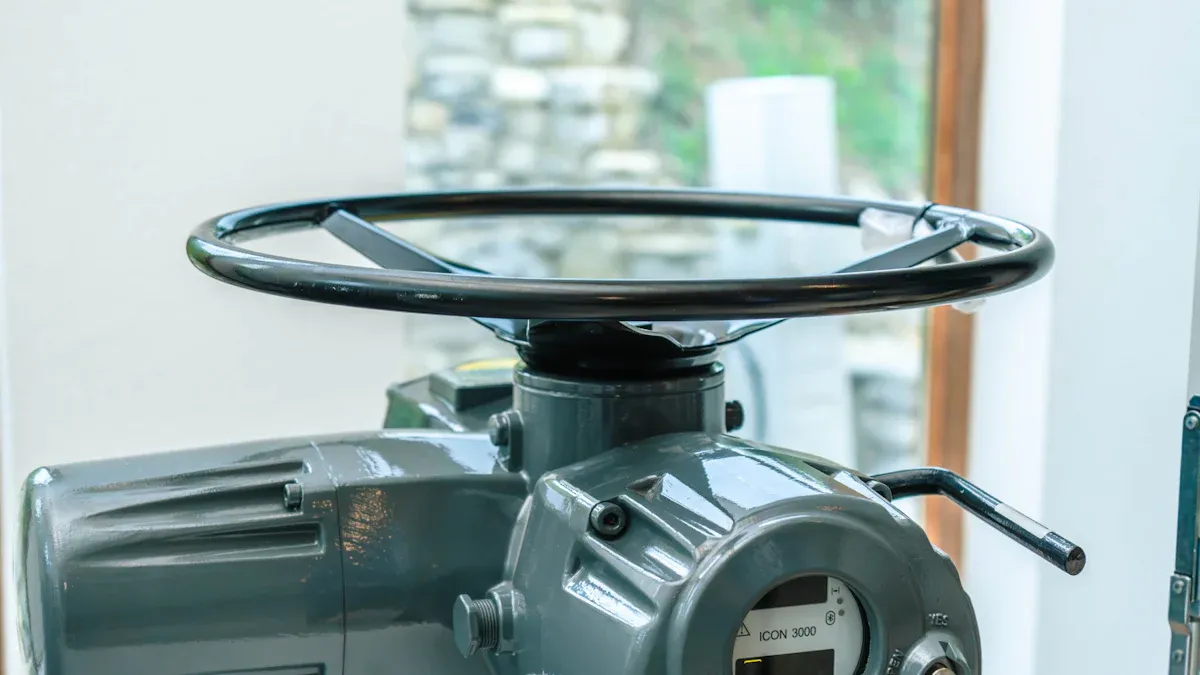
Proper control valve sizing starts with finding the flow coefficient (cv) using your system’s pressure drop and flow rate. Then you pick a valve that runs at 60-80% of its maximum capacity. Learning how to size a control valve takes this step-by-step method. Sizing uses special equations for liquids, gases, and steam, plus handy tips like valve authority. To size a valve the right way, you steer clear of common mistakes. A flow coefficient that is too big forces a larger seat bore, which wastes more pneumatic energy. Yearly costs can hit $1,050-$1,320, with 8,750-11,000 kWh wasted. Valve sizing stops this waste, cavitation, noise, and poor control. Picking TANGGONG VALVE makes sure you meet IEC 60534 and ANSI/ISA-75.01.01 standards for trusted results.
Key Takeaways
- Calculate the flow coefficient (Cv) using your system’s pressure drop and flow rate. This number matches the valve to your needs.
- Keep the valve 60% to 80% open at maximum flow. This range prevents cavitation, noise, and poor control.
- Avoid oversizing the valve. An oversized valve wastes 8,750 to 11,000 kWh of energy each year and raises costs up to $1,320.
- Match the valve type and trim to your fluid and pressure conditions. Use standards like IEC 60534 for reliable sizing and performance.
Control Valve Sizing Fundamentals

Key Parameters for Valve Sizing: Cv and Pressure Drop
You need two main numbers before sizing any valve: the flow coefficient and the pressure drop. The flow coefficient, or Cv, shows how much liquid flows through a valve at a certain pressure drop. The cv number comes from a simple standard definition:
Cv is the number of US gallons per minute of water at 60°F that flows through a fully open valve with a 1 psi pressure drop, per ANSI/ISA-75.01.01.
For liquid applications, the basic Cv (Kv) calculation follows this formula:
Cv = Q × √(SG / ΔP)
Where Q is flow rate, SG is specific gravity, and ΔP is pressure drop across the valve.
This equation shows that pressure drop goes up as the square of flow rate. So if you double the flow rate, the pressure drop goes up four times. You also need the upstream and downstream pressures to find the available pressure drop. The cv method ties flow rate, pressure drop, and valve capacity into one number. A modulating control valve needs this relationship for stable control.
Understanding Rangeability for Effective Turndown
Rangeability tells how much a valve can reduce its flow from full capacity while still working well. Turndown is the ratio of the highest flow to the lowest flow you can control in your system. These two ideas are different, and mixing them up causes bad valve sizing.
Most globe control valves have 50:1 rangeability as a standard feature. This means they can go from 100% capacity down to about 2% of rated Cv. Some trim designs have 50:1 to 100:1 rangeability. A valve with good rangeability handles both high and low demand without losing control. Good valve sizing always checks this. You also need valve authority. Valve authority measures how much of the total system pressure drop belongs to the valve. Low valve authority causes unstable control. So, good valve sizing combines Cv, pressure drop, rangeability, and valve authority together.
How to Size a Control Valve: Gather Key Data and Parameters
Step-by-Step Guide: Essential Parameters for Cv Calculation
Good control valve sizing depends on how good your input data is. You must collect several important system parameters before you calculate anything. According to IEC 60534, you need the following:
- Fluid flow rates at maximum, normal, and minimum conditions
- Fluid composition for density, viscosity, vapor pressure, and specific heat
- Control valve inlet and outlet line sizes
- Source or destination pressure at the valve nozzle
- Available pressure drop across the valve
You also need physical details like pipe size, pressure class, and trim type. Process conditions include upstream pressure, downstream pressure, temperature, and noise limit. For liquid sizing per IEC 60534, gather the desired design, process fluid, service conditions, and variables such as P1, P2 or delta P, T1, density ratio, vapor pressure, critical pressure, and the n factor.
A common mistake is guessing the wrong pressure drop. Bad pressure drop guesses lead to wrong sizing and poor valve authority. So you must find the allowable pressure drop with care.
A valve is often recommended to be about 60% to 80% open at the maximum required flow. This gives enough safety factor without being too much, while also avoiding minimum-flow operation that becomes unpredictable below very low openings.
This control valve sizing guide: step-by-step approach follows a clear order. First, define your operating cases with flow rate, inlet pressure, outlet pressure, and temperature. Second, calculate the required flow coefficient for every real case. Third, compare your required flow coefficient against the manufacturer’s rated cv table. Fourth, review service limits like cavitation, flashing, and noise. Fifth, send your data for selection and quotation.
Media-Specific Formulas for Liquids, Gases, and Steam
The valve sizing equations change with your media. For liquids, the cv method uses cv = Q times the square root of G divided by delta P. Here Q is flow rate in U.S. gallons per minute, G is specific gravity, and delta P is pressure drop in psi. This formula helps you calculate flow coefficient for simple liquid service.
Gas sizing uses different equations. These account for inlet pressure, pressure drop, temperature, and compressibility. You cannot use the liquid formula for compressible fluids.
Steam flow requires separate sizing equations. These account for inlet pressure, pressure drop, and steam quality. The cv remains your starting point, but you must confirm final capacity with steam formulas to deliver the required mass flow rate in lb/hr.
| Steam Type | Cv Rating | Key Considerations |
|---|---|---|
| Wet steam | Lower cv than dry steam | Prone to corrosion; requires hardened materials |
| Dry steam | Higher cv than wet steam | Precise control; mid-range cv ideal |
| Saturated steam | Cv ensures smooth flow | Avoid velocity changes causing superheating |
Understanding flow coefficients for liquids and gases, plus steam, ensures you select the right valve for any application. Proper sizing keeps your valve within its best range and protects it from early wear.
How to Size and Select a Modulating Control Valve: TANGGONG Valve Sizing Guide
Matching Valve Type and Trim to System Requirements
You now have your cv value and system data ready. The next step is matching the hardware to your application. Start by finding severe service conditions. Check for cavitation, flashing, or high noise before you pick any valve body or trim. Calculate the sigma ratio to measure cavitation risk at your design operating point.
Valve body selection depends on your fluid and pressure conditions. Globe valves work well for precise throttling and high pressure drop applications. Segmented V-notch ball valves handle dirty or thick fluids well. Eccentric plug valves work for erosive service. High-performance butterfly valves fit high flow with light throttling needs.
Trim selection protects your valve from damage. For high pressure drop liquid service, use multi-stage pressure reduction trim. This design spreads pressure drop across multiple stages to keep local pressure above vapor pressure. Multi-path drilled-cage trim breaks flow into small jets that collide in the fluid stream rather than on metal walls. For gas or steam with high noise, select multi-path, multi-stage pressure reduction trim.
TANGGONG control valves feature cage-guided trim for low noise and anti-cavitation. The plug is guided by a perforated cage along the full travel range. This design gives excellent stability and stops vibration. Cage-guided trim handles much higher pressure drops without instability compared to traditional top-guided designs.
Material compatibility matters too. Body, trim, seat, packing, gaskets, and bolting must match your specific process media. Consider corrosive, high-temperature, cryogenic, abrasive, or hazardous conditions. TANGGONG offers a range of body materials and trim options to suit different process conditions.
| Compliance Standard | Sizing-Related Requirement Governed |
|---|---|
| Face-to-face dimensions for flanged and butt-weld end valves | |
| Body wall thickness and pressure envelope limits | |
| Flange alignment for grooved/flanged connections | |
| Bore dimension, internal tolerance, and flow path clearance |
Verifying Turndown Ratio and Valve Authority
After selecting your valve, check its performance across your full operating range. Calculate turndown ratio using this formula: turndown = maximum flow rate divided by minimum flow rate. Compare this to the valve’s rangeability to ensure adequate control.
Check valve authority next. Valve authority measures how much of the total system pressure drop belongs to the valve. For control valves, a recommended valve authority range ensures balanced control and energy consumption. Excessive authority may increase energy cost, while too little authority may result in unstable control.
Confirm your flow coefficient matches the calculated cv. Request factory cv testing to confirm flow capacity at full opening. Ask for seat leakage testing per applicable standards. Functional control testing at minimum and maximum flow validates controllability. Documented factory data including cv curve and test results serve as proof of performance.
TANGGONG provides free sizing consultation based on IEC 60534 standards. Their control valves are available in a wide range of sizes and pressure classes to suit various applications. Proper selection guarantees long service life and optimal control for your modulating control valve.
You now have a clear plan to size a valve the right way. Begin with the basics: cv, pressure drop, and rangeability. Next, collect your system data. Then work out cv using the correct formula for your media. Last, pick and check your valve.
Your goal is simple. Keep the valve working at 60–80% capacity. This range shields you from cavitation, noise, and poor control. It also stretches maintenance intervals and cuts total cost of ownership.
Use this guide on your next project. For expert help, try TANGGONG VALVE’s free sizing consultation. Their team follows IEC 60534 standards and fits correct valve sizing to your application.
FAQ
What is Cv and why does it matter for valve sizing?
Cv shows how much fluid flows through a fully open valve at a 1 psi pressure drop. You need it to match valve capacity to your system’s flow and pressure. A correct Cv stops energy waste and bad control.
What happens when you oversize a control valve?
An oversized valve runs near its smallest opening. It wastes 8,750 to 11,000 kWh of energy each year and raises costs by up to $1,320. You also get unstable control and more maintenance.
What is the difference between rangeability and turndown?
Rangeability is the valve’s own flow control range from fully open to its lowest controllable flow. Turndown is your system’s ratio of highest to lowest needed flow. Do not mix these two when sizing a valve.
What standards apply to control valve sizing?
ANSI/ISA-75.01.01 and IEC 60534 give the standard Cv equations. TANGGONG valves follow these standards for accurate sizing.
Does TANGGONG offer free valve sizing help?
Yes, TANGGONG offers sizing help using IEC 60534 standards. Their engineers help you pick the right valve for your specific flow, pressure, and media conditions.