A low temperature control valve controls flow in very cold conditions. It uses an actuator to move the valve trim based on a control signal. Cold changes everything: materials shrink, ice forms, and standard valves can fail. The global cryogenic control valve market shows this need, growing from $4.1 billion in 2026 to $9.7 billion by 2033 at a 13.6% CAGR. Good design handles very cold temperatures and prevents breakdowns. Special materials and construction are needed for reliable temperature control, because without these changes a valve may leak or seize. Engineers must choose valves rated for the exact temperature range.
Key Takeaways
- Low temperature control valves use special materials like LCB, LCC, CF8, and CF8M to stay strong in very cold conditions.
- An extended bonnet keeps the packing area warm and stops ice from forming, which prevents leaks and jams.
- These valves manage flow, pressure, and level in cold processes such as LNG and cryogenic storage.
- TANGGONG gives free sizing help and certifications to make sure the valve works well in cold service.
- Choosing the correct valve for cold conditions stops brittle fracture, leaks, and safety risks.
What Is a Low Temperature Control Valve?
A Simple Definition
A low temperature control valve is a device that controls how liquid or gas flows in very cold conditions. It works a lot like a normal temperature control valve: an actuator gets a control signal and moves the valve trim to change how far it opens. The trim shapes the flow. The main difference is not in how it works, but in its materials and construction. Regular carbon steel can get brittle and crack when temperatures drop. Low-temperature carbon steel or stainless steel, such as austenitic grades 304 and 316, stays tough in the cold. Low temperature control valves are used in LNG liquefaction and cryogenic storage.
These units also use an extended bonnet. The bonnet is the part of the body that holds the packing, and “extended” means the neck is made extra long on purpose. This long neck keeps the cold process fluid away from the packing and the stem seals. It also creates a temperature transition zone that stops fluid from vaporizing and protects the internal seals. PTFE packing keeps its sealing properties from about -200°C to +260°C, so it works well in this zone. A cryogenic bonnet extension may have an internal gas space and a certain orientation to keep the stem-sealing area warmer than the body. These features show why the whole shape has to change.
Purpose and Everyday Role
The purpose of this unit is to keep cold processes steady and safe. It does this by controlling flow, pressure, and vessel level in systems where normal equipment would fail. In LNG liquefaction and cryogenic storage, these units control vessel levels, protect vessels from too much pressure, protect pumps from damage, control flow rates, and isolate equipment during shutdowns, start-ups, and emergencies. A plant may depend on many of them in a row, and each one responds to a signal from a controller. As a cryogenic tank empties, for example, the unit must open just enough to hold pressure. This keeps pumps from cavitating and vessels from getting too much pressure.
Because the service is so cold, engineers pick temperature control valves with extensions and sealing systems that match the process. Cryogenic bonnets use special designs to keep the packing area fairly warm. That small temperature difference stops icing and frost from building up on the stem. In high-pressure differential applications, some temperature control valves use low noise trims. The trim reduces cavitation and cuts down noise. Cavitation happens when pressure across the trim drops too fast. Cavitation is the forming and collapsing of vapor bubbles. The collapsing bubbles can damage metal over time. Low noise trims help reduce this effect. In these services, reliable operation means less downtime and safer work.
The difference between a standard temperature control valve and this cryogenic design is not just for looks. It is an engineering answer to the physical effects of cold on metals, polymers, and seals. For toxic or volatile fluids, a bellows-sealed bonnet can add an extra barrier against stem leakage, while regular packing stays as a second seal. Picking the right body material, bonnet extension, and packing makes reliable control possible in places where normal units seize, leak, or crack.
Temperature Control Valve Working Principle
Actuator, Signal, and Trim
The temperature control valve working principle depends on a closed loop. A temperature sensor (RTD or thermocouple) checks the process temperature and sends a live reading to a temperature controller. The controller compares the reading with the desired temperature setpoint. If the process temperature runs high, the controller opens the valve; if low, it closes the valve. The actuator responds to the controller’s signal; in automated systems, a PLC or controller drives an electric or pneumatic actuator with analog signals for continuous modulation.
The sequence below shows the loop:
- A temperature sensor in the hot region sends the measured value to the controller.
- The temperature controller compares that value with the target.
- If the process temperature goes above the setpoint, the controller tells the actuator to open.
- The open valve lets in cold fluid, mixing a cold and hot process fluid inside the body.
- When the mixed flow reaches the desired temperature, the controller holds the valve position.
Low noise trims are used in some high-pressure differential applications to reduce noise and cavitation. The temperature sensor must be placed at the correct tap so the loop gets accurate data.
Working of 3-Way Temperature Control Valve
The working of 3-way temperature control valve starts with two inlets and one outlet. A 3-way temperature control valve blends hot and cold fluid into one stream. This mode works well for mixing a cold and hot process fluid to reach a desired outlet temperature. The valve actuator moves one plug that adjusts both inlet openings, so the branch flows stay connected. A 3 way temperature control valve in mixing service combines two inlets. Port A and Port B serve as hot and cold inlets, while Port AB is the common outlet. The plug position sets the ratio of hot to cold flow.
In a 3 way temperature control valve that diverts, the common port becomes the inlet, and the plug sends fluid flow to one side outlet. Most 3 way temperature control valve bodies use a T-port or L-port bore. L-port connects the common port to one side at a time; T-port connects all three ports. In mixing service, the plug position sets the ratio of hot to cold water; at 5°F below the target it can close the cold port entirely, and at 5°F above the target it can close the hot port entirely.
A thermostatic valve uses a filled bulb that expands with rising temperature, generating stress or pressure in the actuator. The actuator converts this pressure change into valve stem movement, so the sensing element acts directly on it. In electric or pneumatic units, downstream temperature sensors feed live data back to the actuator. It moves the plug to fix drift. The resulting outlet temperature depends on inlet temperatures, branch-flow characteristics, and circuit resistance. These three-way control valves adjust continuously under analog control from a PLC or controller.
Once the mixed stream reaches the desired temperature, the 3 way temperature control valve settles into balance. Thermostatic control valves keep a steady process temperature as loads change. A plant can choose a 3-way temperature control valve. Understanding the working of 3-way temperature control valve in both modes makes selection easier. A complete temperature control valve working principle includes a temperature sensor, a controller, an actuator, and a trim.
Main Components of Temperature Control Valve
Trim, Body, and Bonnet Extensions
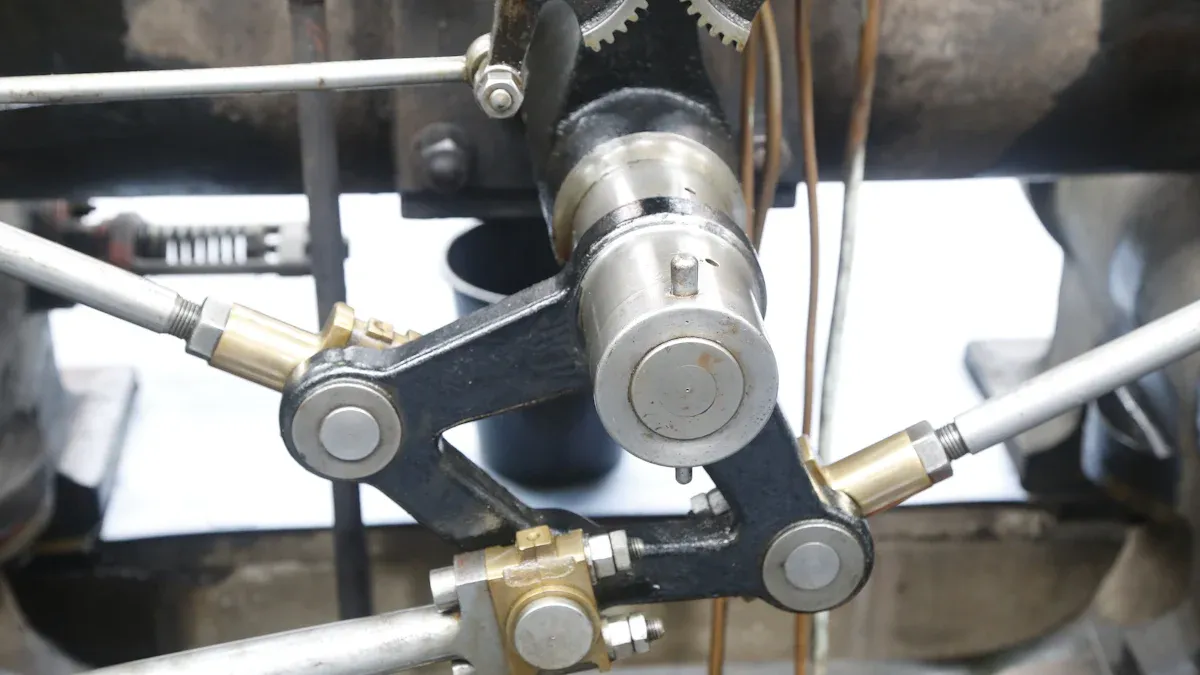
The main parts of temperature control valve designs are the trim, body, and bonnet extension. The trim shapes the fluid flow. The body holds the inside parts and connects to the pipeline. For cryogenic service, materials such as austenitic stainless steels (304, 316), nickel alloys such as Inconel, and specialty polymers are chosen. Low-temperature carbon steel or stainless steel is used for bodies to prevent brittle failure at low temperatures.
Low noise trims are used in some high-pressure differential applications to reduce noise and cavitation. The bonnet extension is a key feature in temperature control valves for cold service. It moves the packing chamber away from the cold zone. This keeps the packing away from the cold fluid and places the gland above insulation so it stays accessible. The extended bonnet keeps the stem-sealing area warmer than the body. Seals can harden and clearances can tighten in cold conditions, so this design helps prevent leakage and sticking. Ice can jam the stem and scratch the packing. A damaged packing causes serious leakage and safety incidents.
Sealing Materials for Cold Service
Sealing materials must stay flexible and tight at very low temperatures. Standard packing can harden in the cold, and seeping media can freeze between the packing and valve stem, causing ice jams and packing damage. PTFE retains its sealing properties from about -200°C to +260°C, making it a go-to material for low-temperature sealing applications. The table below lists its temperature range.
| Material | Packing Type | Minimum Temperature | Maximum Temperature |
|---|---|---|---|
| PTFE | Polymer sealing material | -200°C | +260°C |
Its minimum rating covers low-temperature service, and the extended bonnet works with this packing to keep the sealing zone warm. This combination protects the packing, extends its life, and prevents seal failure. Proper sealing also stops liquefied gas from vaporizing and causing insulation failure.
Why Cold Demands Special Design
Thermal Contraction and Brittleness
Metals get smaller when the temperature goes down. A normal valve body, stem, and trim shrink at different speeds. This uneven shrinking opens gaps at the seat and can jam the stem. Think of it like a metal lid on a glass jar that loosens under cold water because the metal shrinks faster. In a valve, that same effect causes leaks or a stuck plug.
Cold also makes some steels brittle. Carbon steel has a temperature where it changes from bendable to brittle. Below that point, the energy it can absorb from a hit drops sharply. The material does not just get weaker; it breaks in a different way and can crack with almost no warning. Carbon steels and some low-alloy steels are more susceptible to embrittlement; austenitic stainless steels (304, 316), nickel alloys such as Inconel, and specialty polymers are chosen for cryogenic service. Low-temperature toughness is critical to avoid brittle fracture and sealing failure.
Below the ductile-to-brittle transition, a material can fail by brittle fracture instead of bending, so cryogenic service avoids standard carbon steels and requires materials selected for low-temperature toughness.
Low-temperature carbon steel or stainless steel is used to prevent brittle failure of standard carbon steel at low temperatures. Austenitic stainless steels such as 304 and 316, nickel alloys such as Inconel, and specialty polymers are chosen for cryogenic service. The table below lists commonly selected materials.
| Material | Selection rationale |
|---|---|
| Low-temperature carbon steel | Prevents brittle failure at low temperatures |
| Austenitic stainless steels (304, 316) | Remain tough in cryogenic service |
| Nickel alloys (e.g., Inconel) | Chosen for cryogenic service |
| Specialty polymers | Chosen for cryogenic service |
These materials stay tough at low temperature. PTFE retains its sealing properties from about -200°C to +260°C, and extended bonnets reduce heat transfer and protect internal seals.
Icing and Frost Buildup
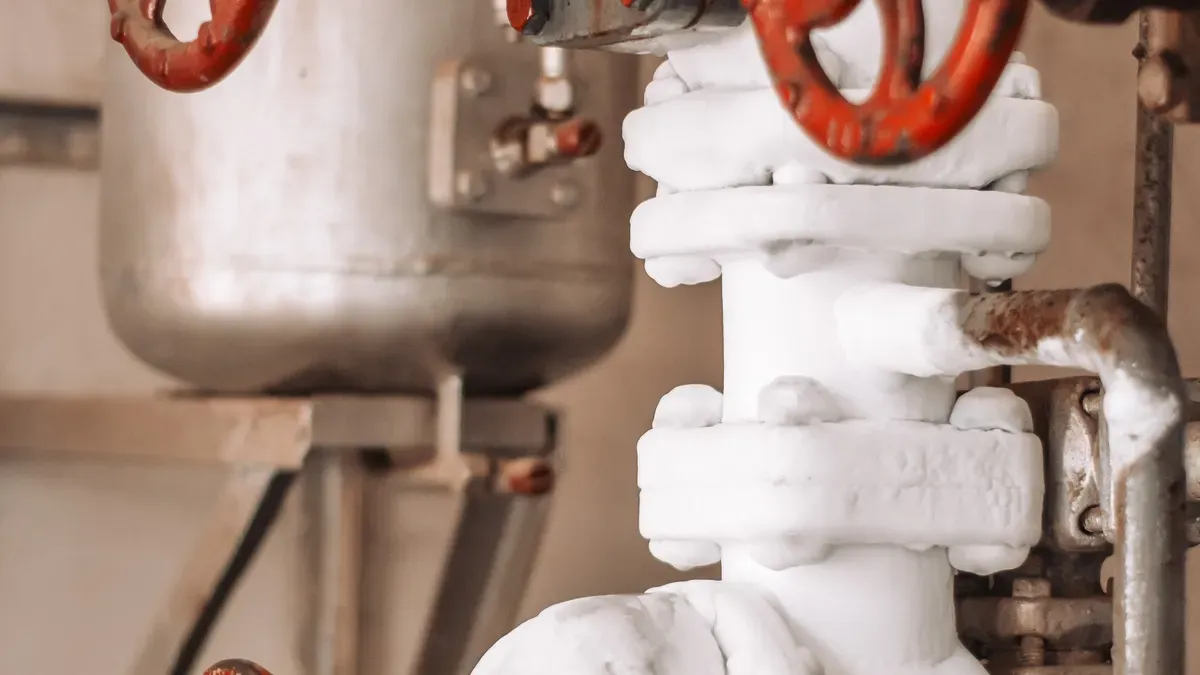
Cold conditions cause seals to harden and clearances to tighten, so ice and frost can affect the stem and packing. An extended bonnet prevents both problems. It creates a thermal barrier between cold internals and the actuator. This extra neck length keeps the packing area warmer than the body. A cryogenic bonnet extension moves the packing and actuator connection away from the cold fluid; its long neck, internal gas space, and orientation keep the stem-sealing area warmer than the body. This design helps prevent ice from jamming the stem and protects sealing performance.
Common Uses and TANGGONG Benefits
LNG, Cryogenic Storage, and Chilled Lines
Low temperature and cryogenic control valves help run LNG liquefaction and cryogenic storage. In these services, control and isolation valves regulate vessel levels, protect vessels from overpressure, protect pumps from damage, regulate flow rates, and isolate equipment during shutdowns, start-ups, and emergencies.
| Sector | Typical duties |
|---|---|
| LNG | Liquefaction, cryogenic storage |
| Cryogenic storage | Vessel level control, overpressure protection, pump protection, flow regulation, isolation |
A temperature sensor sends a live reading to a temperature controller. The controller checks that value against the target temperature. Then the actuator moves the trim to change fluid flow. This loop keeps the process temperature steady when loads change.
Safety, Reliability, and Efficiency
Cryogenic control valves protect vessels from overpressure and pumps from damage. They isolate equipment during shutdowns, start-ups, and emergencies. In high-pressure differential applications, some valves use low noise trims to reduce noise and cavitation. Valves with extended bonnets keep the packing and actuator connection away from the cold fluid, protecting sealing performance. Reliable operation means less downtime and safer work.
A low temperature control valve controls flow in very cold places. It uses an actuator, special trim, and materials made for cold. The trim shapes the flow, and the plug moves when it gets a control signal. Materials such as austenitic stainless steels 304 and 316, low-temperature carbon steel, and specialty polymers stay strong at low temperatures. Extended bonnets keep packing safe from ice. If the process runs cold, the valve must be made for that cold. Standard valves are not a safe swap. A matching low temperature control valve stops leaks, seizing, and brittle fracture. Knowing these basics makes choosing and fixing valves much easier.
FAQ
What makes a low temperature control valve different from a standard one?
A standard valve uses carbon steel that turns brittle in extreme cold. A low temperature valve uses low-temperature carbon steel or stainless steel, such as austenitic grades 304 and 316, that stays tough. It also has an extended bonnet. This long neck keeps the packing away from the cold zone and protects the stem seals.
How does a 3-way temperature control valve hold a setpoint?
A 3-way valve mixes hot and cold fluid into one stream. A sensor checks the mixed temperature and sends data to a controller. The controller moves the plug to adjust both inlets. This keeps the outlet temperature steady.
Why do cryogenic valves need extended bonnets?
An extended bonnet makes a thermal barrier between cold internals and the actuator. It keeps the packing area warmer than the body. This design protects sealing performance and helps prevent ice from jamming the stem. It also reduces heat transfer to the packing.
What materials work best for trim in cold service?
Austenitic stainless steels such as 304 and 316, nickel alloys such as Inconel, and specialty polymers are chosen for cryogenic service. Low noise trims are used in some high-pressure differential applications to reduce noise and cavitation.
Does TANGGONG provide sizing help for low temperature applications?
Yes. Engineers review the process conditions, including fluid properties, flow rates, pressures, and temperature ranges, so each valve fits its low-temperature duty. Proper selection keeps the valve matched to the exact service.