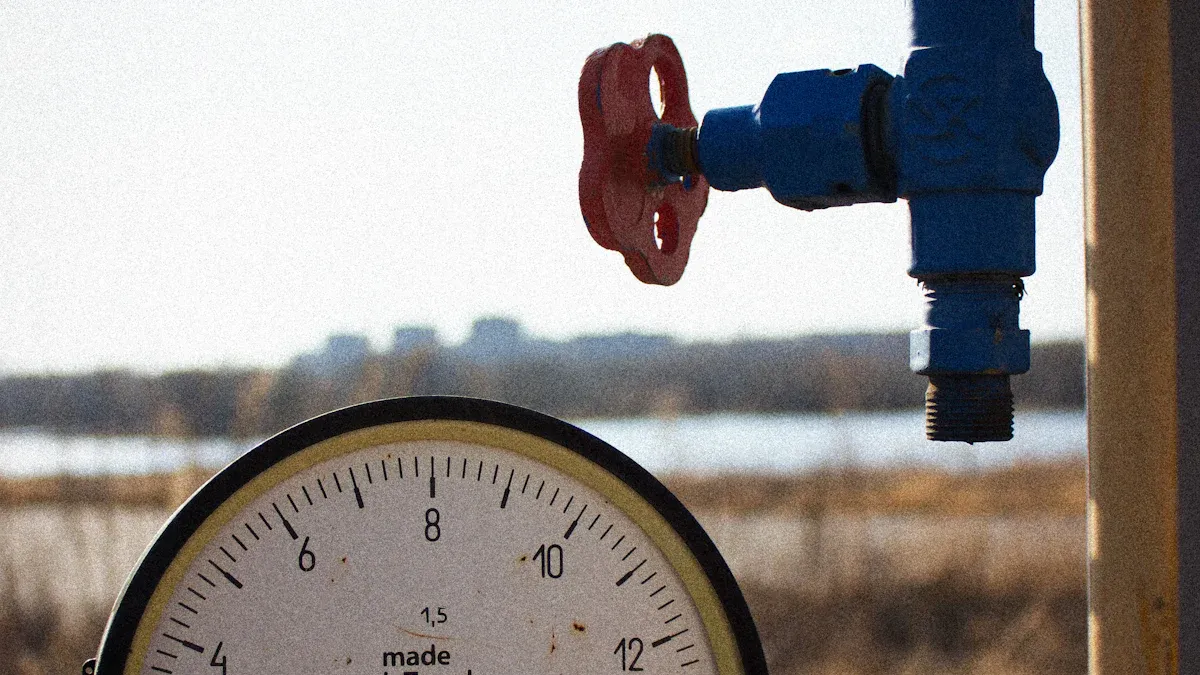
A high pressure control valve is a powered device that controls the flow and pressure of fluids in systems that work under very tough conditions. You will see these valves in industries where normal equipment is not strong enough. Their main job is to keep the movement and pressure of liquids and gases safe. They follow control signals and adjust on their own to keep process conditions steady. This article explains what these valves are, how they operate, and where you will use them. You will understand their role in modern industrial systems.
Key Takeaways
- A high pressure control valve changes flow and pressure in tough industrial systems.
- Control valves are not the same as shut-off valves. Control valves adjust the flow, but shut-off valves only open all the way or close all the way.
- The key parts are the valve body, actuator, positioner, and trim, each with its own job.
- These valves are used in oil and gas, power generation, and many other industries to keep processes safe.
- The right size and good care keep it safe, efficient, and working for a long time.
What Is a High Pressure Control Valve?
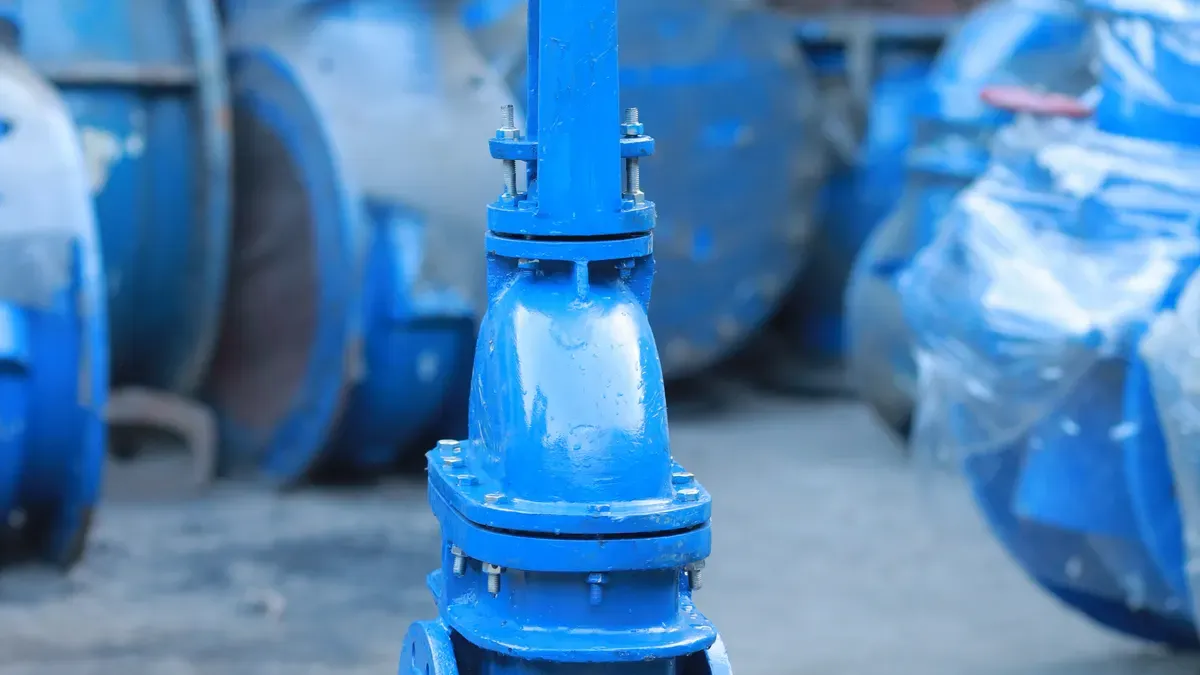
Defining High Pressure Control Valve
A high pressure control valve is a final control element that controls flow, pressure, or temperature in systems that work under extreme conditions. You will find these valves in processes where standard equipment cannot handle the demands. They react to a control signal and change their position without stopping. This lets them keep process conditions steady even when system pressure changes happen.
You might ask how a control valve is different from a shut-off valve. The difference matters for your application. A control valve adjusts flow without stopping. A shut-off valve only opens all the way or closes all the way. Using the wrong type causes vibration, trim erosion, and early failure.
| Aspect | Control Valve | Shut-Off Valve |
|---|---|---|
| Primary function | Modulates flow, pressure, or temperature | Fully opens or closes for isolation |
| Operation mode | Throttling with mid-stroke positioning | Discrete full-open or full-closed only |
| Typical applications | Process regulation | Isolation, emergency shutdown |
In high-pressure service, the process pressure helps the valve close. This raises seating force between the plug and seat. The result is stronger seat loading and tighter shutoff capability. You get better sealing performance because fluid pushes the closure element into the seat. This achieves more consistent shutoff under high differential pressure. These valves are preferred for hazardous fluids, steam, and corrosive chemicals.
Key Components of a Control Valve
Every control valve has several critical parts that work together. Understanding these components helps you pick the right valve for your needs.
| Component | Function |
|---|---|
| Valve body | Pressure-containing shell that houses the trim and provides the flow path |
| Actuator | Converts control signals into mechanical motion to move the plug |
| Positioner | Adjusts the actuator to achieve precise stem positioning |
| Valve trim | Internal parts that regulate flow, including plug, seat, stem, and cage |
The actuator type you choose depends on your application. Pneumatic diaphragm actuators fit hazardous areas. Pneumatic piston actuators handle high thrust requirements. Electric motor actuators work well in remote plants without air supply. Hydraulic actuators provide exceptional force for extreme pressure reduction.
The valve trim plays a vital role in performance. Cage-guided trim uses a cylindrical cage with precision ports to guide the plug. This design shapes flow characteristics, reduces noise, and prevents cavitation. You can select linear, equal percentage, or quick opening characteristics based on your process needs.
TANGGONG VALVE control valves are designed for precision and reliability. They comply with ANSI/FCI 70-2 and IEC 60534 standards. These standards define shutoff classifications and sizing calculations. The valves support multiple control signals, including 4–20 mA, HART, Modbus, and Profibus. This ensures compatibility with modern automated systems.
How a TANGGONG VALVE Control Valve Works
A TANGGONG VALVE control valve works inside a closed loop. A controller sends a 4–20 mA command to the positioner. The positioner checks it against the real stem position. If they differ, it changes air pressure in the actuator. The actuator moves the stem to change the flow area. The control valve then holds the correct opening.
The Role of the Actuator and Positioner
The positioner is a precise feedback device mounted on the actuator. It overcomes friction and high differential pressure. Without it, the control valve runs in an open loop. With it, the stem matches the command signal exactly. Smart positioners accept HART, Modbus, or Profibus.
Four options:
| Design | Best application | Key advantage |
|---|---|---|
| Pneumatic diaphragm | Hazardous areas | Intrinsically safe |
| Pneumatic piston | High-thrust duties | Fast strokes |
| Electric motor | Remote plants | No air supply |
| Hydraulic | Large pipelines | Massive force |
Pneumatic designs use plant air and fit explosion-risk zones. Electric units fit remote plants with no air supply. Hydraulic units give the strongest force and hold position without drifting. For steady modulating control, pneumatic units offer the best mix of speed, safety, and cost.
The Function of the Valve Trim
The valve trim actually throttles the flow. Cage-guided trim uses a round cage with precision ports. The cage guides the plug. You can choose linear, equal percentage, or quick opening. Equal percentage responds smoothly to wide demand shifts. Quick opening reacts fast for shutdown.
The trim stops cavitation and reduces noise. Under a large pressure drop, liquid can boil locally. Bubbles break when the fluid slows down, causing pitting. Anti-cavitation trim splits the total drop into smaller stages. This reduces bubble formation. For gas service, the cage breaks one stream into many small jets. The cage also controls the flow downstream.
TANGGONG control valves range from DN15 to DN600. Pressure classes run from Class 150 to Class 2500. Temperature range covers -196°C to +650°C. Body materials include WCB and CF8M. Trim materials include SS316 and Stellite 6. All units meet ANSI/FCI 70-2 and IEC 60534. The result is reliable control valves for extreme service.
Applications of Control Valves
Use in Oil and Gas Production
Oil and gas production moves liquids and gases through pipelines at very high pressure. A high pressure control valve keeps this flow safe and steady. You can find these valves at wellheads, separation units, and transmission lines. They adjust the fluid flow so equipment farther down the line never gets a dangerous surge.
Different valves perform different jobs here. The table below shows how each valve helps with flow control and safety.
| Valve Type | Role in High Pressure Flow Control and Safety |
|---|---|
| Ball valves | Give precise control and medium pressure drops; trunnion designs are good for high-pressure service |
| Globe valves | Give accurate control for adjusting and throttling flow |
| Check valves | Stop backflow under pressure and prevent cross-contamination |
| Plug valves | Handle unrefined oil products; not advised for throttling |
| Butterfly valves | Fit high-pressure pipelines and seal tightly when closed |
| Slam shut valves | Shut off flow when they sense a major pressure change |
| V-port ball valves | Provide exact throttling in high-pressure, high-capacity systems |
Safety relies on more than the valve body. Strong alloys, thicker walls, and special trims help these valves resist wear and leaks. A controller changes the opening size to keep flow, pressure, and temperature steady. In short, the valve is the last defense that keeps dangerous conditions inside safe limits.
Use in Power Generation and Other Industries
Power plants run steam and water systems under hundreds or thousands of pounds of pressure. Control valves manage steam, condensate, cooling water, and fuel flow to protect turbines and boilers. Superheater valves keep boiler pressure below 70% and control steam to the turbine. Attemperator spray valves control water flow to set steam temperature. Turbine bypass valves divert steam during startup, shutdown, or emergency stops. Sootblower header valves act quickly to avoid pressure surges.
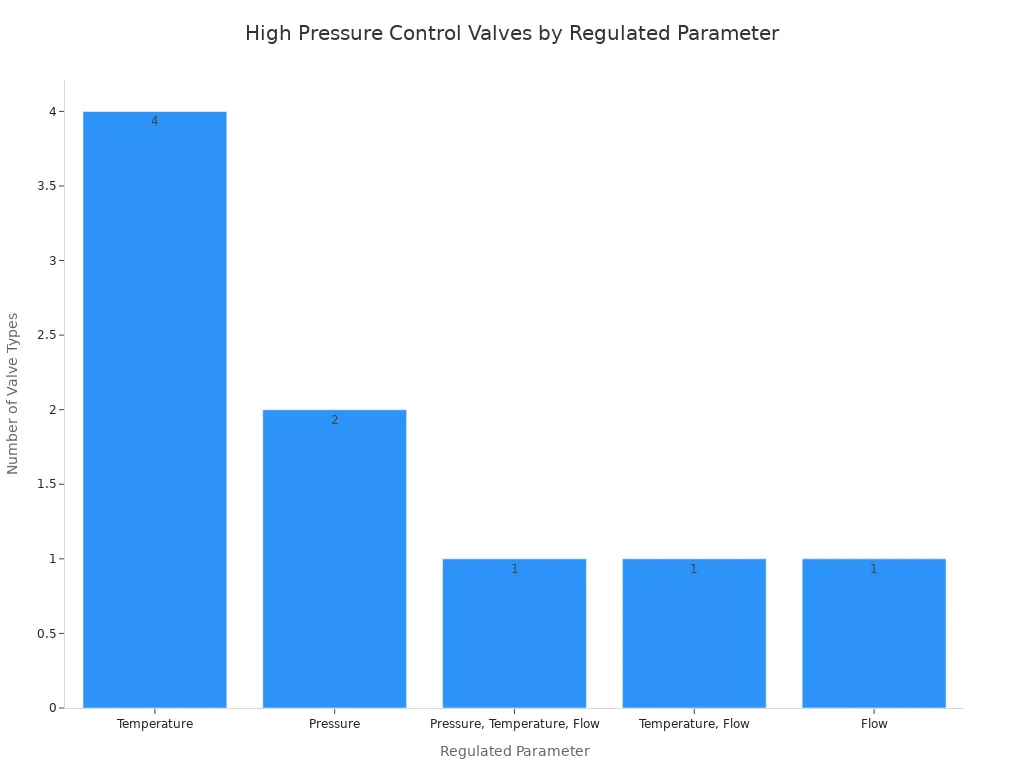
Other industries depend on the same idea. Petrochemical and chemical plants handle harsh, corrosive fluids under high pressure and heat. Marine systems use valves for ballast water, fuel handling, and steam generation, with designs that stand up to saltwater corrosion. Aerospace and defense programs use them in aircraft and spacecraft fuel, hydraulic, and propulsion systems. Water treatment, food processing, and steam services also need accurate throttling. Even building systems use them: hydronic heating and HVAC loops need adjustable control to keep room temperature steady, and HVAC chillers and HVAC boilers rely on the same throttling action.
TANGGONG VALVE control valves are used in over 35 countries. Their flexibility and strength make them a good fit for many different jobs.
Selection and Maintenance
Ensuring Safety and Preventing Failure
Start valve sizing with the IEC 60534 standard. You collect fluid properties, highest and lowest flow rates, inlet and outlet pressures, temperature, and the allowed pressure drop. With these inputs, you can calculate the needed flow coefficient for liquid, gas, or steam service. You also check for choked flow and cavitation at the design point. A valve that is too small erodes fast, while one that is too large hunts near its seat and loses control.
The right shutoff class also affects safety. Leakage limits for each class come from the ANSI/FCI 70-2 standard.
| Class | Leakage Limit | Typical Use |
|---|---|---|
| IV | 0.01% of rated capacity | General process service |
| V | 5×10⁻⁴ mL/min per mm of port diameter per bar | High-pressure liquid isolation |
| VI | Bubble-tight | Gas, toxic, or hazardous lines |
Choose Class VI for hazardous fluids. Class V handles high-pressure liquid hydrocarbon service. Do not over-specify: a Class VI metal seat costs far more than a standard one.
Maintaining Efficiency and Performance
To stay accurate and last longer, your control valve needs maintenance. Check the actuator for stiction, diaphragm leaks, and slow response. Verify positioner calibration using a 4–20 mA or HART signal. A smart positioner calibrates itself and tracks setpoint without overshoot. This reduces packing and seal wear.
During every shutdown, inspect the trim and check the plug, seat, cage, and guides for erosion, corrosion, and cavitation damage. Use OEM-approved materials to replace worn seals and gaskets. Flow direction must match the body arrow and P&IDs. For critical high-pressure service, use ultrasonic thickness testing to spot internal corrosion.
TANGGONG VALVE helps you with free valve sizing consultations and factory calibration. Every unit ships already tested to ANSI/FCI 70-2. This custom approach boosts performance and cuts your operating costs.
In oil, power, water, and chemical plants, a high pressure control valve is a powered final control element. After reading a signal, it moves its plug to change the flow area. That keeps pressure steady.
You rely on these valves to hold flow and pressure at a setpoint. They protect equipment, reduce wasted energy, and keep processes stable. A positioner and the correct trim provide safe, accurate flow control.
Modern industry depends on these valves daily. Reliable control valves from TANGGONG VALVE serve more than 35 countries. Their work keeps global systems running safely and efficiently.
FAQ
What makes a control valve different from a shut-off valve?
A control valve changes the flow all the time to keep a process variable steady. A shut-off valve only opens all the way or closes all the way to block flow. You need the first kind for throttling work and the second for on/off duty. Picking the wrong one damages the trim and hurts performance.
Which actuator type should you pick for a high pressure system?
Your choice depends on the conditions at your plant. Pneumatic diaphragm actuators fit hazardous areas because they are intrinsically safe. Pneumatic piston units handle high thrust needs. Electric motors work in remote plants that have no air supply. Hydraulic actuators give the greatest force for extreme pressure reduction.
How does cage-guided trim help under high pressure?
Cage-guided trim uses a round cage with precision ports to guide the plug. This design shapes the flow characteristic and cuts down noise. It also stops cavitation by splitting the pressure drop into stages. You get longer trim life and steadier control.
What standards do TANGGONG control valves follow?
TANGGONG control valves meet ANSI/FCI 70-2 for shutoff classification and IEC 60534 for sizing. They carry ISO 9001:2015, CE, and SGS certifications. Sizes run from DN15 to DN600, with pressure classes from Class 150 to Class 2500. Temperature coverage goes from -196°C to +650°C.
How do you size a control valve correctly?
You collect fluid properties, flow rate range, inlet and outlet pressures, temperature, and allowable pressure drop. Then you work out the needed flow coefficient using IEC 60534 methods. TANGGONG offers free sizing consultations and factory calibration. This makes sure your valve fits the process and avoids early failure.