A modulating control valve is an automated valve that adjusts flow gradually, not just on or off. Unlike a simple shutoff valve, it smoothly varies the flow rate. Think of it as a dimmer switch for lights, providing a range of brightness instead of a standard on/off switch. This proportional action allows precise regulation of pressure, temperature, or level in industrial processes. This article explains how it works, its main parts, and typical uses, giving technical readers useful tips for process control.
Key Takeaways
- A modulating control valve changes flow little by little, like a dimmer switch, for exact control.
- It uses a control signal and positioner to always match what the process needs.
- The key parts are the actuator, positioner, valve body, trim, and bonnet.
- Industries such as oil and gas, power generation, and water treatment depend on these valves.
- Accurate flow control saves energy, improves quality, and makes equipment last longer.
What Is a Modulating Control Valve
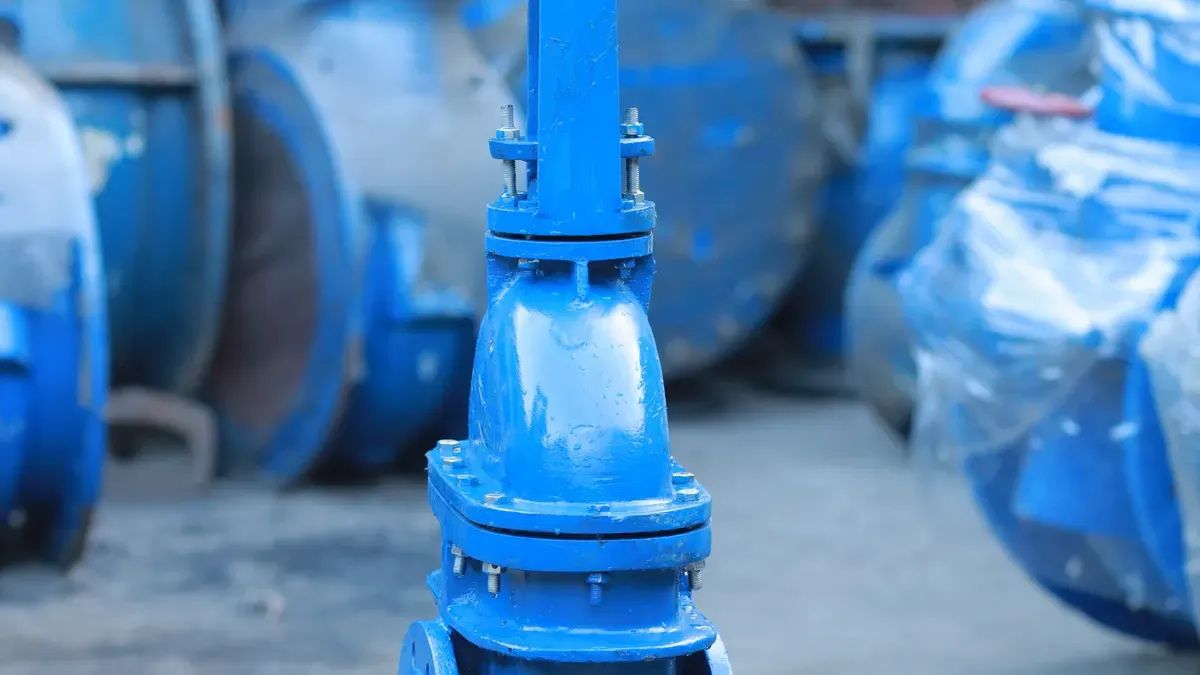
Difference Between a Modulating Valve and an On/Off Valve
The distinction between a modulating valve and an on/off valve comes down to control capability. An on/off valve operates in only two states: fully open or fully closed. It serves as an isolation device. A modulating valve, by contrast, moves to any intermediate position to regulate the flow of fluids with precision.
| Feature | Modulating Control Valves | On/Off Valves |
|---|---|---|
| Flow Control Precision | High | Low |
| Valve Positions | Many (incremental) | Two (open/closed) |
| Response to Changes | Dynamic | Static |
| Common Uses | HVAC, industrial process | Simple shut-off |
This difference shapes how engineers apply each type. A standard ball or plug valve works well for isolation. It cannot deliver precise throttling. For modulation, the system needs a valve built for accurate positioning and stable control. TANGGONG control valves are designed specifically for continuous throttling, not just shutoff. Their trim and sizing prioritize controllability and longevity over maximum sealing.
Core Principle of Continuous Flow Control
What is modulation in a control valve? The answer lies in proportional action. A modulating valve positions itself anywhere between fully open and fully closed. It regulates the flow rate, pressure, or temperature according to process demand. A 4–20 mA signal, for example, may correspond to 0% to 100% travel. The valve responds continuously, not just in two positions.
This capability proves essential in systems that must maintain stable process conditions. Steam temperature control, hot oil heating circuits, flow balancing lines, and pressure regulation loops all depend on proportional flow control. The valve adjusts its internal plug position to create a precise partial flow area. A positioner compares the incoming control signal to the actual stem position and corrects any deviation. This feedback loop ensures the valve holds the setpoint despite changing process conditions.
TANGGONG’s control valves are factory-calibrated for precise modulation per IEC 60534 standards. The IEC 60534 standard provides equations for sizing control valves for incompressible and compressible fluid flow under installed conditions. This includes choked flow conditions related to the flow coefficient (Cv). Proper sizing ensures the valve can handle the required flow rate range while maintaining stable control at intermediate openings.
The actuator plays a critical role in this process. Pneumatic actuators use compressed air to move a diaphragm or piston. Electric actuators use motors for precise positioning. Both types receive commands from the positioner and adjust the valve stem accordingly. The valve’s flow characteristic — linear, equal percentage, or quick opening — determines how flow changes with valve opening. Equal percentage valves increase flow exponentially with opening. Linear valves provide a direct proportional relationship between valve position and flow rate.
A modulating control valve thus automates process quality, not just isolation. It continuously adjusts to keep the process variable at the desired value. This continuous throttling capability separates it from simple shutoff devices and makes it indispensable in modern industrial process control.
How a Modulating Valve Operates
Control Signals and Positioners
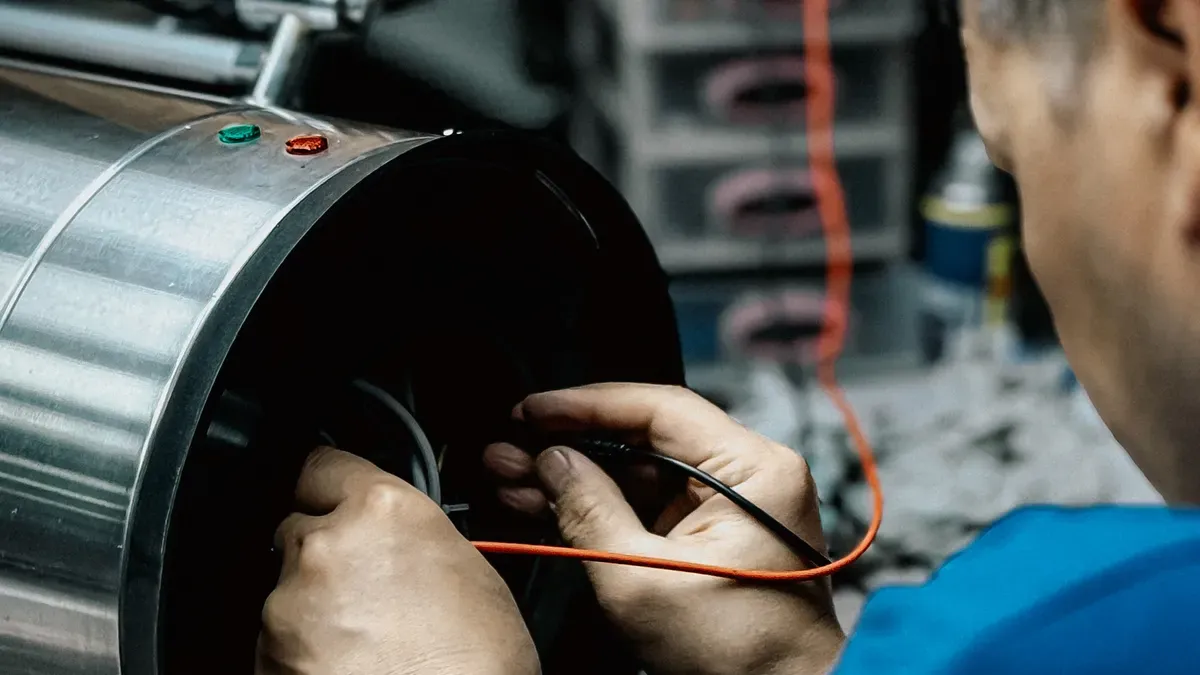
A modulating valve depends on a control signal to tell it where to sit. The most common signal is 4–20 mA, where 4 mA means 0% open and 20 mA means 100% open. Other options include 0–10 V, HART, Modbus, and Profibus. TANGGONG modulating control valves support all of these protocols. The positioner acts as the brain of the assembly. It reads the incoming control signal, compares it to the actual stem position, and applies corrective air pressure to eliminate error. This closed-loop action defines the modulating control loop. The positioner continuously compares the desired set point with actual stem position. It then adjusts actuator air pressure to minimize friction effects. This action produces faster speed of response and improved system performance.
| Signal Type | Positioner Interpretation |
|---|---|
| 4–20 mA (electric) | Electric positioners read the analog current and drive the actuator motor. |
| 4–20 mA (electro-pneumatic) | An I/P converter translates current to pneumatic output (e.g., 3–15 PSIG). |
| 0–10 VDC | Electric positioners interpret voltage to command the actuator motor. |
| 3–15 PSIG (pneumatic) | Pneumatic positioners proportion supply air pressure to move the actuator. |
HART stands out because it superimposes digital data on the 4–20 mA loop. A positioner with HART reads the analog signal for the primary valve position command. It also sends and receives configuration and diagnostic data over the same two wires. This dual capability allows fine-tuning without extra wiring. Digital positioners deliver air pressures up to the regulated supply setting. They overcome hysteresis and deadband effects caused by friction in larger actuator and valve combinations.

From Signal to Flow Adjustment
The physical process follows a clear sequence. A controller sends a low-power electrical signal to the positioner. The positioner converts that signal into a pneumatic air pressure signal. Air pressure then acts on a diaphragm or piston inside the actuator. The resulting force moves the stem, which repositions the plug inside the valve body. This movement changes the flow area and regulates the flow of fluid. The position of a modulating control valve thus changes to match process demand.
- Signal Reception – A PLC, DCS, or PID controller transmits a command signal representing the desired process condition.
- Actuator Response – The actuator converts the signal into mechanical movement. Pneumatic actuators apply air pressure to a diaphragm or piston. Electric actuators use a motor-driven mechanism.
- Trim Adjustment – The actuator moves the valve plug, altering the opening between plug and seat. A positioner fine-tunes stem position for accurate response.
- Process Feedback – Sensors measure pressure, flow, or temperature and send feedback to the controller.
The actuator type shapes performance. Pneumatic diaphragm actuators use air pressure against a spring. Pneumatic piston actuators handle higher thrust. Electric motors offer precise positioning without an air supply. Hydraulic actuators deliver high force because hydraulic fluid is nearly incompressible. A modulating valve with a pneumatic actuator responds quickly to signal changes. The modulating valve holds position against spring force.
A modulating valve can adjust its position anywhere between fully open and fully closed. This capability enables precise partial flow control. The valve achieves continuous throttling rather than simple on/off action. A control valve with linear characteristic provides a direct proportional relationship between position and flow. Equal percentage valves increase flow exponentially with opening. This throttling action shapes how flow rate changes with valve opening. This action provides modulation across the full travel range.
These control valves achieve ANSI/FCI 70-2 shutoff classes IV, V, or VI. Class IV allows maximum leakage of 0.01% of rated flow capacity. Class VI is the most stringent and measures leakage in bubbles per minute. These ratings confirm that a modulating valve can deliver both precise throttling and tight shutoff. The desired flow rate stays stable because the positioner corrects any deviation immediately.
Key Components of a Control Valve
A control valve assembly has five main parts: the actuator, positioner, valve body, trim, and bonnet. The valve body is the main pressure holder and keeps all parts together. The bonnet covers the body opening and supports inside parts like the stem and plug. The trim includes the plug, seat, stem, and guiding sleeves. These parts work together to allow precise control. TANGGONG gives options like pneumatic diaphragm, pneumatic piston, electric motor, and hydraulic actuators for different uses.
Actuators: Pneumatic and Electric Types
The actuator moves the valve plug to a set position. A pneumatic actuator uses air pressure on a diaphragm or piston to create force. A spring pushes back and allows fail-safe action. An electric actuator uses a motor to place the valve exactly without needing air. Engineers choose the actuator by looking at needed torque, power available, and working conditions. Dangerous areas often need explosion-proof ratings. The positioner gets the control signal and changes the actuator to set the valve correctly. It is the most important part for accurate control. A good positioner makes sure the valve goes to the same spot each time and reduces hesitation. The actuator must give enough force with exact control. Low friction stops the valve from sticking or jerking. High stiffness keeps the valve in place even when process forces push.
Cage-Guided Trim and Flow Characteristics
Cage-guided trim has a round cage with accurate openings to guide the plug and control flow. This design lowers noise and stops cavitation by dividing pressure drops into small steps. Anti-cavitation cages send flow away from weak areas. Low-noise cages slow down fluid speed and cut turbulence. The shape of the cage openings decides the flow behavior. A modulating valve can give linear, equal percentage, or quick opening behaviors. Linear valves work well for steady pressure drops. Equal percentage valves work best where pressure drop changes. Quick opening valves are for on/off use, not for adjusting flow. TANGGONG offers trim materials including SS304, SS316, 17-4PH, and Stellite 6. These materials fight wear and rust in tough process conditions. Good trim choice makes the valve last longer and work as expected.
Applications of Modulating Control Valves
Key Industries and Use Cases
Modulating control valves are used in many industries that need exact process control. TANGGONG provides these valves to oil and gas, petrochemical, power generation, marine, energy storage, and water treatment sectors. Each industry uses a modulating valve for different jobs.
| Industry | Typical Use Case |
|---|---|
| Oil and Gas | Wellhead control, separator level control, anti-surge, compressor recycle |
| Petrochemical | Reactor feed, distillation column control, chemical dosing |
| Power Generation | Boiler feedwater control, main steam control, turbine bypass |
| Marine | Fuel systems, firewater, chemical injection, produced water |
| Energy Storage | Cryogenic flow control, pressure regulation |
| Water Treatment | Chemical dosing, filtration, distribution networks |
In power plants, a modulating valve controls steam flow to turbines. This action matches power output to electricity demand. A refinery uses a control valve to manage chemical dosing into process streams. A water treatment plant uses a modulating valve to adjust chlorine or coagulant feed rates. These examples show how a modulating valve keeps process conditions stable across many different operations.
Benefits of Precision Flow Control
Precise flow control brings clear benefits. A modulating valve stops extra energy use by matching flow rate to real demand. This approach saves money over time. Stable temperature and pressure set points improve product quality and safety. Fast reaction to process changes keeps the system balanced.
A modulating valve also lowers wear on pumps and other equipment. The valve avoids the cycling action of on/off valves. This continuous adjustment reduces mechanical stress and extends service life. Modern automation systems work smoothly with these valves. TANGGONG’s valves are SIL-capable and certified to ISO 9001:2015, CE, and SGS. These credentials confirm reliability for critical applications. A properly sized modulating valve with proportional flow control supports stable, efficient operations across any industry.
A modulating control valve gives steady, proportional control. This lets it precisely adjust flow, pressure, or temperature. Unlike a standard on/off valve, it changes little by little to match shifting process demand. This key difference makes it vital for stable, efficient operations.
TANGGONG control valves provide this performance with proven engineering excellence. The company has 36+ years of experience and over 200 patents. Its global reach covers more than 35 countries. These credentials ensure reliable modulation in demanding applications.
For free sizing consultations or technical specifications, visit the TANGGONG control valve product page today. The team can help pick the right valve for your process.
FAQ
What is the difference between a control valve and a shut-off valve?
A control valve changes flow little by little to keep a process variable steady. It reacts to signals such as 4–20 mA. A shut-off valve only opens all the way or closes all the way to block flow. TANGGONG control valves give you throttling control, not just tight shutoff.
What is the difference between pneumatic and electric control valves?
Pneumatic control valves use compressed air to move the valve. They respond fast and can fail safe in dangerous areas. Electric control valves use motors to position the valve exactly without an air supply. TANGGONG offers both types for different plant needs.
What is cage-guided trim in control valves?
Cage-guided trim uses a round cage with precise holes to guide the plug. This design cuts noise and stops cavitation. It also shapes flow behavior like linear or equal percentage. TANGGONG uses trim materials including SS304, SS316, and Stellite 6.
How does one size a control valve for an application?
Sizing needs fluid properties, flow rate range, pressures, temperature, and allowed pressure drop. TANGGONG offers free sizing consultations based on IEC 60534 standards. Proper sizing keeps control stable across the full travel range.
What certifications do TANGGONG control valves have?
TANGGONG control valves are certified to ISO 9001:2015, CE, and SGS. They are tested to ANSI/FCI 70-2 shutoff standards. SIL-capable designs are available if you ask. Third-party inspections by TUV, SGS, or DNV are also available.