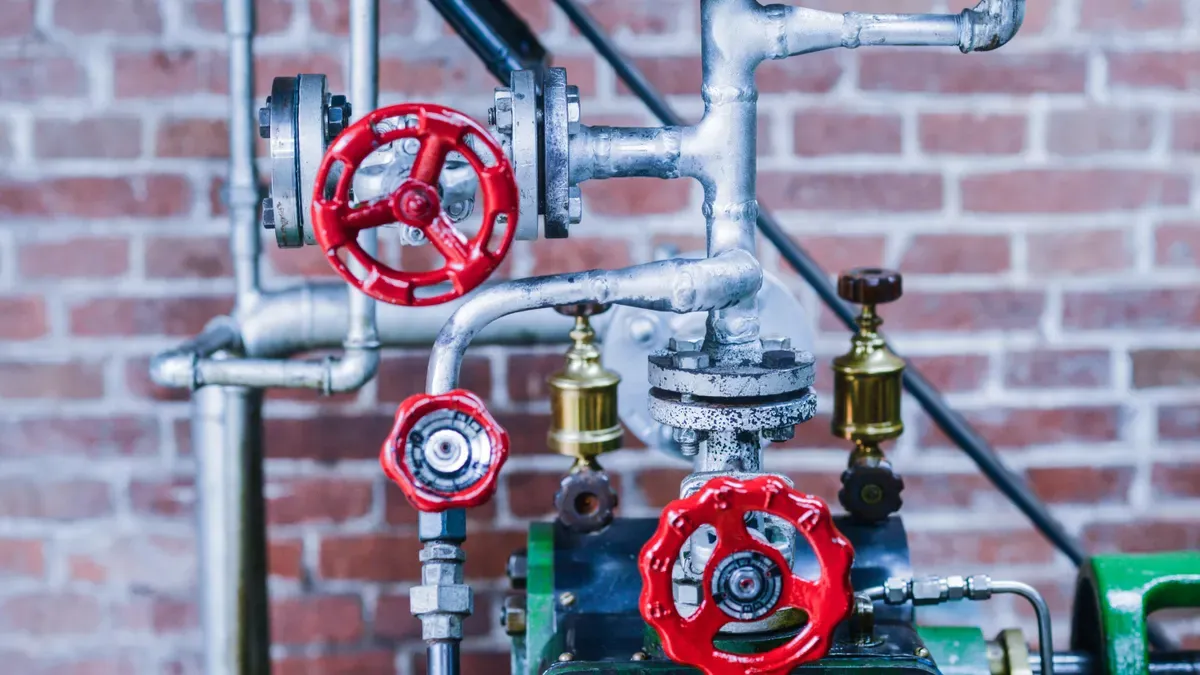
A gate valve is an industrial valve that starts or stops fluid flow. It uses a flat or wedge-shaped disc that moves up and down. So it suits on/off service, not flow regulation. Engineers choose it for straight-through paths and low pressure drop.
There are several types of gate valves. Various types of gate valves exist. Gate valves differ by wedge type, stem movement, seat type, or special design. Knowing these differences helps buyers select proper gate valves for specific applications. Reliable gate valves handle demanding fluids and high temperatures. Maintenance-friendly gate valves reduce downtime. End users can explore the product range at https://www.tanggongvalves.com
Key Takeaways
- Gate valves have a straight flow path. They cause very little pressure drop. Use them only for on/off service.
- Solid, flexible, split, and parallel wedges work with different fluid conditions. Pick the wedge style with care.
- Rising stem valves clearly show if open or closed. Non-rising stem valves fit tight vertical spaces. Choose by install spot.
- Metal seats handle high heat. Resilient seats give bubble-tight shutoff. Match seat type to the fluid.
- Special knife gates slice through thick liquids. Through-conduit valves let cleaning tools pass through pipes. Pressure and temperature help you choose the right one.
Gate Valve Classification by Wedge Type
Wedge type serves as the primary method for gate valve classification. Understanding the types of gate valves helps engineers match a valve to its service. The closure member’s geometry determines how a gate valve forms a seal. Designers group the designs into four families: solid wedge, flexible wedge, split wedge, and parallel gate valves. A reliable gate valve requires the right wedge style for the medium.
The table below compares the main wedge gate valve designs:
| Wedge Type | Defining Design Feature | Sealing Basis |
|---|---|---|
| Solid Wedge | Single rigid piece with inclined seating faces | Self-locking wedge angle of 5–7° |
| Flexible Wedge | One-piece casting with a peripheral groove | Flexible disc accommodates misalignment |
| Split Wedge | Two disc halves with a central carrier | Spreader forces discs outward |
| Parallel Slide | Two parallel disc plates with spring | Pressure-energized sealing |
Engineers often consult API 600 and API 603 when specifying steel wedge gate valves. These gate valve standards cover body materials, pressure classes, and testing for refinery service.
Solid Wedge Gate Valve
A solid wedge shaped gate valve uses one rigid piece for the closure element. The seating faces match tapered seat rings at an inclined angle. Typical wedge angles measure 5–7 degrees. This solid wedge shaped gate valve provides a simple, strong structure. However, the design demands high precision in the sealing surface angle. Manufacturing and repair become more difficult. The solid wedge also runs a higher risk of jamming under thermal expansion. Therefore, solid wedge gate valves suit clean fluids and stable pressure. Common gate valve applications include water and oil lines with moderate temperatures.
Flexible and Split Wedge Gate Valves
A flexible wedge gate valve avoids the solid wedge’s thermal sensitivity. The casting carries a peripheral groove around the wedge face. The flexible wedge keeps the simplicity of a single-piece gate while adding elastic deformation. Engineers often select the flexible wedge gate valve for steam systems with fluctuating temperatures. This flexible wedge has become the most widely used wedge gate valve in modern industry.
The wedge gate valve’s sealing surface forms an angle with the gate’s centerline. Closing applies stem thrust that increases pressure on the wedge face. This forced seal works well for low-pressure media.
A split wedge or parallel disks gate valve uses two separate disc halves. A central carrier holds the discs of the gate valve, and a spreader piece forces them outward. This split wedge or parallel disks gate valve does not rely on a fixed wedge angle. Instead, it self-compensates for seat wear and alignment errors. The double-disc design requires less precision in the seating surface angle. It also resists sticking under temperature changes. However, this design has more parts, and viscous media can interfere with the seal. For heavy-duty water and steam pipelines, the split wedge remains a proven choice.
Parallel gate valves follow a different principle. Two parallel disc plates sit against parallel seat rings. Sealing occurs when upstream fluid pressure energizes the discs. Because this gate valve’s gate and seat stay in contact throughout operation, particles cannot enter the sealing surface. This makes parallel gate valves ideal for slurries and dirty fluids.
TANGGONG VALVE manufactures a complete range of wedge gate valves for industrial use. The product line includes each type of gate valve described above. All gate valve units meet recognized standards such as ASME B16.34 and API 6D. With over 36 years of experience, TANGGONG provides reliable gate valves for oil and gas, petrochemical, and marine applications. Engineers can explore these gate valve options at https://www.tanggongvalves.com
Types of Gate Valves by Stem Movement
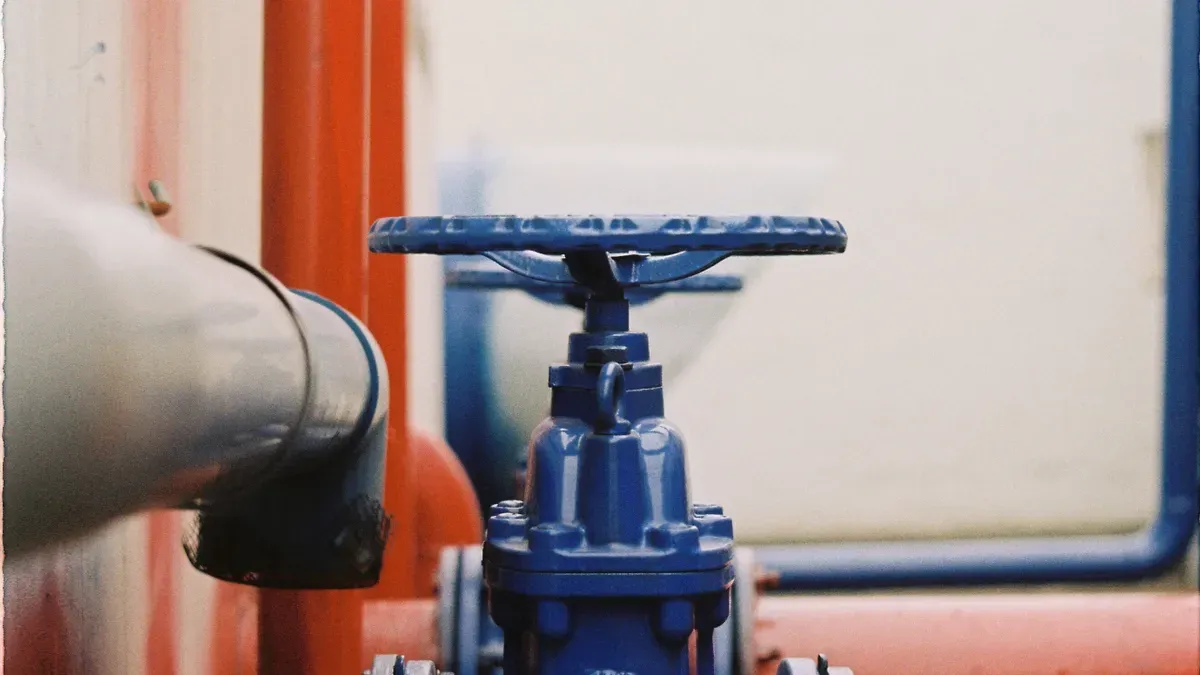
Stem movement gives us another way to group gate valves. This difference in stem movement splits rising stem gate valves from non-rising stem gate valves. Each design has its own benefits for different setups. Engineers pick between these two types of gate valves based on space limits and the need to check position.
The table below sums up the main differences between these gate valve designs:
| Factor | Rising Stem (OS&Y) | Non-Rising Stem (NRS) |
|---|---|---|
| Stem movement | Moves up and down with the gate, visible outside | Stays still; the gate moves along the stem inside |
| Position indication | Visual: stem height shows the valve state | Needs an indicator, records, or another way to check |
Rising Stem Gate Valve (OS&Y)
A rising stem gate valve has a threaded stem placed outside the valve body. The stem moves up when the valve opens and down when it closes. Operators turn the handwheel to raise or lower the gate. The os & y gate valve design gets its name from this setup. OS&Y means Outside Screw and Yoke. The outside screw is the threaded part of the stem on the outside. The yoke is the support bracket on top that holds and guides the stem.
This os & y gate valve setup lets you see the valve position directly. When the stem rises higher and the threads show clearly, the gate is fully out of the flow path. When the stem lowers closer to the valve body and the threads are less visible, the gate is fully seated against the valve seats. Maintenance crews like rising stem gate valves because they can check position without taking anything apart or using extra tools.
Rising stem gate valves work well where operators need to know the position right away. Refineries, chemical plants, and power stations often install these gate valves. The visible stem movement helps workers confirm open or closed status during inspections. But rising stem gate valves need enough vertical space for the stem to travel. Places with low ceilings or overhead blocks may not fit this design.
Non-Rising Stem Gate Valve
A non-rising stem gate valve keeps the stem still during operation. The stem turns in place without moving up or down. Inside the valve body, a stem nut attached to the gate turns the stem’s spinning motion into up-and-down gate movement. The gate moves along guide slots to open or close the passage. On the outside, the stem height does not change, and only the handwheel turns.
This non-rising stem gate valve design has a compact shape. The valve height stays the same no matter the position. Non-rising stem gate valves fit underground or in tight spaces where vertical room is limited. Common uses include water and gas pipelines, city water supply networks, gas distribution systems in cities, and small spaces like utility tunnels and underground chambers.
Operators cannot check position just by looking at the stem in a non-rising stem gate valve. They need an indicator, records, or other ways to verify. The stem nut sits inside the valve body and touches the medium directly. This contact can affect thread lubrication and how long it lasts. Regular maintenance helps ensure reliable performance.
TANGGONG VALVE offers both rising and non-rising stem gate valves. The company provides gate valves for oil and gas, petrochemical, and marine industries. Engineers can choose the right stem design for their specific applications.
Gate Valve Classification by Seat Type
The seat design decides how well a gate valve seals and what fluids it can handle. That is why buyers compare metal seat and resilient seated gate valves. Each design works for different pressure, temperature, and fluid conditions. The table below sums up the main differences between these two types of gate valves.
| Feature | Metal Seat Gate Valve | Resilient Seated Gate Valve |
|---|---|---|
| Sealing tightness | Moderate; small flaws cause more leakage over time | Excellent; often gives bubble-tight shut-off |
| Temperature limits | Works well above 500°C (932°F) | Elastomers break down past 150–200°C (302–392°F) |
| Typical media | Steam, high-temperature fluids, abrasive slurries | Water, non-corrosive fluids, clean service |
Metal Seat Gate Valve
A metal seat gate valve uses metal surfaces that match on the body and disc. Manufacturers machine these surfaces from stainless steel, copper alloy, or hard alloys. This gate valve stands up to extreme temperatures and pressures. It stays stable in steam lines, refinery units, and abrasive slurry service. However, metal seats do not always seal as tightly as soft seats. Small flaws can raise leakage rates over time. Impurities may build up in grooves at the valve body bottom. This buildup can block the disc from closing and cause sealing failure. Operators accept this trade-off when temperature and durability matter more than zero leakage.
Resilient Seated Gate Valve
A resilient seated gate valve lines the disc with rubber or a similar elastomer. The wedge-shaped body presses the rubber against the seat. This pressure creates a tight seal. The body has no grooves, so impurities cannot build up and block the disc. These gate valves give excellent leak-tightness, often reaching zero leakage. Specifications such as API 598 (mirrored with ISO 5208) or API 6D govern leakage for soft seated valves. They call for zero bubbles of air or zero drops of water under specified test conditions. The industry therefore calls these valves zero leakage or bubble tight. Class VI (bubble-tight) allows only 0.15 to 0.3 ml/min of air or nitrogen. Engineers pick resilient seated gate valves for tight shut-off, corrosion resistance, and low operating torque. Common applications include water supply systems, irrigation, HVAC, and municipal pipelines. These gate valves cannot handle high temperatures, because elastomers break down past 150–200°C (302–392°F).
TANGGONG VALVE makes both seat types with strict quality control. The company holds ISO9001:2015, CE, TUV, SGS, API 6D, and API 607 certifications. Engineers can source the right gate valve for each service condition.
Special Gate Valve Designs and TANGGONG VALVE Solutions
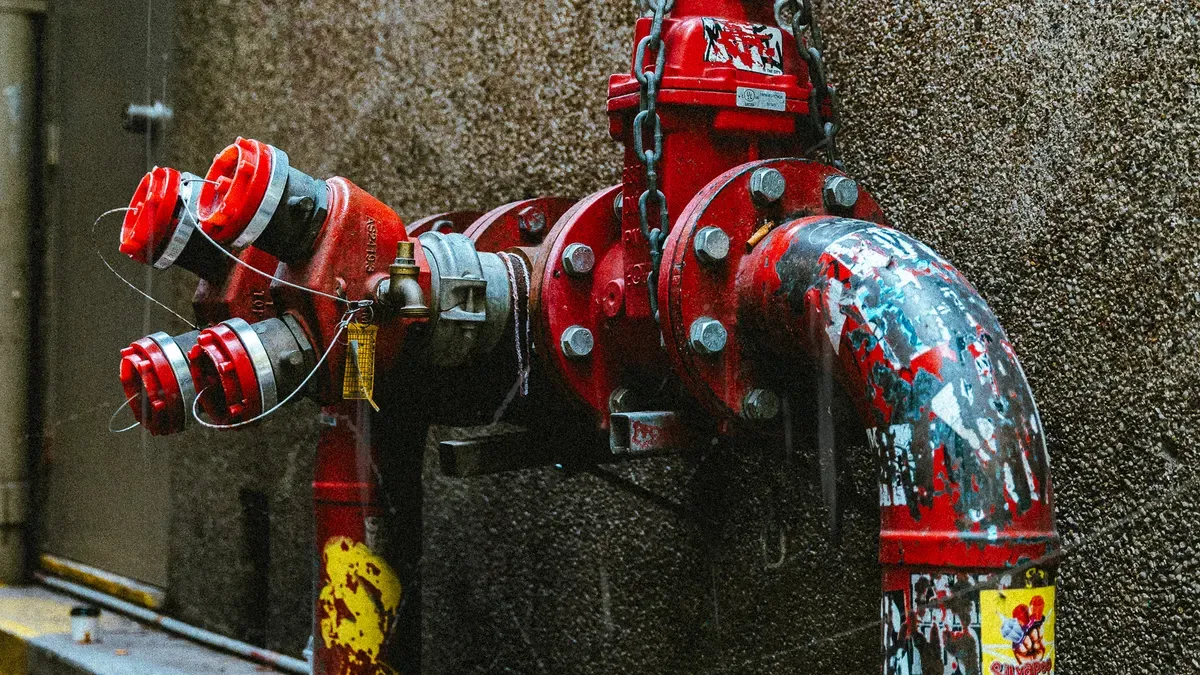
Standard gate valves do many isolation jobs. But some services need special designs. Knife gate valves and through-conduit gate valves fix problems that standard gate valves cannot solve. Engineers also compare types of gate valves by body and bonnet connection when they pick these special designs. A pressure-seal bonnet often shows up in high-pressure through-conduit gate valves. These features matter in tough applications.
Knife Gate Valve
A knife gate valve uses a sharp gate plate with a round bore. The thin blade cuts through thick media when it closes. This cutting action makes a knife gate valve different from a regular gate valve. The sharp edge moves through slurry, fibers, or solids. Then the seat makes a tight seal. Flow stops all the way. A knife gate valve works great in mining, chemical, pulp, and paper industries. It handles coal mine media, cement slurry, gold ore powder, mineral sand, wood pulp, tailings, and slaughterhouse wastewater.
The table below shows key design features of knife gate valves:
| Design Feature | Description | Typical Applications |
|---|---|---|
| Knife-shaped gate plate | Sharpened blade cuts through solids | Slurry, wastewater, mining |
| Floating seat | Auto-compensates for wear | High-pressure slurry systems |
| Metallic or soft seals | Metallic for harsh service; soft for tight shut-off | Chemical, wastewater treatment |
| Pneumatic or electric actuation | Fast operation for automated lines | Power generation, mining |
TANGGONG VALVE makes knife gate valves for water supply systems and other tough services. The company also makes gate valves for oil and gas, petrochemical, and marine industries. TANGGONG holds ISO9001:2015, CE, TUV, SGS, API 6D, and API 607 certifications. The company also holds more than 200 national patents. Engineers can see the full range at https://www.tanggongvalves.com/category/gate-valves.
Through-Conduit Gate Valve
A through-conduit gate valve uses a full-bore design for pipeline duty. The bore lines up with the pipeline when open. This design lets pigging happen without stopping service. The valve makes a tight mechanical seal at full differential pressure. Line pressure pushes the seat against the gate. Internal springs push seat rings against the gates at low pressure. This design gives bubble-tight shutoff. A pressure-seal bonnet often supports high-pressure pipeline service.
Through-conduit gate valves follow API 6D as slab-gate or expanding-gate designs. They work well for natural gas, oil products, and chemical engineering transmission pipelines. The full-bore design cuts flow resistance and pressure loss. These gate valves also handle bidirectional sealing. Engineers pick them for long-distance pipelines and cryogenic LNG service. TANGGONG VALVE offers through-conduit gate valves along with other types of gate valves based on body and bonnet connection. The company serves customers in over 35 countries. Readers can view the complete gate valve portfolio at tanggongvalves.com. TANGGONG provides tailored solutions for diverse applications. The company’s global presence and quality certifications make it a reliable partner. Engineers can request technical support at tanggongvalves.com The product range covers gate valves for many industries. TANGGONG continues to lead the global valve industry. For more details, visittanggongvalves.com
Selection Criteria and Advantages
The gate valve working principle shows why engineers trust this design. A flat disc moves up and down to open a straight flow path. This motion gives gate valves several benefits. Operators pick common gate valves for low resistance and steady shutoff. These benefits work for many industrial applications.
Key Advantages of Gate Valves
A gate valve gives an almost straight flow path when fully open. This gate valve design makes very low pressure drop. A globe valve causes high pressure loss because fluid turns several times inside the body.
| Valve type | Pressure loss when fully open |
|---|---|
| Gate valve | Low, because the disc lifts fully out of the flowing stream |
| Ball valve | Low, because the bore goes straight through |
| Globe valve | High, because the fluid must turn several times inside the body |
Low resistance saves pumping energy in large pipelines. A gate valve also seals and works with flow from either direction, which makes piping layouts simpler. Gate valves come in sizes from 2 inches and up. Their simple construction lowers manufacturing cost and cuts down failure points.
Factors for Selecting the Right Gate Valve
Engineers check several factors when choosing types of gate valves. Pressure and temperature start the decision. ASME B16.34 pressure-temperature ratings drop as temperature goes up. Carbon steel WCB works for general service up to around 600 °C. Stainless steel 316H and nickel alloys stretch the range.
Process media also guides material selection. The trim must have corrosion resistance at least equal to the valve body. Hard-facing on sealing surfaces fights galling, erosion, and oxidation. For high-temperature steam, a gate valve with metal seats and live-loaded packing keeps leakage low. A gate valve must match the nominal pipe size and pressure class. Common connections include flanged and butt-welded ends. Rising stem gate valves show position clearly. Non-rising stem gate valves fit compact installations.
TANGGONG VALVE offers tailored solutions. It supplies gate valves in many materials. Technical support helps engineers choose the correct gate valve for each service. TANGGONG’s quality certifications and global presence make it a reliable partner.
Engineers group gate valves by wedge type, stem movement, seat type, and special designs. Each valve has a different job. Solid and flexible wedges handle clean fluids and steam. Rising stem gate valves show their position clearly, while non-rising stem gate valves fit tight spaces. Metal seats resist heat and wear. Resilient seats give bubble-tight shutoff for water. Knife and through-conduit gate valves cover slurry and pipeline work.
The right gate valve depends on pressure, temperature, and the fluid. Buyers should match materials, seats, and stem style to the job. TANGGONG VALVE has over 36 years of experience and a broad gate valve range. The company helps customers in over 35 countries. These gate valves meet API 6D and ISO9001:2015 standards. TANGGONG VALVE stays a reliable partner for gate valve solutions.
FAQ
What is the main difference between a gate valve and a globe valve?
A gate valve has a flat disc that lifts all the way out of the flow path. This design causes very low pressure drop. A globe valve makes fluid turn many times inside the body. That motion leads to high pressure loss. Engineers choose each valve for different jobs.
When should someone choose a rising stem gate valve?
A rising stem gate valve shows its position by how high the stem is. Operators can check if it is open or closed without tools. Refineries and power stations like this design for quick visual checks. But it needs enough vertical space for the stem to travel.
Can a gate valve handle slurry or wastewater?
A standard gate valve has trouble with thick media. A knife gate valve fixes this problem with a sharp blade that cuts through solids. These gate valves work well in mining, wastewater treatment, and pulp processing. The cutting action stops blockage when the valve closes.
What factors affect gate valve selection for industrial applications?
Pressure, temperature, and process medium guide the choice. Engineers also check pipe size and end connections. Metal seats stand up to heat and wear. Resilient seats give tight shutoff for water. The right gate valve matches materials and design to the service conditions.
Do gate valves work for flow regulation?
No. A gate valve is only for on/off isolation. Partially open positions make the disc vibrate against the seat. This vibration damages the sealing surfaces over time. Engineers use globe valves or control valves when they need precise flow control.