A PTFE lined ball valve is a quarter-turn valve. Its body, ball, and wetted trim all have a full PTFE lining. This lining keeps corrosive media from touching metal. Turning the perforated ball 90 degrees opens or closes the flow. The PTFE lining seals and shields the internal parts.
The sections below cover the parts, how it works, the benefits, and the uses of the lined ball valve. PTFE lined ball valves hold about 41% of the global PTFE lined valves market. Global revenue reached USD 2,289.1 million in 2025.
| Metric | Value |
|---|---|
| PTFE lined ball valves share of global PTFE lined valves market | ~41% |
| Global PTFE lined valves market revenue (2025) | USD 2,289.1 million |
| Chemical processing share of global PTFE lined valve demand | ~48% |
Key Takeaways
- A PTFE lined ball valve has a full PTFE lining that keeps corrosive fluids away from the metal parts.
- Turning the ball 90 degrees opens or closes the flow fast and with little effort.
- PTFE lining gives great protection against chemicals and low friction for smooth operation.
- Pick the right seat material: PTFE for resistance to many chemicals, PEEK for high heat and wear.
- These valves work well for industries that handle acids, alkalis, and solvents. They offer a cheaper choice than rare metal alloys.
What Is a PTFE Lined Ball Valve
A PTFE lined ball valve is a quarter-turn valve with a full PTFE barrier inside. The liner covers the body and trim. Harsh chemicals never touch metal surfaces. This design pairs the strong build of a standard ball valve with a protective lining that coats the inside surfaces.
Core Components
Five parts make up the assembly. The metal body gives structural strength and holds pressure. Cast or stainless steel construction carries the mechanical load. The PTFE lining shields this shell from the medium, so the liner does the corrosion resistance job. The ball turns 90 degrees to control flow. Its PTFE-coated surface keeps the flow path safe from corrosive attack during operation. The stem links the ball to the handle or actuator. A sealed stem entry keeps the medium inside the liner. PTFE seats seal tightly against the ball when closed. This chemically resistant sealing ensures leak-proof shut-off without metal contact that can corrode. TANGGONG VALVE makes ball valves with PTFE, RPTFE, and PEEK seat options.
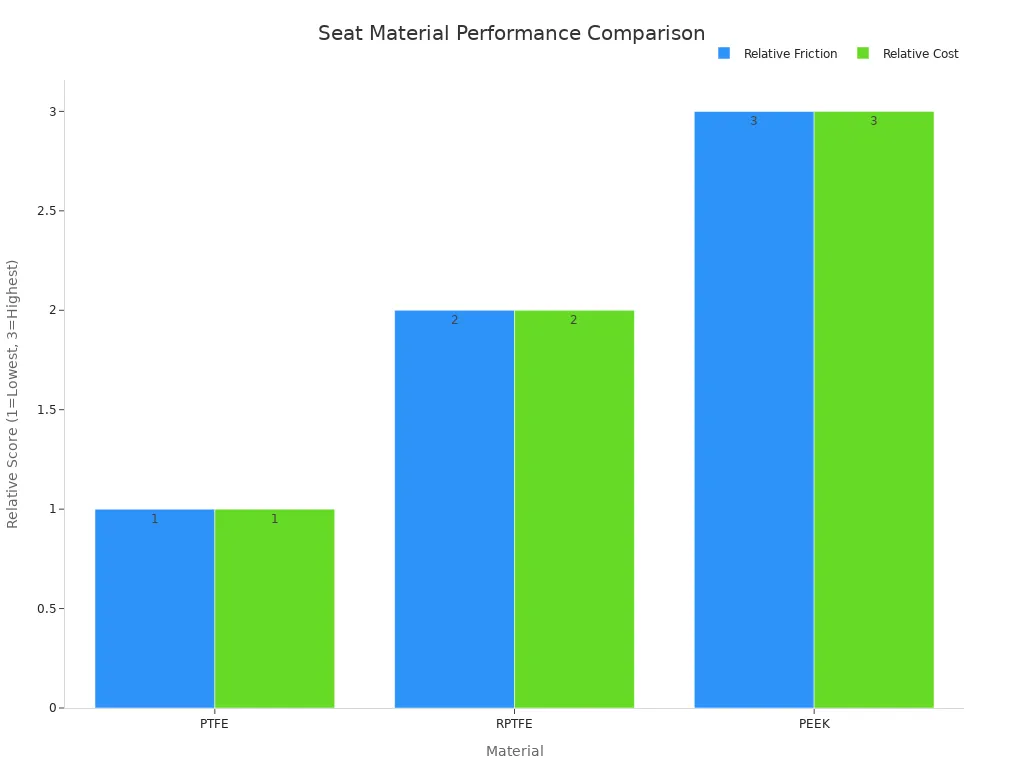
Seat choice matters for chemical compatibility. PEEK shares PTFE’s wide temperature range and good chemical compatibility. It does not match PTFE’s breadth of chemical resistance. PEEK should never be exposed to sulfuric acid or used in corrosive environments. PEEK is harder, tougher, and more abrasion-resistant than PTFE. It performs well under radiation and extreme heat. It shows brittle behavior at lower temperatures. PTFE is the safer choice for broad corrosive media. PEEK suits high-temperature, high-pressure, and abrasive duty where its chemical limits are respected. RPTFE sits between the two. It offers better creep resistance than standard PTFE at moderate cost.
| Property | PTFE | RPTFE | PEEK |
|---|---|---|---|
| Temperature range | -45°C to 204°C | -45°C to 232°C | -57°C to 260°C |
| Relative friction | Lowest | Low | Moderate |
| Chemical resistance | Excellent (nearly all chemicals) | Good (avoid HF, strong caustics) | Good (avoid conc. H2SO4, strong oxidizing acids) |
| Creep resistance | Poor (cold flow) | Good | Excellent |
| Relative cost | Lowest | Moderate | Highest |
Why PTFE Lining Matters
The lining serves three purposes. First, it delivers corrosion resistance. A fluoropolymer lining forms a barrier that cannot be penetrated, separating the transported fluid from the valve’s structural metal. All wetted parts carry a chemically inert layer. Corrosive acids, alkalis, and solvents contact only the liner. They never touch the cast iron or steel body. This fully prevents corrosion of the valve’s core components. Second, the lining creates a smooth, low-friction surface. The bore stays clean and resists media buildup. Third, it protects the standard rugged valve design. By preventing internal corrosion and media buildup, the lining greatly reduces wear on core components. This directly results in a longer service life and lower maintenance requirements than unlined metal valves in corrosive service. The liner also protects product purity, since the inert surface does not react with the process fluid.
Stainless steel such as 316L falls short against highly concentrated acids, hot chlorides, and aggressive alkalis. Strong acids like hydrochloric or sulfuric acid cause pitting and catastrophic failure. Lined ball valves create a chemical-resistant barrier that cannot be penetrated. The underlying metal stays fully isolated from the media. Many plants specify lined ball valves for acid service. Lined ball valves also cut replacement frequency. A PTFE valve therefore offers a practical answer for chemical attack in demanding lines.
How a Lined Ball Valve Works
Flow Control by Ball Rotation
A ball with a hole in it sits inside the lined body and spins on its axis. The hole goes straight through the ball. A quarter turn, or 90 degrees, moves the valve between its two positions. The valve opens when the hole lines up with the pipe. Media flow then passes through the ball with almost no resistance. The valve closes when the hole turns perpendicular to the pipe. The solid side of the ball then blocks the line. The PTFE coating on the ball keeps the flow path inert during every stroke. One quarter turn gives full open or full closed service, so operators get fast, predictable corrosion-resistant flow control. The ball never traps fluid in the body cavity, and the straight-through hole keeps the flow path clean.
Sealing and Corrosion Protection
The lining and the seats work together as one sealing system. The PTFE lining covers every wetted metal surface. Acids, alkalis, salts, and organic solvents meet only the liner and the seats. Metal parts stay fully isolated, so chemical attack has no path to the body. The seats press against the ball and close the gap at shut-off. Several design details make this seal reliable:
| Sealing Mechanism | How It Creates a Tight Seal | Key Parameters |
|---|---|---|
| Ultra-smooth ball surface | A polished ball reduces friction and removes gaps against the PTFE seal | Ra ≤ 0.1 μm; a rough surface (Ra > 0.5 μm) would cause leakage |
| Floating ball design | Fluid pressure pushes the ball against the downstream PTFE seal | For PN16 and below; DN15–DN80; ball diameter tolerance ±0.01 mm |
| Fixed ball design | Bearings hold the ball so pressure spreads evenly across the PTFE seal and wear drops | For PN25 and above; PTFE-coated bearings, 5 kN load capacity, up to PN100 |
| Single-seat design | One downstream PTFE seal with a V-shaped cross-section compresses and adapts to minor ball misalignment | ANSI Class VI (<0.1 cc/hour, nitrogen at 10 bar) |
| Double-seat design | Redundant PTFE seals on both sides stop leakage even if one seal fails | Meets ISO 15848-1; VOC <100 ppm; helium leak rate <1×10⁻⁹ cc/sec |
| Live-loading | A stainless steel spring behind the PTFE seal holds constant compression and offsets PTFE creep | Extends service life by 20–30% vs. non-spring-loaded designs |
| Precision molding and machining | Compression molding gives uniform density; CNC machining fits the seal precisely and blocks bypass leakage | Density ≥2.15 g/cm³; seal surface Ra ≤ 0.2 μm; tolerance ±0.005 mm |
This layered approach gives the lined ball valve a tight shut-off against aggressive fluids. The lining also delivers a smooth flow surface that resists buildup. Operators can add electric or pneumatic actuators to TANGGONG VALVE ball valves for remote operation. Automation keeps the valve cycling without manual effort, and the PTFE valve still holds its seal through repeated strokes. The lining does its main job at every cycle: it shields the metal and keeps the seal tight against corrosive media.
Key Features of PTFE Lined Ball Valves
Chemical Resistance and Low Friction
PTFE stands up to many kinds of process fluids. Strong acids, alkalis, salts, and organic solvents barely change the liner. Test data shows the material keeps its strength after long exposure. A 98% sulfuric acid soak at 200°C for 1000 hours caused a weight change under 0.1% and no measurable loss of tensile strength. A 50% sodium hydroxide soak at 150°C for 2000 hours caused weight loss below 0.05%. These results explain why a ptfe lined ball valve suits aggressive service.
| Medium | Test Conditions | Result |
|---|---|---|
| 98% sulfuric acid | 200°C, 1000 h | Weight change <0.1%; no tensile strength loss |
| 50% sodium hydroxide | 150°C, 2000 h | Weight loss <0.05%; >95% elongation retained |
| 30% hydrogen peroxide | 100°C, 500 h | No cracking or dimensional change |
| Toluene and xylene | 80°C, 3000 h | Swelling <0.5%; no chain extraction |
PTFE also has extremely low friction. This property gives the lined ball valve low operating torque. Operators turn the handle with little effort, and smaller actuators can drive the valve. Low friction also cuts stem wear and helps keep a smooth flow path with low pressure drop.
PTFE’s strong carbon-fluorine bonds give it high resistance to chemical attack. Engineers must still check chemical compatibility for the exact medium, temperature, and pressure, because a fluid that is safe at room temperature may act differently when hot.
Tight Sealing and Long Service Life
The soft PTFE seats press firmly against the ball and give bubble-tight shut-off. Soft seats make a good seal with less friction than metal seats, so torque stays low and the seal lasts through many cycles. The lining shields every wetted surface from chemical attack, and this protection extends service life and cuts maintenance work.
TANGGONG VALVE ball valves carry ISO 9001:2015, API 6D, API 607, CE, TUV, and SGS certifications. Buyers can order these lined ball valves with confidence in their quality record. The ptfe valve combines tight sealing, durability, and low upkeep, which makes it a practical choice for corrosive lines.
Applications of Lined Ball Valves
Industries and Corrosive Media
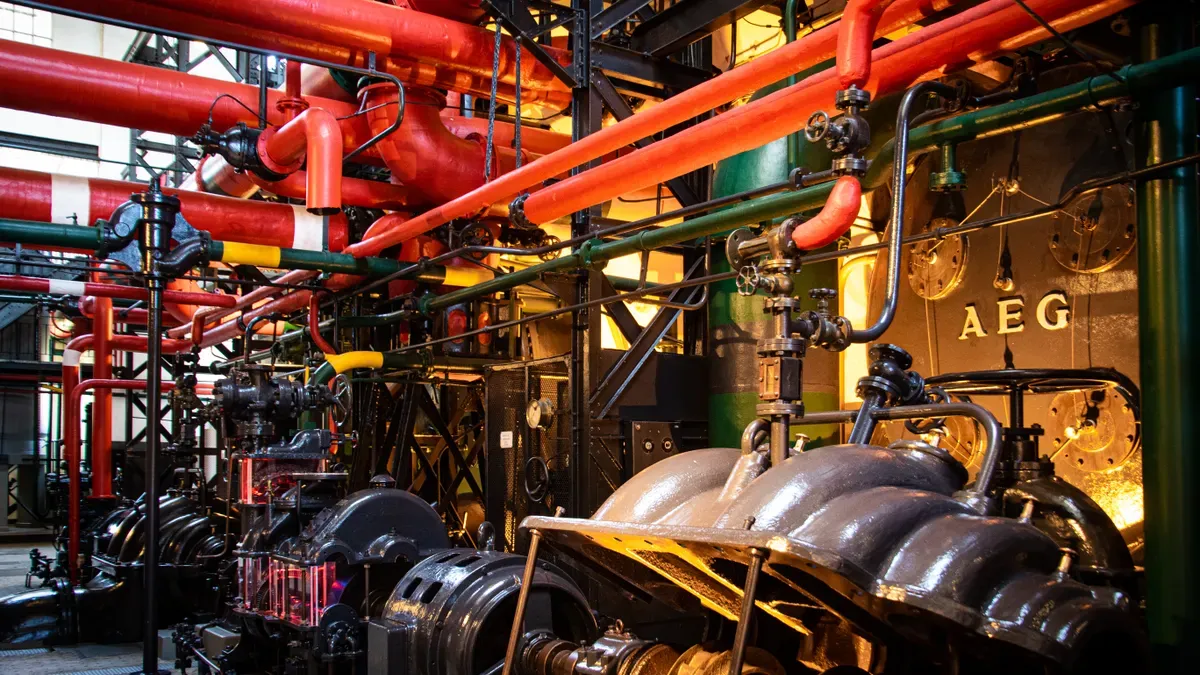
Lined ball valves are used in plants where process fluids eat away at metal. Chemical processing plants work with large amounts of acids, alkalis, and solvents. Pharmaceutical and biotech sites handle sensitive biological and chemical compounds. Food and beverage lines carry acidic products and strong cleaning agents. Power generation uses these valves for corrosive cooling and process fluids. Petrochemical, oil and gas, water treatment, and marine work also depend on this design. The lining keeps every wetted surface from reacting, so harsh media never touch the body metal.
The choice of media guides the selection. Strong acids, caustic solutions, salts, and organic solvents all need a barrier that will not react. Engineers check chemical compatibility for each fluid, temperature, and pressure before they choose a valve. A lined ball valve then gives corrosion-resistant flow control across the whole line.
| Industry | Typical Corrosive Media Handled |
|---|---|
| Chemical Processing | Acids, alkalis, solvents (bulk corrosive chemicals) |
| Pharmaceutical/Biotech | Sensitive biological and chemical compounds |
| Food & Beverage | Acidic products and aggressive cleaning agents |
| Power Generation | Corrosive cooling and process fluids |
Compared with Other Ball Valves
Standard metal-seated ball valves cost less at first. They do not hold up well against strong acids and hot chlorides, where pitting can ruin the seat and body. . Fully PTFE ball valves offer the widest chemical resistance, but they handle less pressure than lined metal bodies. The lining gives the best mix of protection and strength for most corrosive service.
Temperature and pressure set the real limits. Virgin PTFE seats reach 230 °C at 70 bar. Filled PTFE keeps the same 230 °C limit but raises pressure capability to Class 800. PEEK seats reach 260 °C and Class 2500. Metal seats go up to about 650 °C, but they leak more. TANGGONG VALVE supplies a fluorine-lined valve line and a ball valve range from DN15 to DN2000, Class 150 to 2500, and -196°C to +650°C. Buyers should read each maker’s pressure-temperature curve, because the allowed temperature drops as line pressure goes up.
A ptfe lined ball valve is a quarter-turn valve with a full PTFE barrier inside. The body, ball, stem, and seats make up the main assembly. Turning the ball 90 degrees opens or closes the flow path. The lining seals every wetted surface and stops corrosion from harsh media.
Engineers and buyers should pick lined ball valves when process fluids eat away at metal. These valves work well with acids, alkalis, salts, and organic solvents. The PTFE barrier keeps chemicals away from the metal that holds the valve together. This design gives tight shut-off and long service in corrosive use. Buyers who deal with harsh media get reliable flow control from this valve.
FAQ
What media can a PTFE lined ball valve handle?
The liner stands up to strong acids, alkalis, salts, and organic solvents. Even so, engineers should check that it works with the exact fluid, temperature, and pressure. A fluid that is safe at room temperature may act differently when it is hot.
How does the ball control flow?
The ball has a hole through it and turns 90 degrees inside the lined body. The valve opens when the hole lines up with the pipe. It closes when the hole turns sideways to the flow. This quarter-turn action gives fast, predictable shut-off.
Which seat material should buyers choose?
PTFE works for a wide range of corrosive media and has the lowest friction. RPTFE adds better creep resistance at a moderate cost. PEEK handles higher heat and abrasive duty, but it should never touch sulfuric acid. TANGGONG VALVE offers all three seat options.
What sizes and pressure classes are available?
TANGGONG VALVE ball valves range from DN15 to DN2000 and Class 150 to 2500. The temperature range runs from -196°C to +650°C. Buyers should check each maker’s pressure-temperature curve, because the allowed temperature drops as line pressure goes up.
Can operators automate these valves?
Yes. Electric and pneumatic actuators mount on TANGGONG VALVE ball valves so they can run from a distance. Automation keeps the valve cycling without manual effort. The PTFE lining still shields the metal and holds the seal through repeated strokes.