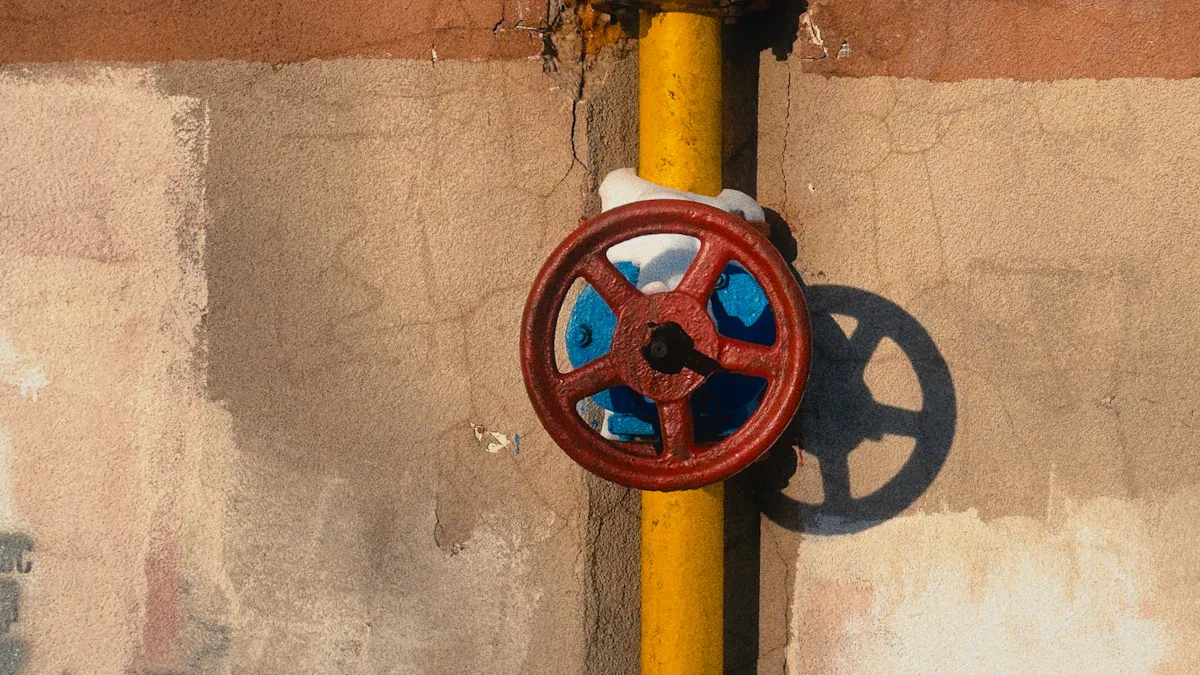
A pfa lined ball valve is a quarter-turn valve. Its wetted surfaces have a perfluoroalkoxy fluoropolymer lining. This lining protects the metal body from corrosive media. A drilled ball turns 90 degrees to start or stop flow. The liner also keeps every metal part away from the process fluid.
The design combines the quick shut-off of a ball valve with the chemical inertness of a fluoropolymer. Users often pick a lined ball valve when aggressive fluids would attack ordinary metal trim. The pfa surface also resists buildup and keeps the flow path clean.
Engineers find lined ball valves in many demanding services. A pfa lined valve handles corrosion without exposing the pressure shell. Construction details, operating principles, and selection factors all matter here.
Key Takeaways
- A PFA lined ball valve has a special plastic lining that keeps harsh fluids from damaging the metal body.
- The ball turns 90 degrees to start or stop the flow, and the liner keeps all metal parts away from the fluid.
- PFA lining stands up to almost all chemicals. It also works well in high-purity uses like pharmaceuticals.
- These valves are used in chemical plants, water treatment, and other industries that work with harsh fluids.
- Routine upkeep, like opening and closing the valve once a month, helps it last longer and work reliably.
What Is a PFA Lined Ball Valve
Definition and Construction
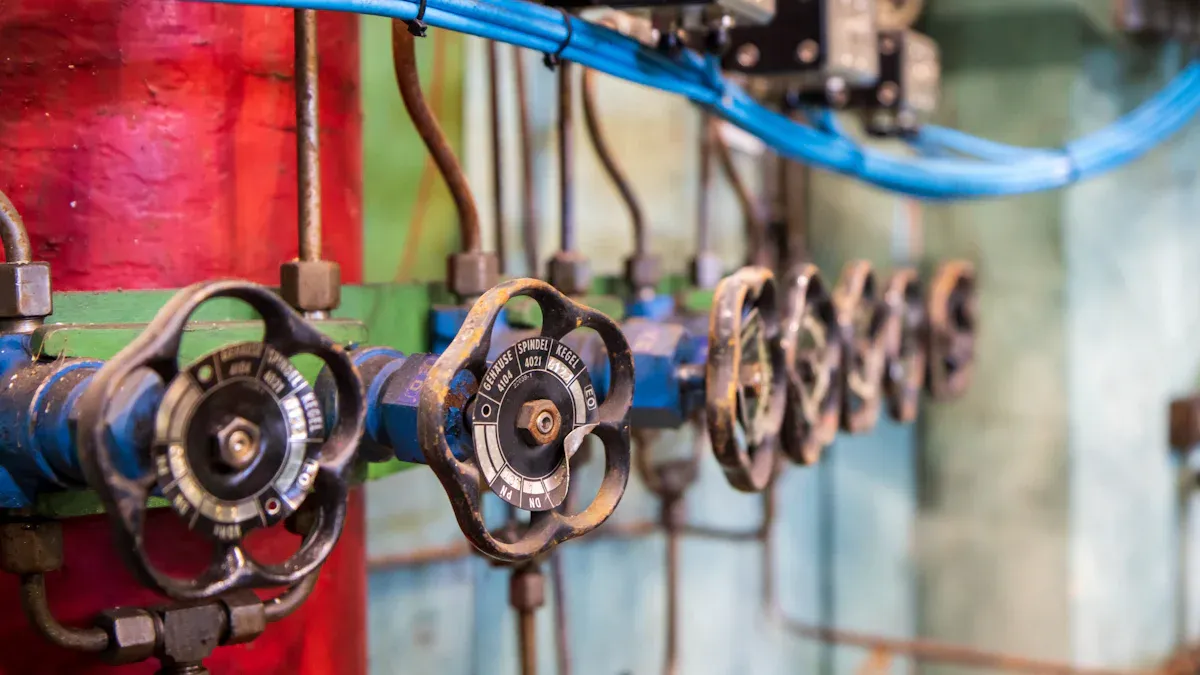
A pfa lined ball valve is a ball valve with a PFA liner on the body and trim. The liner keeps harsh media away from a ductile iron, carbon steel, or stainless steel shell that holds the pressure. This setup lets a standard metal shell handle pressure while the fluoropolymer handles the chemistry. A user gets the quick shut-off of a ball valve plus a barrier against corrosion.
The valve has five main parts. The ball controls flow by rotating. The body is the outer shell that holds the internal parts. The stem connects the handle to the ball. The seats are rings that support the ball and provide sealing. The handle lets an operator open or close the valve by hand.
A lined ball valve uses lined metal for every wetted part. Common material options appear below.
| Part | Material Options |
|---|---|
| Body | 1.4408/CF8M+PFA, 1.4308/CF8+PFA, or 1.0619/WCB+PFA |
| End Cap | 1.4408/CF8M+PFA, 1.4308/CF8+PFA, or 1.0619/WCB+PFA |
| Ball | 1.4408/CF8M+PFA or 1.4308/CF8+PFA |
| Stem | 1.4408/F316+PFA or 1.4308/F304+PFA |
| Ball Seat | PTFE |
The construction uses full fluorine plastic lining technology. Both the inner chamber and the ball come from high-pressure injection molding with corrosion-resistant, ageing-resistant lining. This method gives reliable anti-corrosion and sealing performance for strongly corrosive media.
TANGGONG VALVE manufactures fluorine-lined valves alongside its ball valve series. That series spans DN15–DN2000 (½”–80″) and Class 150–2500. This range covers small utility lines and large transmission duty.
PFA Lining vs. Other Liners
PTFE and PFA are the common lining materials used in lined ball valves. Each has a clear place. PTFE is the general-purpose liner. It suits many standard chemical services and offers broad chemical resistance at a lower cost. PFA offers a smoother, more permeation-resistant surface. Users weigh chemical compatibility and permeation risk when they choose between pfa and ptfe-lined valves. PFA lined ball valves serve high-purity duty.
The difference shows in barrier performance. PTFE sintering can leave microscopic voids, sometimes called fish-eyes, because particle fusion is imperfect. Manufacturer literature states these fissures are large enough to let process media migrate to the base metal. That forces thicker linings, which reduce flexibility and sealing predictability. PFA melts and flows into a continuous film. The same manufacturer found no visible fissures under 10,000x magnification and rates its permeation resistance as excellent. PFA lined valves therefore resist permeation better.
| Property | PTFE Lining | PFA Lining |
|---|---|---|
| Permeation resistance rating | Good | Excellent (low void content) |
| Permeation rate vs. standard PTFE (chlorine gas, hydrochloric acid tests) | Baseline | 50%–70% lower |
| Surface smoothness benefit | — | Smoother finish reduces particle generation and bacterial growth in semiconductor/pharma applications |
The smoother finish matters in high-purity work. It reduces particle generation and bacterial growth in semiconductor and pharmaceutical applications. PFA-lined ball valves therefore fit high-purity service well. PFA lined valves also stay cleaner. PTFE-lined ball valves remain a sound choice for general corrosive duty where permeation is less critical. A lined ball valve suits both duties when the liner matches the media.
Both liners share the same goal. They protect the metal shell and deliver chemical resistance across acids, bases, and oxidizing media. The key features of lined ball valves stay the same either way: a quarter-turn ball, a sealed seat, and a barrier between fluid and metal. A well-chosen pfa lined ball valve keeps the process clean and the shell intact.
How Does a Lined Ball Valve Work
The Ball and Seat Mechanism
A pfa lined ball valve controls flow with a simple quarter-turn action. A hollow, round ball sits inside the lined body. The ball has a bore, or channel, drilled straight through its center. An operator turns the handle 90 degrees to change the valve state. In the open position, the bore lines up with the flow path. Fluid passes through the ball with little resistance. In the closed position, the ball turns so the bore faces away from the flow. The ball then presses against the seat. The seat is a ring that touches the ball and seals the passage. Soft-seated ball valves reach Class VI shut-off, the strictest standard for near-zero, bubble-tight leakage. This tight seal makes them a common choice for zero-leakage duty. The seat material also matters. PTFE seats are common in lined ball valves because they resist chemicals and seal well against the ball.
A full-port design adds another plus. The bore matches the inside diameter of the pipe. Flow resistance stays very low, and the valve acts much like a plain pipe section. Full-port lined ball valves therefore support high flow capacity and lower pumping costs. This design also keeps turbulence low and supports steady flow. A reduced-port design trades some capacity for a smaller, lighter body.
Manufacturers build lined ball valves in two body styles. A floating ball design lets the ball shift slightly downstream under pressure. The pressure pushes the ball into the seat for a firm seal. A trunnion-mounted design holds the ball in place with upper and lower supports. Trunnion designs suit larger sizes and higher pressure classes. Floating designs fit smaller lines and moderate pressures. Both pfa lined ball valves rely on the same quarter-turn principle.
The Liner as a Barrier
The liner does the chemical work. A protective lining covers the body cavity, the ball, and the entire flow path. Corrosive fluids touch only the fluoropolymer surface. The metal shell never meets the process medium. The liner also protects the stem and the seat area, so no metal edge sits in the flow stream.
PFA lining acts as a highly resistant barrier that shields the metal valve body from aggressive fluids, offering outstanding durability against a wide range of acids, bases, solvents, and other corrosive substances.
This chemical-resistant barrier splits two jobs. The metal body supplies mechanical strength and holds pressure. The pfa liner forms the wetted surface. A correctly designed lined ball valve keeps the fluid on the liner side at all times. The corrosion load on the body drops sharply. Cheaper base metals can replace costly corrosion-resistant alloys. PFA itself is chemically inert and resists nearly all chemicals, with low permeability. That is why pfa lined valves serve aggressive chemical duty so well.
The liner is not a thin cosmetic coating. Its thickness, attachment method, molding process, and dimensional stability all count as critical engineering parameters. Molded pfa liners improve dimensional stability and give a consistent wetted surface. A well-made lined ball valve keeps that surface intact through repeated cycling. Floating and trunnion-mounted designs both use this barrier approach. The result is reliable flow control in aggressive service.
Benefits: Exceptional Chemical Resistance
Purity and Media Compatibility
Lined ball valves are known for their excellent chemical resistance, and the liner is the reason. The liner stands up to almost all industrial chemicals. It works with strong acids, bases, oxidizing media, and organic solvents. Only molten alkali metals and elemental fluorine can harm it. Because it works with so many chemicals, one valve family can serve many process lines.
PFA gives the highest level of resistance among fluoropolymers against chemical corrosion and permeation. This comes from the strength of the fluorine-carbon bonds in its polymer chain.
The surface also stays clean. The liner does not stick, and it releases very few extractables. High-purity lines for pharmaceuticals and semiconductors value this trait. Fluid touches only the fluoropolymer, so metal contamination stays out of the product. These are the main advantages of lined ball valves in sensitive duty.
How well lined ball valves perform still depends on the parts you select. Chemical resistance depends on the liner and seat materials you choose. TANGGONG ball valves offer seat options including PTFE, RPTFE, PEEK, and metal-to-metal. The company certifies its ball valves to API 6D and API 607, with fire-safe and anti-static designs. A lined ball valve therefore pairs a proven barrier with tested safety features.
Temperature and Pressure Performance
PFA keeps its properties across a wide temperature range. Published data list a melting point near 305°C and reliable operation from -200°C to 260°C. That range covers cryogenic lines and hot process streams alike. The liner keeps its high corrosion resistance as temperatures climb, as long as it stays within its rated window. Its corrosion resistance also limits corrosion on the metal shell.
Pressure capability varies by design and size. Floating and trunnion-mounted pfa-lined ball valves each carry their own ratings. Users must confirm temperature and pressure limits against the manufacturer’s liner data for the specific grade. Going past those limits can soften or deform the liner and break the barrier. A careful check protects the superior chemical resistance the liner provides. That barrier explains the strong chemical resistance of pfa lined valves.
Applications of Lined Ball Valves
Chemical Processing and Water Treatment
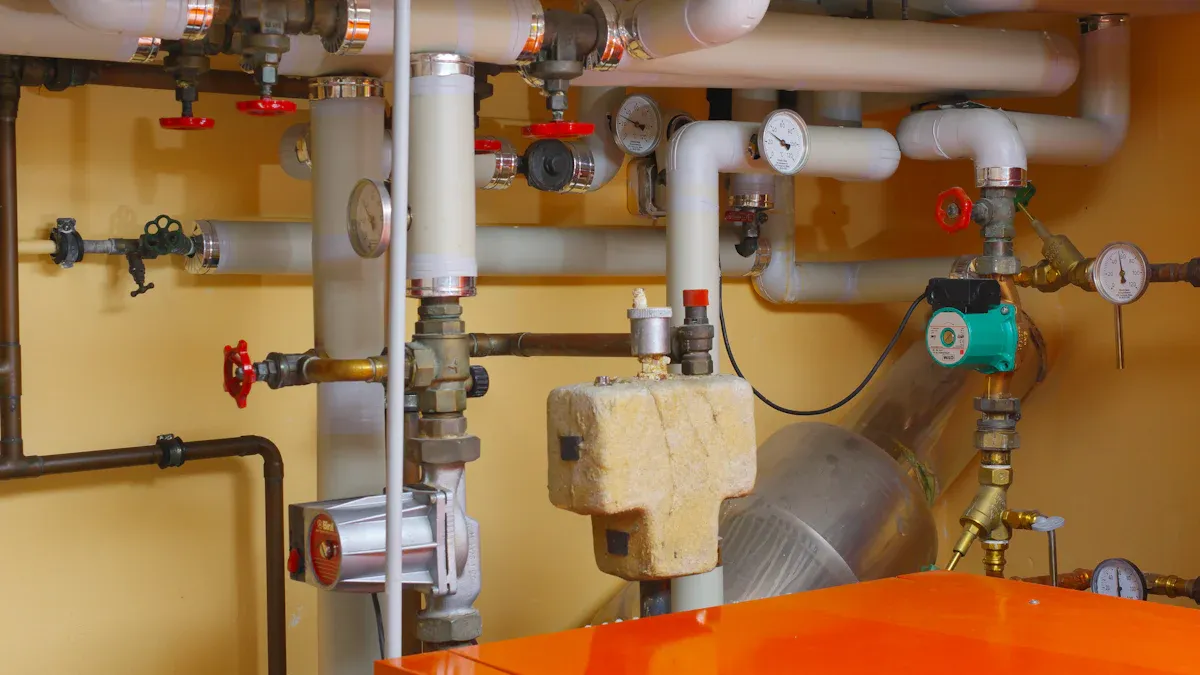
Lined ball valves are used in many kinds of process industries. Chemical plants, petrochemical facilities, water treatment works, power generation, marine systems, and metallurgy all depend on them. The table below shows common jobs and the services they usually involve.
| Industry | Typical Duty |
|---|---|
| Chemical processing | Chlorine, sulfuric acid, nitric acid, solvents, polymers |
| Water and wastewater treatment | Disinfection chemical dosing, waste acid neutralization, pH control |
| Electroplating and mining | Plating chemicals, process slurries |
| Pharmaceutical plants | Solvent transfer, high-purity chemicals |
The list of media shows why these valves are popular. Hydrochloric acid, sulfuric acid, nitric acid, caustic soda, and chlorine compounds all eat away at normal metal trim. A fluoropolymer barrier handles them instead. Engineers still check each concentration and temperature case against liner data, because sulfuric acid acts very differently depending on both.
Standard on/off duty covers most lines. V-port and C-ball configurations add exact flow control in corrosive service. These trimmed balls measure flow instead of just stopping it.
High-Purity and Corrosive Service
High-purity work sets a higher standard. Semiconductor manufacturing needs materials that do not contaminate, with no trace impurities that could leach out or shed particles. Pharmaceutical plants want the same cleanliness in solvent and reagent lines. A smooth pfa surface helps reach this goal, and corrosion-resistant flow control keeps the stream free of metal ions.
Seal materials need just as much attention. Body lining alone does not promise purity after the valve is installed. Operators should check seats and seals as carefully as the liner.
One warning applies. Ball valves fit bulk and utility gas and chemical lines, where higher flow matters most. Dead-volume limits keep them out of ultra-high-purity semiconductor applications. Engineers weigh that trade-off during design.
The industry applications of lined ball valves keep growing as processors look for one valve family for aggressive media. Chemical resistance, purity, and tight shut-off drive the choice.
How to Choose the Right Lined Ball Valve
Media, Temperature, and Pressure
Lined ball valves do many different jobs, but every line has its own needs. Picking one starts with a short checklist. First, write down the pipe size and pressure class. Then note the fluid type and concentration, the operating temperature and pressure, and the shut-off class you need. Choose how the valve will be operated — manual, electric, pneumatic, or hydraulic — and list the standards that apply.
| Factor | What to Confirm |
|---|---|
| Pipe size | Nominal size and end connection |
| Pressure class | Class 150–2500 range |
| Fluid | Type, concentration, impurities |
| Temperature | Minimum and maximum |
| Shut-off class | Leakage allowance |
| Actuation | Manual, electric, pneumatic, hydraulic |
| Standards | API 6D, API 608, ASME B16.34, ISO 17292 |
Chemical compatibility decides the liner choice. Before anything else, users check whether the fluid works with the lining material. A pfa liner fits most aggressive media, and pfa lined valves handle strong acids and bases well. Each fluid still needs a check against liner data. TANGGONG VALVE offers free valve selection consulting for this step. Its ball valves meet API 6D, API 608, ASME B16.34, and ISO 17292.
Installation and Maintenance
Good installation protects the liner and seats. Keep the valve packed until you install it, and store it in a cool, ventilated space. Check the body, seat, and ball materials before fitting. Finish all welding first, and let flanges cool to room temperature. Clean the pipe of residue, rust, and debris. Check flanges for warpage, support large valve and actuator assemblies, and tighten bolts in stages. After fitting, cycle the lined ball valve through its full 90-degree travel.
Maintenance keeps lined ball valves reliable. Isolate and depressurize the line before any work. Inspect the body and end connections for corrosion, cracking, and leakage. Check the liner for wear or deposits. Replace seats and seals with approved materials that match the service fluid. Cycle idle lined ball valves at least monthly so the ball does not stick to the seats. Plan access space for end-plate removal during seat replacement. Most lined ball valves reward this care with a long, leak-free life and steady chemical resistance.
A pfa lined ball valve combines a quarter-turn ball with a fluoropolymer barrier. The ball starts and stops the flow path. The liner keeps corrosive media away from the metal shell. Together, lined ball valves give reliable, corrosion-resistant flow control.
Choosing one comes down to four checks. Users confirm the media works with the valve, then check temperature and pressure limits against the manufacturer’s liner data. A lined ball valve needs room for maintenance access. Careful planning keeps corrosion risk low and helps the valve last longer.
Lined ball valves fit tough chemical duty when the liner matches the process. A pfa lined valve gives full chemical resistance when that match holds. Readers with specific process conditions can contact TANGGONG VALVE for guidance.
FAQ
What makes a PFA liner different from a PTFE liner?
PFA melts into a smooth, solid film with very few gaps. PTFE sintering can leave tiny cracks that let fluids reach the metal underneath. Because of this, PFA blocks permeation better and gives a smoother surface. PTFE is still a good general-purpose choice for normal corrosive duty.
When should an operator choose a lined ball valve over a metal-seated valve?
An operator chooses a lined ball valve when harsh fluids would eat away normal metal parts. The fluoropolymer barrier stands up to acids, bases, and oxidizing chemicals. Metal-seated valves still work well for clean, high-temperature service. The fluid’s compatibility decides the choice.
Which seat materials are available for corrosive service?
TANGGONG ball valves offer seats in PTFE, RPTFE, PEEK, and metal-to-metal. Each option fits different fluids and temperature needs. Users match the seat to the process fluid. The company certifies its ball valves to API 6D and API 607, with fire-safe and anti-static designs.
What sizes and pressure classes do lined ball valves cover?
TANGGONG’s ball valve series spans DN15–DN2000 (½”–80″) and Class 150–2500. This range covers small utility lines and large transmission duty. Buyers check the liner grade against their temperature and pressure limits before ordering.
How does an operator maintain lined ball valves in the field?
Shut off and release pressure from the line first. Check the body, liner, and seats for wear or buildup. Replace seats and seals with approved materials that match the service fluid. Cycle idle lined ball valves at least once a month so the ball does not stick to the seats.