A PTFE lined gate valve is a gate valve with a full PTFE lining on its wetted surfaces. This means the process media only touches the liner and never the metal body. This design makes the valve a common choice for isolating corrosive fluids in chemical and water treatment lines. Below, readers will find the internal parts, the opening and closing action, and the service conditions that suit these gate valves explained in plain terms.
Key Takeaways
- A PTFE lined gate valve keeps harsh fluids from touching the metal parts.
- The valve opens and closes with a simple gate that moves straight up and down.
- Use these valves to turn flow on and off, not to control the flow rate.
- PTFE lining stands up to harsh chemicals and a wide range of temperatures.
- Pick the right lining thickness and seat design for your job.
What Is a PTFE Lined Gate Valve
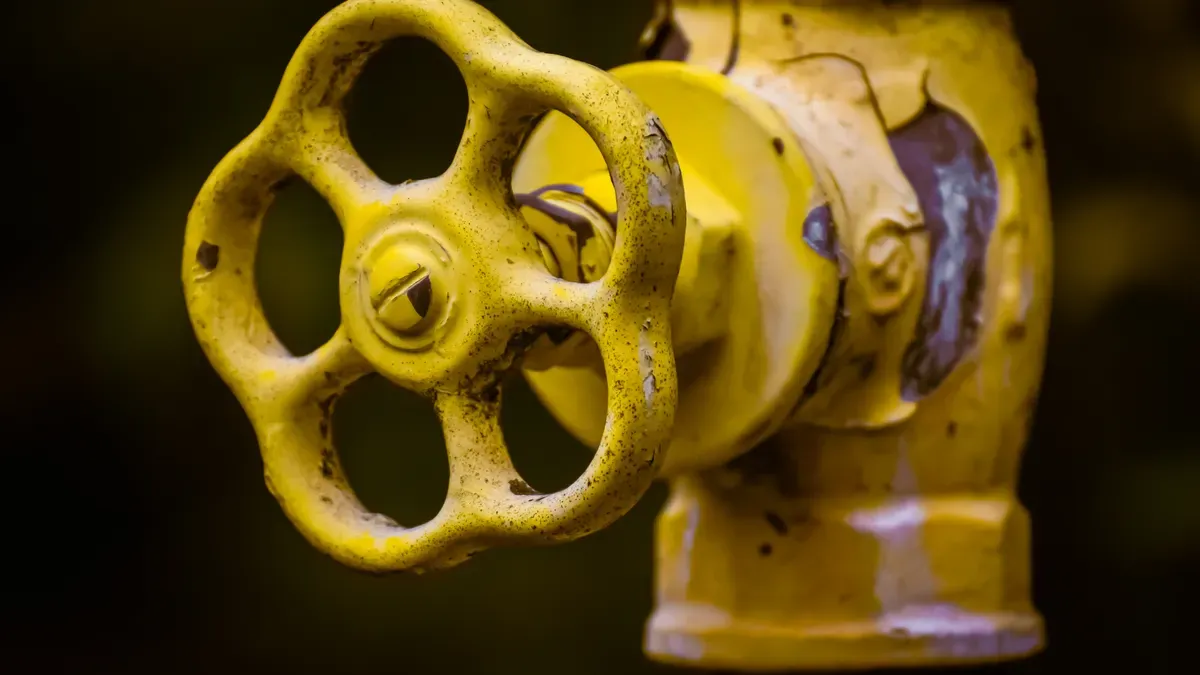
A PTFE lined gate valve is a gate valve with a full fluoroplastic barrier on all its wetted surfaces. The liner keeps metal away from the media, so corrosive chemicals never touch the body or trim. This design works well for tough jobs in chemical plants and water treatment lines. In these places, ordinary metal valves would fail fast.
Body, Gate, and Stem
Three main parts make up the valve: the body, the gate plate, and the stem. Each part has its own protective layer. The table below shows how each part resists corrosion.
| Component | Design feature | How it ensures corrosion resistance |
|---|---|---|
| Valve body | Carbon steel cast body with an inner cavity fully lined with an F4 (PTFE) fluoroplastic layer | The liner is the only surface that touches the medium, so it keeps the carbon steel away from corrosive media while the outer body stays strong |
| Gate (gate plate) | Wedge-shaped gate plate fully lined with F4 fluoroplastic, plus an elastic fluoroplastic seat | The PTFE lining protects the gate from chemical attack, and the elastic seat gives two-way sealing with zero leakage |
| Stem | Stem surface lined or covered with F4 fluoroplastic, plus an anti-blowout structure with fluoroplastic seals | The fluoroplastic layer protects the stem from corrosive media, and the seals stop medium leakage and make operation safer |
The body uses carbon steel for strength. Inside, a thick F4 layer covers every surface that touches the process fluid. The gate plate has a wedge shape that presses firmly into the valve seat when closed. This wedge action creates a tight shutoff. The stem rises as the valve opens, so you can clearly see its position.
PTFE Lining and Actuator
The lining material sets the valve’s temperature limits and chemical compatibility. Makers often use three fluoroplastics: FEP, PFA, and PTFE. FEP works up to 200°C (392°F). PFA reaches 260°C (500°F) and offers lower melt-processing viscosity plus weldability. PTFE has excellent chemical inertness but cannot be melt-processed, which limits its lining uses. All three materials resist concentrated acids, bases, aromatic solvents, and strong oxidizers. They fail only against molten alkali metals and high-temperature fluorine gas.
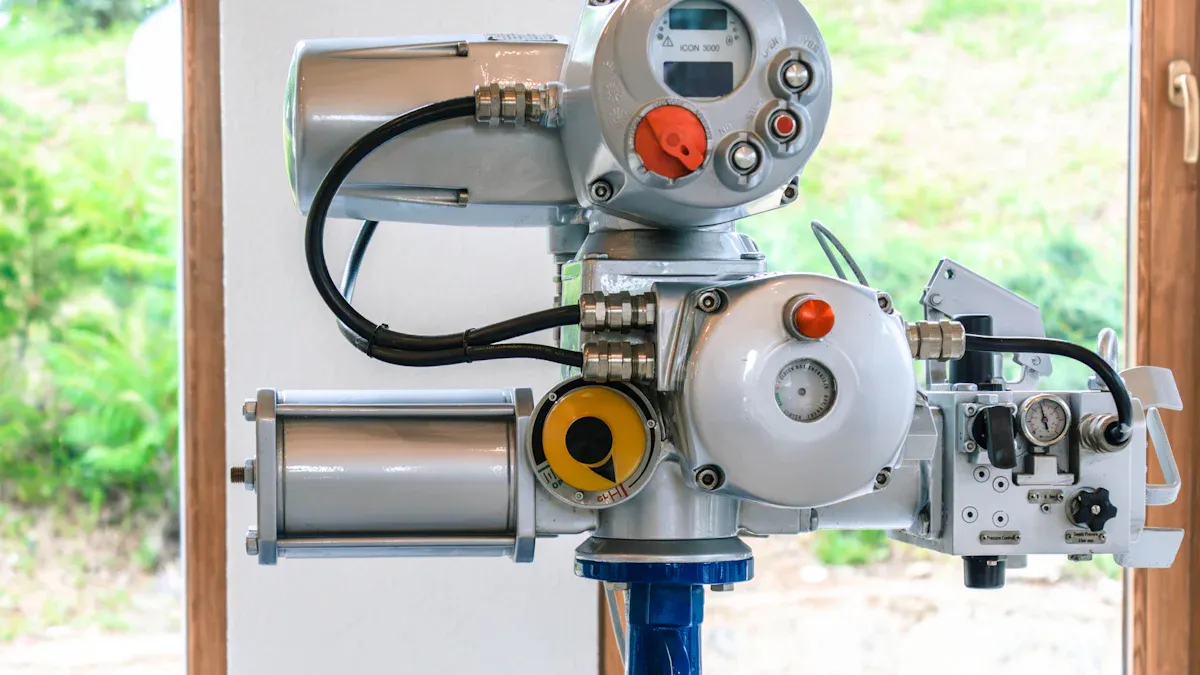
The actuator drives the multi-turn stem movement. Most PTFE lined gate valves use a handwheel or gearbox for manual operation. Electric or pneumatic actuators can replace these for remote control. Common construction features include:
- Rising Stem
- OS & Y Type (Outside Screw and Yoke)
- Bolted Bonnet
- Deep Stuffing Box for Gland Packing
- Two Piece Self Aligning Gland Flange
The rising stem design keeps threads outside the flow path. This setup stops corrosion on the threaded portion. The bolted bonnet allows easy maintenance access. A deep stuffing box holds gland packing that presses around the stem for reliable sealing. The two-piece self-aligning gland flange spreads pressure evenly on the packing.
These gate valves are part of a larger family called fluorine lined valves. Globe valves and butterfly valves also use this lining method for corrosive service. Each type meets different control needs. Gate valves are best at isolation rather than throttling. They open fully or close completely, so they restrict flow very little when open.
How the Gate Valve Works
Linear Gate Movement
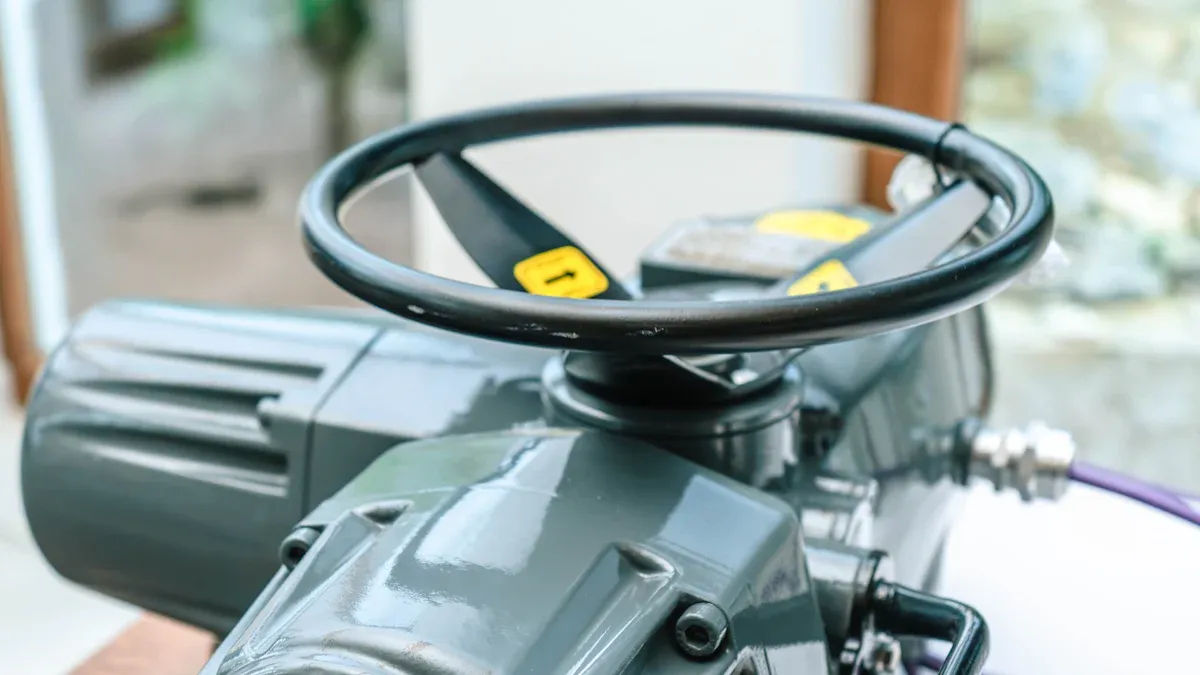
The gate valve works with a simple straight-line, multi-turn action. An operator turns a handwheel, or an actuator drives the stem. This turns the threaded stem that is connected to the gate. The turning motion changes into straight up-and-down movement of the gate inside the valve body.
The opening steps follow a clear order:
- Opening the valve: Turning the handwheel counter-clockwise (or starting an actuator) turns the threaded stem. This drives the gate upward in a straight line.
- Fully open state: Once the gate rises fully clear of the flow path, the channel is open. This gives straight-through flow with very little pressure drop and flow resistance.
- Closing the valve: Turning the other way moves the gate back down into the fluid passage.
- Sealing: The gate comes down and seats firmly against the sealing surfaces. This fully blocks the flow and gives a tight shutoff with little risk of leakage.
The most common design uses a wedge-shaped gate. As the gate pushes straight into the seat, the wedge shape fits tightly against the sealing surface. This improves sealing contact and helps ensure a tight closure. The gate blocks the flow path completely when lowered, so the valve is a true thrust-seated isolation device.
Gate valves serve one main purpose: isolation. They work only as cut-off devices, either fully open or fully closed. They cannot control flow. In dry throttling service, high fluid speed near the seat causes erosion. A partly open gate can also swing under medium impact and damage the seal. Gate valve sealing surfaces wear faster than globe valve surfaces in these conditions. Repairing that wear is hard because grinding and polishing cannot easily restore them.
How PTFE Protects Against Corrosion
The PTFE lining creates a protective barrier between corrosive media and the metal body. Pure PTFE faces the process medium while steel gives structural strength underneath. This combination removes corrosion risk by joining steel’s strength with chemically inert protection.
PTFE-lined components eliminate corrosion risk by combining the structural strength of steel with chemically inert protection, ensuring durability, process purity, and consistent performance even under harsh conditions.
PTFE does not bond well directly to metal because it is non-stick and has low surface energy. A suitable bonding interface is needed—such as a fiberglass-based composite structure or an activated bonding surface. Options like PFA-assisted bonding or one-sided sodium treatment support this construction. The result lowers direct corrosion exposure of the metal body and trim. It also lowers leakage and rework risks while supporting stable equipment operation.
Different lining materials suit different temperature demands:
| Lining Material | Working Temperature Range | Notes |
|---|---|---|
| PTFE | approx. -200°C to 180°C | Broad chemical resistance; low fluidity, notable thermal expansion |
| PFA | approx. -250°C to 260°C | More stable, better flexibility than PTFE |
| FEP / general fluorine-lined | up to 200°C (392°F) | Narrower practical range |
PTFE seats give corrosion-resistant sealing that keeps harsh chemicals away from metal surfaces entirely. This strong corrosion resistance makes these valves ideal for control of corrosive media in demanding environments. The lining covers every wetted surface—body cavity, gate plate, and stem—so no metal ever touches the process fluid. This design gives good sealing performance and corrosion resistance at the same time. That makes PTFE lined gate valves a dependable choice for aggressive chemical service where ordinary metal valves would fail quickly.
Where Gate Valves Are Used
PTFE lined gate valves are used in chemical processing, pharmaceuticals, water treatment, and general industrial work. Each industry needs dependable isolation of harsh fluids. The liner deals with the chemicals, and the gate handles the shutoff.
Chemical and Pharmaceutical Service
Chemical plants move acids, bases, and solvents through long pipe runs. A PTFE liner stays non-reactive against most of these fluids. It does not swell, break down, or lose its strength. Process purity also matters in pharmaceutical work. The non-stick liner surface resists buildup, so the flow path stays clean and product quality stays steady.
Steam and hot process lines add a temperature challenge. PTFE keeps its properties across roughly -20°C to +180°C. That range covers hot water and steam transport. These gate valves also suit control of corrosive media and high-temperature media in reactor feed lines and solvent transfer systems. Operators use them as isolation valves, not as throttling devices.
Water Treatment and Corrosive Media
Industrial wastewater can swing across the full pH scale, from 0 to 14. Fluorine-lined gate valves handle this duty well. Three practical points guide the selection:
- The PTFE lining should measure at least 3 mm thick.
- A flat-bottomed seat is recommended, because it prevents debris buildup.
- The valve works best as a full-open or full-closed isolation point.
The table below shows why the lining suits each medium.
| Medium / Condition | PTFE Property | Benefit in Water Treatment |
|---|---|---|
| Acids and bases | Resistant to most acids, bases, and solvents | No corrosion during exposure; reliable long-term performance |
| Solvents | Chemical inertness | Maintains process purity and equipment integrity |
| Steam and high temperature | Withstands -20°C to +180°C | Suitable for hot water and steam transport |
| General flow | Non-stick, low friction | Reduces buildup and clogging; lowers maintenance costs |
PTFE seats add another layer of protection. They keep corrosive media away from metal sealing surfaces. A multi-turn handwheel gives fine control over gate travel during opening and closing. Together, the lined body, the flat-bottomed seat, and the inert seats form a dependable barrier for tough water treatment duty.
Choosing and Sourcing PTFE Lined Valves
Selection Factors
Five practical factors guide the choice of a PTFE lined gate valve: media type, temperature, pressure class, size, and actuation. Media chemistry comes first. The liner must resist every fluid in the line, including acids, bases, and solvents. Temperature comes next, because PTFE softens and loses strength as heat rises. Pressure class and size follow the pipe schedule. Actuation depends on the site: a handwheel suits manual operation, while an electric or pneumatic actuator supports remote control.
Temperature deserves careful attention. PTFE under too much load or heat can deform, cold flow, or extrude, and each of these raises leakage risk. The table below shows the working ranges that matter most.
| PTFE Component / Condition | Temperature Range | Implication for Selection |
|---|---|---|
| PTFE lining | –20°C to +180°C | Standard lined gate valves handle media in this band |
| PTFE continuous range | –20°C to +180°C | Media must stay inside this band to keep mechanical strength |
| PTFE stem packing | –20°C to +180°C | Stem sealing may govern the upper limit |
| Elevated temperature plus high pressure | Strength drops as temperature rises | Derate the allowable temperature to avoid thermal creep |
Repeated heating and cooling changes the picture. Buyers should select on thermal cycle requirements rather than one steady-state temperature, because PTFE can creep under repeated expansion and contraction. Abrasive or high-cycle service also wears the seat faster, so a filled PTFE grade may serve better there.
TANGGONG VALVE Supply and Support
TANGGONG VALVE has manufactured industrial valves since 1990 and holds ISO 9001:2015, API 6D, CE, TUV, and SGS certifications, with export partnerships across more than 35 countries. The company also offers ball valves as a complementary isolation option where quarter-turn operation fits best; both types serve distinct duties well.
A PTFE lined gate valve is a gate valve with a full PTFE barrier on its wetted surfaces, so the process media never touch metal. The way it works is simple. A gate moves in a straight line, at a right angle to the flow, and seats tightly to close the path. The PTFE lining then keeps the medium away from the metal body and seats. The liner covers every wetted surface. This pairing works well for harsh fluids like strong acids and bases. These gate valves work best as full-open or full-closed isolation points, not as throttling devices. For shutoff duty in corrosive lines, TANGGONG VALVE offers help with selection.
FAQ
How does a gate valve open and close?
An operator turns the handwheel, and the threaded stem turns that motion into straight up-and-down travel. The gate lifts clear of the flow path to open and drops back into the seat to close. This multi-turn action gives a tight shutoff when the gate is fully moved.
Can a gate valve control flow rate?
No. A gate valve works only as an on/off device. A partly open gate exposes the seat to fast-moving fluid, and that wears away the sealing surfaces. Operators keep gate valves fully open or fully closed, so the valve is used for isolation, not for throttling.
What temperature range suits a PTFE lined gate valve?
The liner handles about -20°C to +180°C, depending on the fluoroplastic grade. Buyers should check the stem packing limit too, since it may be lower. Repeated heating and cooling also matters, because PTFE can creep when it expands and contracts.
Why does the lining thickness matter?
A thicker liner gives a more reliable barrier against harsh media. Suppliers often recommend at least 3 mm for water treatment duty. The liner covers the body cavity, the gate, and the stem, so no metal touches the process fluid.
How do seats and actuation affect selection?
Soft PTFE seats give bubble-tight closure against corrosive media. A flat-bottomed seat design also limits debris buildup. For actuation, a handwheel suits manual multi-turn operation, while an electric or pneumatic actuator supports remote isolation. Buyers should match pressure class and size to the pipe schedule.