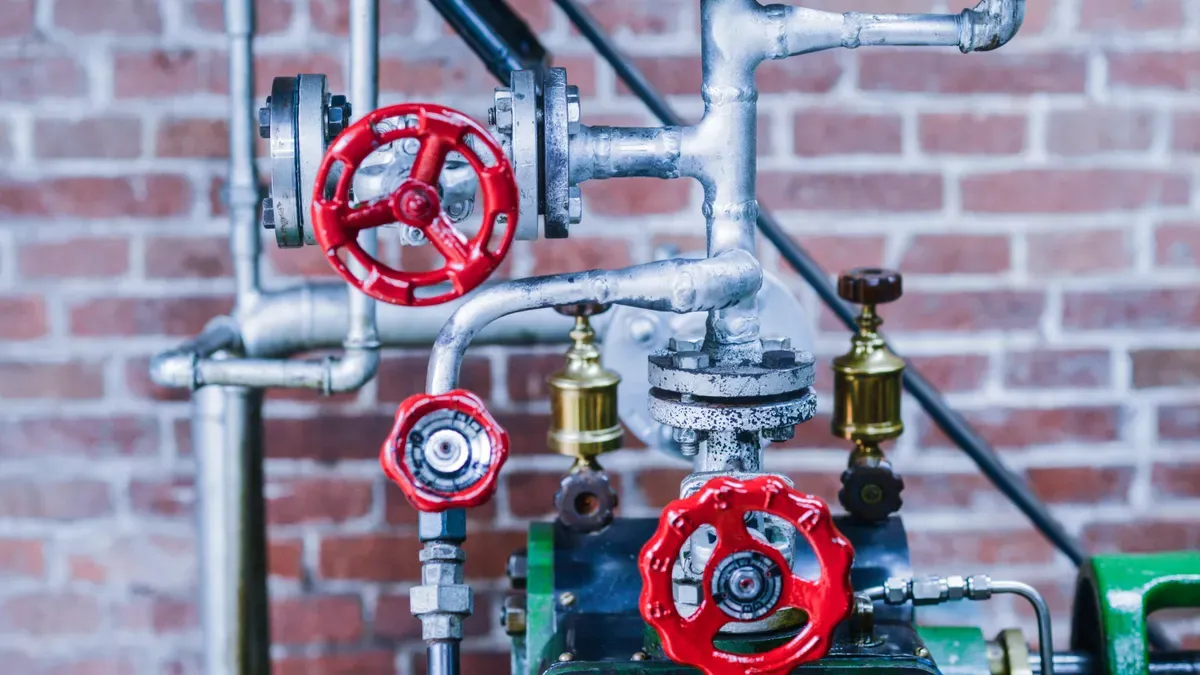
A fluoroplastic lined valve uses a fluoroplastic liner to keep corrosive media away from the metal parts of the valve body. The liner — usually PTFE, FEP, or PFA — gives you the mechanical strength of metal plus the chemical stability of fluoroplastics. This design protects all wetted metal surfaces from acids, oxidizing agents, and corrosive gases.
This guide to fluorine lined valves, also titled a guide to fluorine-lined valves, covers features, applications and selection. Engineers and technical buyers can compare lining materials, review service conditions, and match a fluorine-lined valve to their media and temperature. Fluorine-lined valves work well for corrosive duty where standard metal valves corrode.
Key Takeaways
- A fluoroplastic liner keeps corrosive chemicals from damaging the metal parts of a valve.
- PTFE, FEP, and PFA liners each give you a different mix of temperature range and cost.
- Fluoroplastic lined valves are used in the chemical, pharmaceutical, water, and marine industries.
- Pick a valve based on the chemical makeup of the media, the temperature, the pressure, and the standards.
- Checking the valve often and installing it the right way helps it last longer.
What Is a Fluoroplastic Lined Valve
Definition and Construction
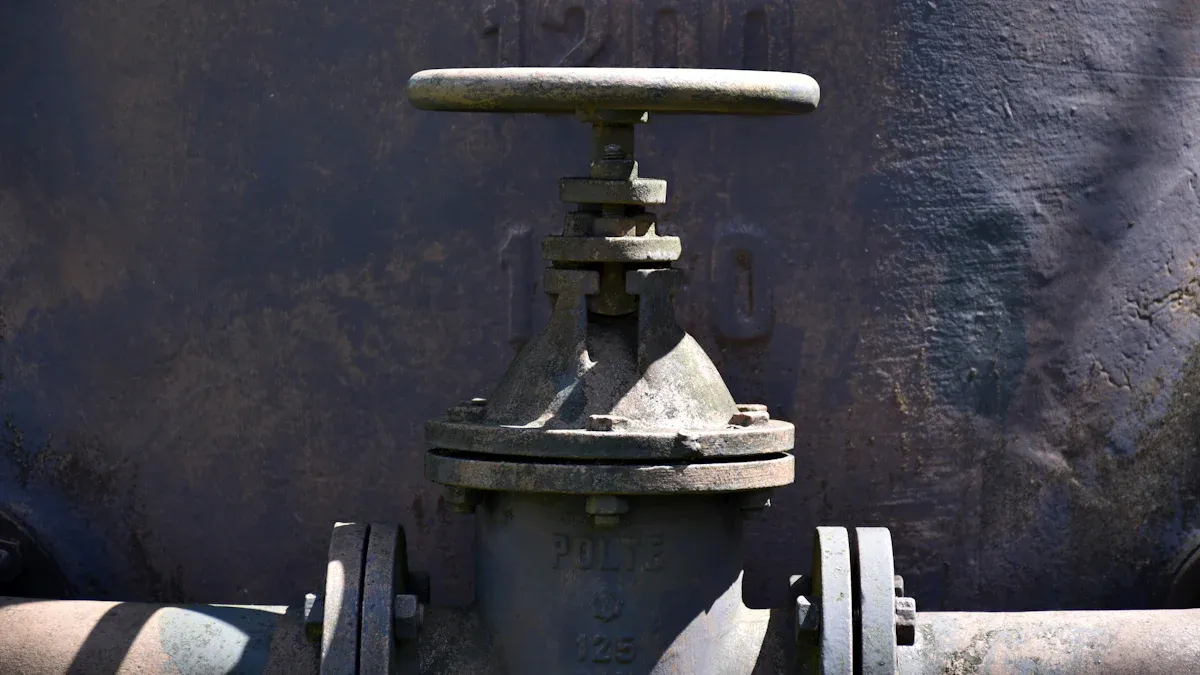
A fluoroplastic lined valve has a fluoroplastic liner that sits between the process media and the metal valve body. The liner makes up the wetted flow path. The metal body carries pressure loads and gives the valve its structure.
Construction begins with a metal body, usually cast or forged steel. A fluoropolymer lining is then attached to the inside surfaces. PTFE, PFA, and FEP liners use mechanical bonding or an interference fit to attach to the valve body, according to Industrial Monitor Direct. Liner thickness changes with the design and valve size. Garlock Inc. requires a minimum seal lining of 0.125 in. thick on its Gar-Seal butterfly valves, which range from 2 to 42 in., as reported by Machine Design. Molded liners usually cover the body cavity, seat area, and disc or ball surfaces. The perfluoroalkoxy (pfa) polymer lining gives a smooth, non-stick wetted surface in pfa lined valves.
How the Lining Protects Metal Parts
The isolation principle is simple. The liner guards every wetted metal surface from chemical attack, scaling, and corrosion. Process fluid touches only the fluoropolymer lining, so the body and trim never meet corrosive media. Knight Materials notes that a fluoropolymer lining is a proven, cost-effective solution in many corrosive environments. Properly chosen linings resist chemical attack and handle impact better than many other lining options. They can also be repaired or replaced to make equipment last longer.
Fluoropolymers as a group offer several protective properties, per Knight Materials:
- Chemical permeation resistance
- Non-reactivity for high-purity service
- Wide temperature range
- Abrasion resistance
- Non-stick properties and a low coefficient of friction
- High impact tolerance
Permeation needs attention in pfa lined valves and pfa-lined valves. No polymer film is perfectly impermeable. With enough time, temperature, and concentration, process chemistry can pass through an intact lining and reach the substrate, according to Fluorotec. Film continuity matters more than raw thickness alone. A thin, flaw-free lining beats a thick one with a pinhole. This is why holiday testing and cure control matter in pfa-lined valves and pfa lined valve specifications.
Media chemistry also drives liner choice. RMB Products notes that styrene quickly destroys high-density polyethylene parts, while a Teflon liner stands up to long styrene contact. Temperature changes can alter compatibility, so engineers must check both factors together. These principles apply to every fluorine-lined valve and fluorine-lined valves in corrosive service. A well-bonded fluoropolymer lining keeps the metal isolated and lengthens service intervals in pfa-lined valve and pfa lined valve installations.
Key Features and Benefits
Corrosion Resistance and Chemical Compatibility
The main features of fluorine-lined valves begin with the liner’s inert barrier. A PTFE lining is one of the most chemically inert materials known, per Kintek Solution. Its stable molecular structure forms a non-reactive shield. That shield keeps the valve core apart from corrosive fluids. The liner resists strong acids, alkalis, organic solvents, and powerful oxidizing agents. It even stands up to aqua regia without breaking down. The strong carbon-fluorine bond makes the material almost completely non-reactive.
| Property | Detail |
|---|---|
| Acids | Resists strong acids, including aqua regia |
| Bases / alkalis | Resists alkalis and strong bases |
| Solvents | Resists all common organic solvents |
| Oxidants | Resists powerful oxidizing agents |
| Limitations | Molten alkali metals, elemental fluorine, and compounds like chlorine trifluoride can attack it at elevated temperature and pressure |
PFA and PTFE have almost the same chemical resistance profiles, according to Janhen Valve. Both stay inert to strong acids, bases, and solvents. The difference is in physical properties, not chemical compatibility. This gives pfa lined valves and pfa-lined valves better chemical resistance across corrosive acids, alkalis, and solvents. Pfa lined valve liners also resist scaling and chemical attack, which makes service intervals longer. Users of pfa-lined valve and pfa lined valve designs get outstanding corrosion resistance in continuous duty.
PFA and PTFE have almost the same chemical resistance profiles. Both are inert to strong acids, bases, and solvents.
Sealing Performance and Service Life
Sealing quality depends on the seat and disc. Bosseal Valves reports that seats and discs machined entirely from PTFE can reach a zero-leakage sealing grade. That grade meets environmental and safety requirements. Tight shut-off also lowers contamination risk in high-purity systems. High-quality fluoroplastics offer excellent aging resistance. With proper selection and operating conditions, service life runs much longer than that of metal valves.
Temperature limits matter for F46 liners. Bosseal Valves notes that F46 can soften and deform when the medium stays above 120°C for long periods or briefly exceeds 150°C. Softening leads to poor sealing and more leakage. Switching to PFA, despite higher cost, can prevent total valve failure. Fluorine-lined valves also need care with particles, vacuum service, and excessive differential pressure. Gkfitting describes fluorine-lined valve maintenance as low: regular lining inspections, correct installation, and avoidance of sharp impacts. These habits protect the lining and extend operational life. Pfa lined valves and pfa-lined valves deliver exceptional corrosion resistance alongside this reliable sealing.
A Guide to Fluorine-Lined Valves: Lining Materials
PTFE, FEP, and PFA Lined Valves Compared
Three fluoropolymers lead this guide to fluorine lined valves: PTFE, FEP, and PFA. Each one gives strong chemical resistance, but they differ in how they are processed, their top temperature, and cost. PFA is the premium choice for hot, demanding service, while PTFE is the workhorse for acid handling at ambient and warm temperatures.
| Polymer | How it is applied | Service window |
|---|---|---|
| PTFE | Compression-molded sheet or sintered powder; not melt-processable | Cold flow under load; permeable to small molecules over time |
| PFA | Melt-processable, transfer-molded into the body, then sintered | Less cold flow than PTFE; lower permeability; more expensive |
| FEP | Extruded or melt-processed; often used for sight glasses and clear linings | Lower temperature ceiling than PTFE or PFA |
PFA lined valves stay intact at higher temperatures, so they fit settings that need thermal stability. PTFE lined valves and FEP lined ball valves may hit their limits in very high-heat cases, per POV Valve. Cost changes by application, but the durability and long service life of PFA lined valves often give better value in industries that need long-term, reliable solutions. Lined ball valves in full-port quarter-turn designs commonly use PFA liners, and lined plug valves with PFA liners show up in aggressive chemical duty.
Matching Liners to Media and Temperature
Selection should rest on real operating requirements, not on the belief that one fluoropolymer always wins. Kosen Valve lists temperature, pressure, chemical concentration, mechanical loading, permeability, dimensional stability, fabrication method, cleanliness, and cost as decision factors. A buyer comparing fluorine-lined valve materials should weigh all of them together.
Flowserve builds plug valve linings from PTFE and PFA in multi-layer systems rated across pH 0–14. Its rotational and compression molding holds lining thickness at 3–6 mm. Its method covers operating temperatures of -20°C to 200°C and pressures up to ANSI Class 600. Peflon maps PTFE to strong acids, alkalis, solvents, and mixed media, PFA to high-purity fluid handling and complex valve parts, and FEP to liners needing smooth flow surfaces. That mapping gives engineers a practical starting point for chemical resistance and thermal stability checks on any fluorine-lined valve.
Typical Applications and Industries
Chemical, Petrochemical, and Pharmaceutical
Chemical plants use pfa lined valves wherever harsh fluids flow through pipes. Bueno Indonesia lists common jobs like moving hydrochloric acid, sulfuric acid, nitric acid, caustic soda, chlorine chemicals, and solvents. These pfa-lined valves lower the risk of contamination and corrosion failure compared with standard metal valves. Semiconductor making, electroplating, and mining systems also use them to handle high-purity and harsh chemicals.
Kosen Valve reports that fluorine-lined valves serve the petroleum, chemical, dyeing, pharmaceutical, electric power, and environmental protection industries. In the chemical sector, plants use them to move and control corrosive chemicals. Pharmaceutical plants use them for media with strict cleanliness rules, which protects product quality and safety. ZP Control Valve notes that lined butterfly valves handle acids, alkalis, and salts, plus gases and liquids that are volatile or pass through materials easily. These fluorine-lined valve applications need tight shut-off and steady flow control.
Water Treatment, Power, and Marine
Water treatment, power generation, and marine sectors always face chlorides, slurries, and cooling water chemistry. PFA lined valves resist these conditions and keep maintenance schedules predictable. Lined ball valves work well for on/off duty on treatment lines and cooling circuits. Lined ball valves also serve dosing skids, where exact shut-off matters. Power plants use lined ball valves on flue gas desulfurization and demineralization lines. Marine systems prefer lined ball valves for seawater service, because the liner shields the body from chloride attack.
TANGGONG VALVE supplies fluorine-lined valves across oil and gas, petrochemical, energy, and marine industries. The company’s lined ball valve range covers sizes DN15 to DN2000 and pressure classes Class 150 to Class 2500. Pfa-lined valves from this range handle corrosive media in continuous duty. Buyers can match a fluorine-lined valve to their line size, pressure class, and fluid chemistry. Pfa lined valves and other lined ball valves give these industries a practical corrosion barrier.
How to Choose the Right Fluorine-Lined Valve
Media, Temperature, and Pressure Factors
Choosing the right fluorine-lined valve starts with a clear understanding of the process. Kintek Solution lists four criteria that guide the decision: media compatibility, operating conditions, size and flow, and actuation method. Each one helps narrow the choices before a buyer compares specific products.
| Selection Criteria | Key Considerations |
|---|---|
| Media Compatibility | Check chemical resistance for specific acids, alkalis, and concentrations. |
| Operating Conditions | Confirm pressure rating and temperature range (−100°C to 260°C). |
| Size & Flow | Match the pipe diameter; think about flow rate and pressure drop for on/off or throttling. |
| Actuation Method | Pick manual (lever) for easy access or automated (pneumatic/electric) for control systems. |
Media chemistry should get the first look.
Jonloo Valves notes that fluoroplastic valves work better for sulfuric acid than carbon steel or cast iron when concentrations are above 80% and temperatures are below 80°C. Hydrochloric acid does better with plastic and rubber-lined valves, though plastics stop working well above 150°C or 16 kg pressure. Nitric acid at room temperature works well with 316 and 316L stainless steel, while high-temperature nitric acid needs titanium alloys. Acetic acid, alkali solutions, and chlorine each have their own material preferences. Chlorine with water in it attacks most metal valves, so fluorine-lined valves become an excellent option. Alcohols, ketones, esters, and ethers usually have low corrosivity, but seal materials still need a compatibility check.
Temperature and pressure set the liner’s practical limit. Kintek Solution reports that PTFE handles up to 260°C (500°F) and still works at cryogenic temperatures down to −100°C (−148°F). Under high, constant pressure at elevated temperature, PTFE can suffer cold flow, a slow deformation that eventually weakens the seal. Buyers should confirm the valve’s pressure rating against long-term operating conditions, not just start-up values. Pfa lined valves and pfa-lined valves handle higher temperatures than FEP, which makes them a safer fit for hot corrosive duty. Pfa lined valve designs also resist cold flow better than standard PTFE, so pfa-lined ball valves suit continuous high-pressure service. Engineers comparing pfa lined valves with other options should weigh temperature, concentration, and pressure together.
Standards, Valve Type, and Maintenance
Applicable standards guide the final choice. Weldon Valves lists ISO, ANSI, DIN, API, and CE as the common references for lined valve selection. These standards cover dimensions, pressure ratings, test methods, and safety requirements. A buyer should confirm that the chosen fluorine-lined valve carries the certification its jurisdiction or project specification demands.
Valve type follows the duty. Ball, plug, butterfly, and gate designs each fit different flow control needs. Lined ball valves offer quarter-turn operation and tight shut-off, which suits on/off isolation. Lined ball valve designs also work well for automated actuation. TANGGONG VALVE ball valves support sizes DN15–DN2000 and pressure classes Class 150–Class 2500, so lined ball valves from this range cover diverse duty. Pfa-lined valves in full-port configurations handle high flow with minimal pressure drop. Jonloo Valves recommends a structured selection process: understand the media’s chemical makeup, temperature, pressure, and flow rate; account for operating conditions and phase changes; avoid oversizing or undersizing; and plan for routine inspection. Maintenance planning should include lining inspections, seal checks, and access for service. Pfa lined valves and pfa-lined valves reward this discipline with longer service intervals. Selecting the right fluorine-lined valve ultimately means matching liner, body, and valve type to the real process, then verifying performance against recognized standards.
Comparing Lining Options for Your Application
Performance Trade-Offs by Material
A side-by-side view helps engineers weigh the four factors that matter most: chemical resistance, temperature ceiling, permeability, and cost. Kintek Solution reports that PTFE and PFA both resist nearly all industrial chemicals, including strong acids, bases, salts, and organic solvents. The differences sit in the physical limits.
| Property | PTFE | FEP | PFA |
|---|---|---|---|
| Chemical resistance | Excellent | Excellent, limited in extremes | Excellent |
| Max service temperature | 260°C | 200°C | 260°C |
| Permeability | Standard | Moderate | Lower |
| Relative cost | Higher | Lower | Higher |
Plastik Solutions lists PTFE’s top service temperature at 260°C and its lowest at −200°C. Virheos reports FEP’s continuous ceiling at 200°C and PFA’s at 260°C. PFA also offers lower permeability and smoother surfaces, per Kintek Solution. FEP is easier to process and costs less, per Virheos. No single column wins everywhere.
Fit by Application Needs
Application fit decides the choice. PFA lined valves suit high-temperature corrosive duty and ultra-pure media, where lower permeability and creep resistance pay off. Virheos notes that PFA lined valves handle chlorine gas and hypochlorites better in hot, high-purity service. PTFE lined ball valves cover broad chemical resistance at moderate cost, and they fit general corrosive service well. FEP lined ball valves serve moderate duty and cost-sensitive projects, such as dilute sulfuric acid below 120°C.
Buyers should match each option to the duty. PFA lined valves and pfa-lined valves reward high-demand service with longer intervals. PTFE lined ball valves and other lined ball valves remain a proven, economical choice for many chemical lines. FEP lined ball valves and comparable lined ball valves protect moderate services at lower cost. Engineers who compare pfa lined valves against pfa-lined valves and PTFE alternatives on real media data will pick the right liner. Pfa lined valves, pfa-lined valves, and every lined ball valve option fit some duty best.
A fluoroplastic lined valve keeps process media behind an inert polymer barrier. The liner protects every wetted metal surface from chemical attack. Key features include wide chemical compatibility, tight shut-off, and long service intervals. PTFE, FEP, and PFA liners each fit different temperature and permeability needs. Chemical, pharmaceutical, water treatment, power, and marine plants depend on fluorine-lined valves for corrosive duty.
Selection should follow the media chemistry, operating temperature, pressure class, and applicable standards. Engineers should match lining material and valve type to the real process. This guide covered features, applications and selection. Fluoroplastic lined valves deliver corrosion resistance and reliable sealing across industrial service. Buyers can consult TANGGONG VALVE for selection support.
FAQ
Which liner suits high-temperature corrosive service?
PFA handles the toughest jobs. It works up to 260°C and resists creep better than standard PTFE. PFA also lets less through, so hot acids and chlorine-bearing media stay contained. Engineers pick PFA lined valves for continuous duty where heat stability and purity both matter.
When does FEP make more sense than PTFE or PFA?
FEP fits moderate duty and projects with tight budgets. Its continuous ceiling is near 200°C, lower than PTFE and PFA. FEP is easy to process and costs less. Dilute sulfuric acid below 120°C is a typical case. Buyers pick FEP lined valves when the duty stays inside that range.
Do fluoroplastic lined valves work at cryogenic temperatures?
Yes. PTFE still works down to about −200°C, and the article’s selection table lists a −100°C lower limit for lined valve service. Engineers should check the liner and seat materials against the real cryogenic duty before ordering.
What information does a supplier need to recommend a valve?
A supplier needs the media chemistry and concentration, the operating temperature range, the pressure class, the line size, and the required shut-off performance. Actuation needs and applicable standards complete the picture. TANGGONG VALVE offers selection support and covers sizes DN15–DN2000 in Class 150–Class 2500.
How often should operators inspect a lined valve?
Inspection intervals follow the duty, not a fixed schedule. Operators check the lining for cracks, blistering, or permeation damage during planned shutdowns. Sharp impacts and too much differential pressure shorten lining life. Regular checks and correct installation extend service intervals.