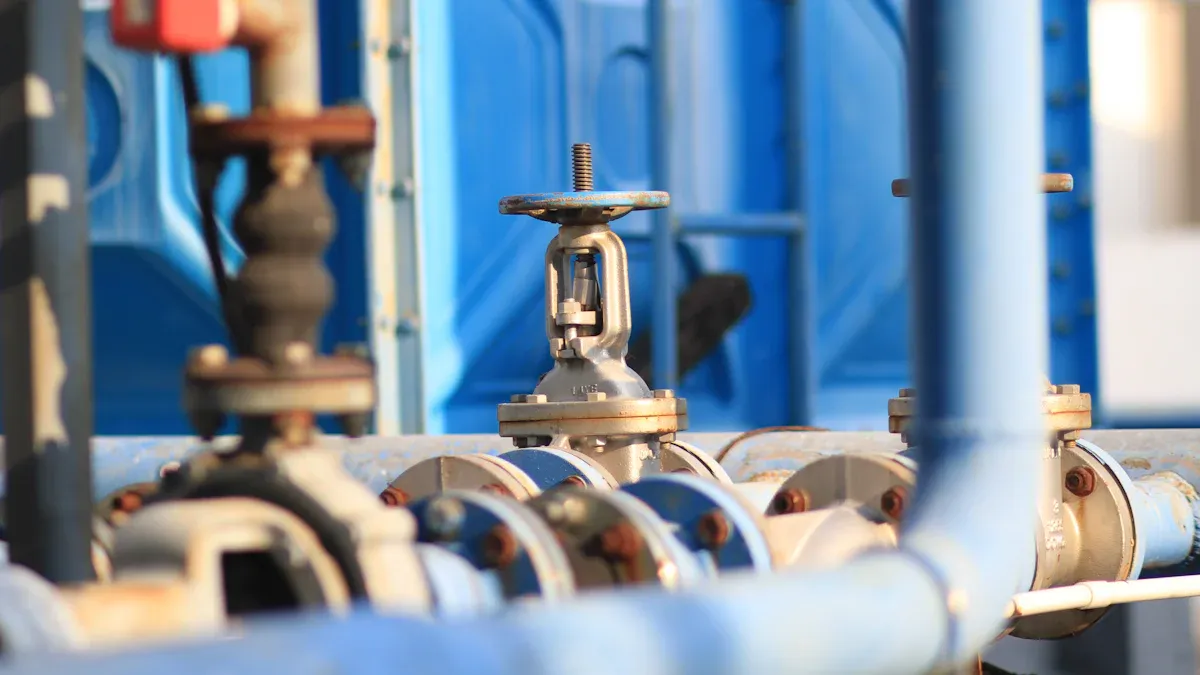
A PTFE lined check valve is a one-way valve. It lets fluid move in only one direction and stops any flow going backward. The whole inside — body and trim — has a PTFE lining, so harsh chemicals never touch the metal shell. This design is great at stopping backflow while standing up to strong chemicals like hydrochloric acid, sulfuric acid, and chlorine. The lining also works for long-term use from -200°C to 260°C. Forward flow pushes the disc off its seat, and reverse pressure pushes it back. The valve closes by itself, with no outside power. Engineers pick these check valves to stop backflow and chemical damage in the same line.
Key Takeaways
- A PTFE lined check valve lets fluid move in just one direction and blocks it from flowing back.
- The PTFE lining keeps harsh chemicals from damaging the metal body.
- Forward flow opens the valve, and reverse flow shuts it on its own.
- These valves work well in chemical plants and water treatment.
- The lining can only handle certain temperatures and pressures, so pick the right valve for your needs.
What Is a PTFE Lined Check Valve?
Definition in Plain Terms
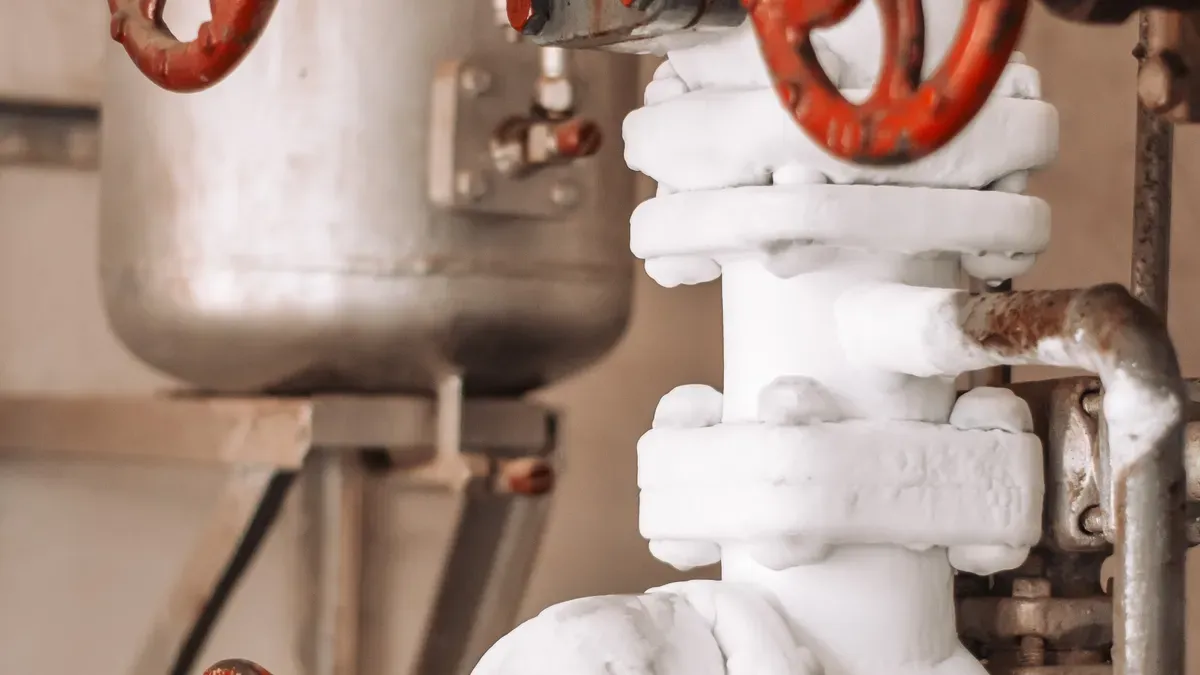
A PTFE lined check valve allows fluid to flow in one direction and blocks reverse flow. It works automatically without a handle or external control. It is also called a non-return valve or one-way valve.
The valve protects pumps, meters, filters, and compressors from backflow damage. It can also prevent contamination between tanks and stop drainage when a pump shuts down.
Inside the valve, forward flow lifts the disk off its seat. Reverse pressure pushes the disk back onto the seat to close the passage. This simple design is compact, reliable, and cost-effective.
Check valves come in different materials, sizes, and designs. They are used in chemical plants, boiler feed systems, pump lines, and domestic water systems. Small ball check valves are common in metering pumps, chromatography pumps, and water-slide supply systems. They are also used in aircraft hydraulic circuits, nuclear feedwater systems, and gas mixing lines.
What the PTFE Lining Covers
The liner is the key part of a PTFE lined check valve. It covers all surfaces that touch the process fluid, including the body, disk, seat, hinge pin, washers, and spring when fitted. This keeps the fluid away from bare metal.
PTFE resists most industrial acids, bases, and chemicals. It protects the metal body from corrosion, wall thinning, and leaks. This allows cast iron or ductile iron to provide strength while the liner resists chemical attack. A PTFE seat also helps maintain a tight seal.
The lining can help keep the fluid clean by preventing direct contact with metal. Since PTFE does not bond easily to metal, manufacturers use a bonding layer to hold it in place. This design suits aggressive media such as hydrochloric acid, sulfuric acid, and chlorine, provided the operating conditions match the valve’s material limit.
How Does a Check Valve Work?
A check valve is a passive part. It controls which way flow goes without any outside power, motor, or hand control. No solenoid, pilot line, or sensor is involved. The design depends on the fluid itself. Forward motion of the medium opens the inside part, and reverse motion closes it. This self-acting motion makes the device simple and reliable.
Check valves are a common type of passive valve. They let fluid flow one way and stop it from flowing back. This gives flow control without outside power.
How Forward Flow Opens It
Forward flow opens the valve through a balance of forces. Inlet pressure pushes the sealing part — often called a poppet or disk — in the opening direction. A spring, gravity, or outlet resistance pushes back in the closing direction. The valve opens only when the opening force is greater than the closing force. The steps follow a clear order:
- Inlet pressure builds on the upstream side of the valve.
- This force pushes against the inside sealing part in the opening direction.
- The inlet force rises above the opposing spring force and any outlet resistance.
- The disk lifts off the seat, creating a path for flow.
- The valve reaches a working balance, and fluid passes in the intended direction.
A low cracking pressure lets the disk open with little effort from the system. Spring-assisted designs use a light spring to keep the disk ready to close. The part stays open while motion continues. The disk lifts only as far as the force balance allows, so the valve adjusts itself to the load. Any drop in forward motion lets the spring start to push the disk back toward the seat.
How Backflow Closes It
A check valve closes when forward flow slows or stops. The spring, gravity, or reverse pressure pushes the disk onto the seat, blocking reverse flow without operator action. Swing check valves use a hinged disk, while spring-loaded designs close faster and help reduce water hammer, a pressure surge caused by sudden flow stoppage.
Spring selection matters. A spring that is too stiff increases the cracking pressure and wastes energy. One that is too soft delays closure and allows reverse flow. The disk and seat must also stay clean to ensure tight sealing.
Correct sizing and installation are essential. An oversized valve may chatter, while an undersized valve restricts flow. Swing check valves usually suit horizontal pipes, while piston and wafer designs can suit vertical pipes with upward flow, depending on the manufacturer’s requirements.
Common Types of Check Valve
Swing, Wafer, and Dual Plate Designs
Each design closes in its own way. A swing check valve uses a hinged disk. Forward flow pushes the disk open, and gravity swings it shut when flow reverses. This design suits large pipelines and low-resistance duties such as wastewater and water distribution. A wafer check valve mounts between two flanges and saves space. Its short disk travel gives fast closure, which helps in compact systems and pump discharge lines. A dual plate check valve carries two semicircular plates on a central hinge. Springs assist the plates, so closure stays quick and quiet. This design fits space-limited piping in HVAC and water distribution.
| Design | How It Closes | Where It Fits Best |
|---|---|---|
| Swing | Hinged disk swings shut under gravity and reverse flow | Wastewater, water distribution, low-pressure-drop liquid lines |
| Wafer | Short-travel disk closes quickly between flanges | Compact systems, pump discharge, HVAC circuits |
| Dual plate | Two spring-assisted plates close fast and quietly | Space-limited HVAC piping, pump discharge, water distribution |
Piston, Ball, and TANGGONG Valve Options
A piston check valve guides a cylindrical piston inside a bore. The guided travel gives tight sealing under high pressure, so steam lines and vertical pump protection suit it well. A ball check valve lifts a spherical ball off its seat. The ball rotates as it moves, and this wiping action keeps the seat clean in slurries and wastewater.
These types of check valve cover most industrial duties. Selecting check valves starts with the fluid, the pressure, and the mounting position. TANGGONG VALVE manufactures swing, wafer, dual plate, piston, and ball check valves under API 594 and ISO 9001:2015 certification. Selecting check valves from one source keeps the flow direction and disk behavior consistent across a plant.
Pros and Cons of PTFE Lined Check Valves
Where They Perform Best
A PTFE lined check valve works great in tough chemical service. The liner protects every wetted part, so acids, bases, and oxidizers touch an inert surface instead of metal. PTFE resists nearly all strong acids, strong bases, and many organic solvents. Only a few media can harm it, such as molten alkali metals, fluorine gas, and very strong oxidizers. That wide tolerance gives dependable corrosion resistance across mixed chemical streams. Brine, chlorine, and hydrochloric acid lines all fall within its range.
The design also gives solid backflow protection. Forward flow lifts the disk off its seat, and reverse flow pushes that disk back down. A PTFE seat and a lined disk keep the sealing path inert, so PTFE shutoff stays tight in corrosive lines. The disk moves a short distance, and it responds right away to any change in direction. Spring-assisted closure resists backpressure and limits water hammer. A light spring can help the disk. The disk closes to stop backflow when a pump stops. Users get reliable backflow prevention plus long service life, because the liner does not corrode or pit. A corrosion-resistant body liner also keeps the process fluid clean.
Where They Fall Short
These limits are about fit, not fault. The liner has a narrower usable temperature range than bare metal, and thermal shock can crack or delaminate it. Rapid thermal cycling puts stress on the bond between liner and metal. High-temperature or rapidly cycling service fits other designs better. Too much pressure can deform the liner, and abrasives or water hammer add stress. High-pressure or abrasive systems need a different construction. A damaged disk or liner usually cannot be repaired, so the whole valve must be replaced.
Cost is another factor. The lining process raises the upfront price above a standard steel check valve, so cost-sensitive, non-corrosive duties rarely justify it. Some dual plate designs add a small pressure drop. The disk and seat must stay clean for tight closure, and debris on the disk face lets fluid slip past. Any backflow meets a sealed seat. Plant teams install these check valves on pump discharge lines. Selecting check valves means matching type, lining, and duty to the fluid.
Where Are PTFE Lined Check Valves Used?
Chemical and Process Industries
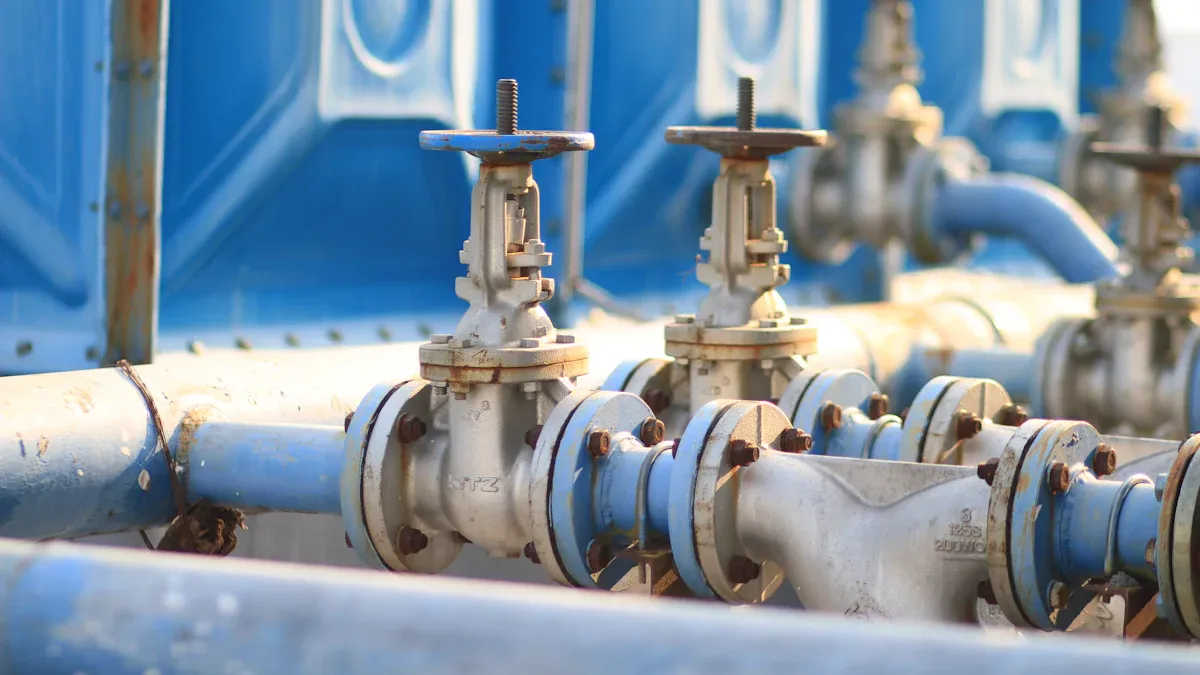
Chemical plants depend on these valves wherever harsh liquids move through pipes. A PTFE lined check valve handles hydrochloric acid, sulfuric acid, chlorine, and caustic solutions without the body rusting. The liner protects the metal shell, so the valve stays strong in chemical service. Process lines that carry harsh liquids, gases, and steam all work well with this design. The disk lifts with forward flow and seals against reverse pressure, so pumps and reactors stay safe. A lined disk and seat keep the sealing path non-reactive, and that matters when a small leak could ruin a batch. Plants also put these valves on dosing lines, where exact flow matters and a backward surge would spoil the mix. Steam service needs care, because the liner has a narrower temperature range than bare metal. Engineers check the duty temperature first, then confirm the lining works with the medium.
Water Treatment and Other Applications
Water treatment plants use lined valves for chlorinated water and chemical dosing systems. The lining resists the chlorine that would eat into an unlined body. In water and metal treatment, PTFE lined valves protect pumps from harsh chemical backflow. Common duties include:
- Chemical dosing lines
- Electroplating baths
- Acid recovery circuits
Pump discharge lines are another major duty. A check valve on the discharge side stops backward flow when a pump stops, and the liner adds rust protection for harsh fluids. Selecting check valves for these lines means matching the disk behavior to the pump cycle. A light spring closes the disk quickly and limits water hammer. Backflow protection matters most on lines that feed boilers, filters, and storage tanks. TANGGONG VALVE serves oil and gas, petrochemical, power generation, and water treatment industries with these designs.
A PTFE lined check valve is a one-way valve with an inert liner. Forward flow lifts the disk, and reverse pressure seats it closed. This simple action delivers the main strength: strong corrosion resistance with automatic, one-way flow. The main trade-off is the liner’s narrower range of temperature and pressure. That limit makes fit matter more than raw strength. Readers should match the valve type and lining to the fluid and the conditions. A swing, wafer, dual plate, piston, or ball design each closes differently. The right pairing of check valves and lining keeps a line safe and reliable. Preventing backflow starts with that match.
FAQ
How Does a Buyer Size a PTFE Lined Check Valve?
Sizing starts with the line size, the flow rate, and the working pressure. A check valve that is too big may chatter against its seat. One that is too small may restrict the flow. The buyer should make sure the cracking pressure fits the pump cycle. A light spring closes the disk fast and limits water hammer.
Can These Valves Mount in Any Position?
Mounting depends on the design. Swing check valves work well in horizontal lines, and vertical lines with upward flow also work. Piston and wafer check valves do well in vertical installations. Dual plate check valves fit tight spaces between flanges. The installer should make sure the orientation fits the chosen type before fitting the valve.
What Causes Water Hammer, and How Do These Valves Reduce It?
Water hammer is a pressure surge. It happens when flow reverses suddenly and slams the disk onto its seat. Spring-assisted closure lowers this risk. The spring closes the disk fast, before reverse flow builds up. Dual plate and wafer check valves close quickly for the same reason. Correct sizing also helps prevent the surge.
Which Lining and Body Pairing Suits Aggressive Media?
PTFE resists nearly all industrial acids, bases, and oxidizers. A cast iron or ductile iron body carries the pressure load, and the liner takes the chemical attack. The buyer should check the duty temperature first, because the liner has a narrower range than bare metal. Then the buyer confirms the lining works with the medium.
What Maintenance Do PTFE Lined Check Valves Need?
These check valves need little routine service. The disk and seat must stay clean for tight closure. Debris on the seat lets fluid slip past. Plant teams inspect the valve during scheduled shutdowns. A damaged liner or disk usually cannot be repaired, so the whole valve gets replaced. TANGGONG VALVE tests its check valves to API 598 standards.