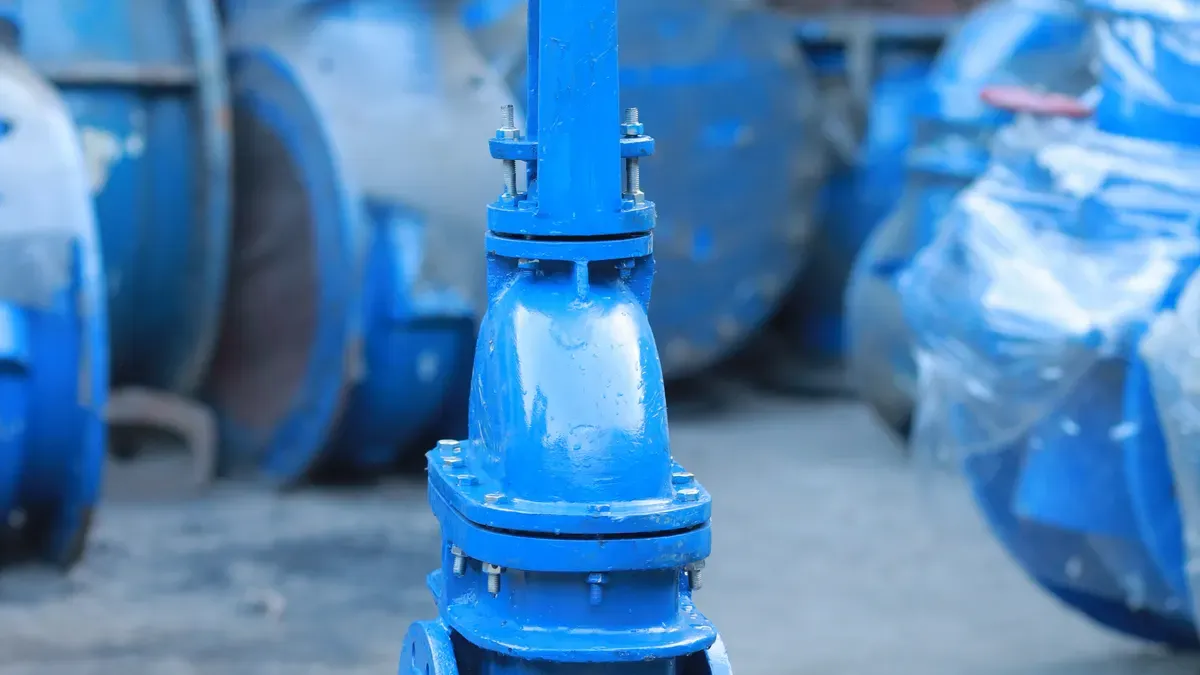
A flat gate valve is an on/off valve. A flat, parallel plate slides up to open and down to close. Think of a sliding barn door. Pull the door sideways, and the opening clears. Push it back, and the opening seals. This valve works the same way, except the plate moves straight up and down inside the housing. The flat gate valve controls flow with a simple sliding motion. No twisting plug, no swinging disc. One metal plate travels in a straight line. That plain design makes the valve easy to understand, easy to operate, and easy to trust in daily service.
Key Takeaways
- A flat gate valve is an on/off valve. It uses a flat plate that slides up to open and down to close.
- The valve’s simple sliding motion makes it easy to operate and reliable for daily use.
- Flat gate valves handle heat and dirty fluids better than wedge gate valves.
- Use flat gate valves fully open or fully closed. They are not for controlling flow rate.
- Piggable pipelines need flat gate valves with a clear bore so cleaning tools can pass through.
What Is a Flat Gate Valve?
A Plain-English Definition
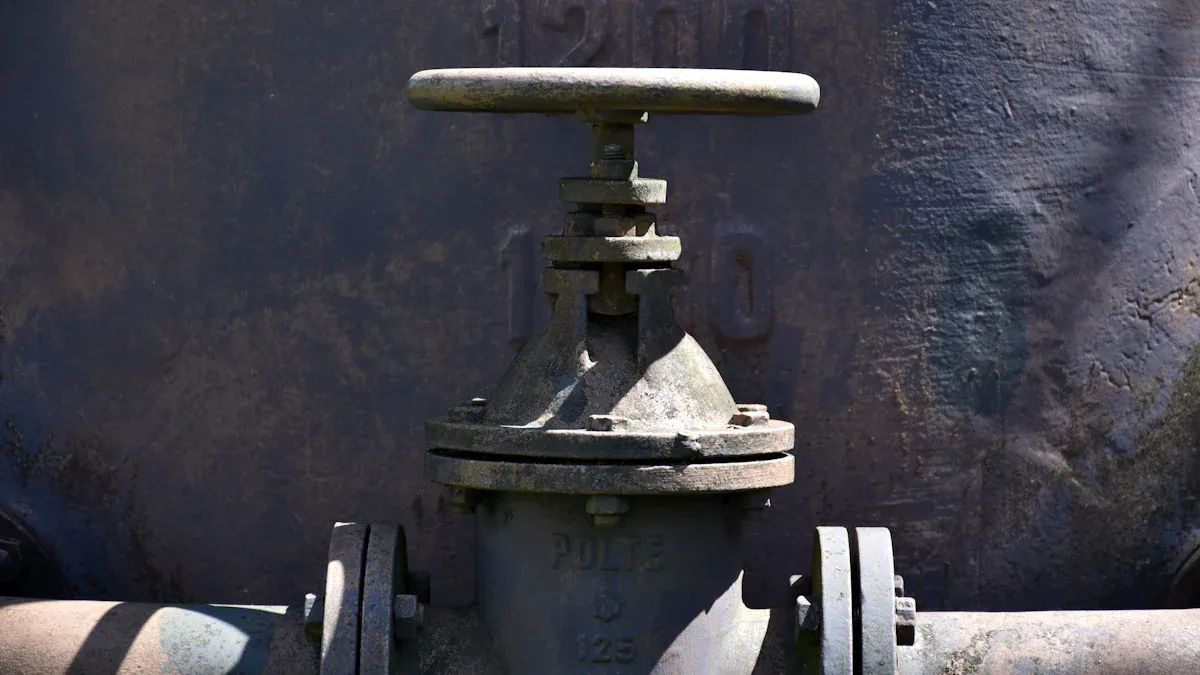
A flat gate valve is an isolation valve. It starts or stops flow, and it does not regulate it. The valve works as a linear-motion isolation valve: a flat, parallel-faced gate-like closing element travels straight up and down inside the body. That disc has two flat sides that sit parallel to each other. Guide rails inside the body keep the disc aligned as it moves. Operators use this valve to stop or allow the flow completely. They do not crack it open to trim a stream. A half-open gate would sit in the path of the moving liquid and wear down fast. So the design serves one job well: full open or full closed.
Flat Gate vs. Wedge Gate
Both types belong to the same family, and both do the same basic job. The difference sits in the shape of the closing element. A wedge gate has angled faces, like a doorstop. It wedges into the seat and relies on that taper to press tight. A flat gate has two flat faces that slide down between two seats. The parallel gate valves use this flat disc, and the seats press against it from both sides. Parallel slide gate valves take their name from that sliding action. The flat design suits lines that carry hot fluids. Heat makes metal expand, and a wedge can jam when the body grows. A flat disc slides freely even when the parts swell. The flat design also handles dirty service better. Grit and scale slide off the flat faces instead of packing into a wedge angle. Maintenance crews like the flat style for another reason. They can resurface a worn sealing surface with simple grinding. A wedge needs careful machining to keep its angle true. One trade-off exists. The wedge can seal with less help from line pressure. The flat disc often needs pressure behind it to press the faces home. That detail matters in low-pressure lines, and buyers should weigh it against the other benefits.
The Gate Valve Working Principle, Step by Step
Opening the Flow Path
An operator turns the handwheel, and the stem spins with it. The stem threads into a nut fixed on top of the gate. As the stem rotates, the gate rises in a straight line. The gate valve working principle here is pure mechanics: rotary motion at the handle becomes linear motion at the disc. A rising stem shows the gate position, so the crew can see how far the disc has traveled. When the gate reaches the top, it retracts into the bonnet. The passage through the body is now clear and wide. Fluid moves through with very little flow resistance, because nothing sits in the bore. The flow resistance coefficient of a fully open flat gate valve stays low for this reason. A pig can pass through the bore without meeting an obstacle. The opening and closing torque stays modest, and the table below shows why.
| Valve Type | Operating Torque Characteristic |
|---|---|
| Wedge gate valve | Requires higher torque, because the wedge-shaped gate must be forced downward to achieve sealing. |
| Flat (slab) gate valve | Requires less torque, since the medium’s pressure presses the gate against the seat to achieve the seal. |
Closing and Sealing Tight
Turning the handwheel the other way drives the gate down. The disc slides between the two seats and blocks the flow path. Contact between the gate and the sealing surface on the body forms the seal. The steps follow a simple order:
- The gate lowers completely and blocks the flow path.
- The gate contacts the seating surfaces on the valve body.
- That contact forms a tight seal and holds fluid back.
Line pressure helps here. It pushes the parallel faces of the gate against the downstream valve seat, and the seal tightens as pressure rises. Good sealing performance depends on clean faces. Debris trapped between gate and seat erodes the hard facing into a groove, and leakage follows even at full closure. A partly open gate makes this worse, because a high-velocity jet scours the sealing surface. That is why a gate valve serves ON/OFF duty only. It is not a throttling device. Operators open it fully or close it fully, and they get complete shutoff with zero leakage at the seat when the faces stay clean.
Main Parts of a Flat Gate Valve
A flat gate valve has a small set of main parts. Each part does one clear job, and together they give you reliable on/off service.
Body, Bonnet, and Stem
The body is the shell that holds pressure. It holds the gate and connects to the pipeline at both ends. The bonnet caps the top of the body. It holds the stem packing and guides the stem as it turns. The bonnet also lets maintenance crews reach the internal parts.
The stem is the threaded rod that links the handwheel to the gate. Turning the handle turns the stem, and the gate rises or falls. This valve may use single or double gates, and the stem drives whichever design the body carries. Some models add a spreading mechanism to push the discs apart at full closure.
The Parallel Gate and Seat
The gate is a disc with two smooth faces. A dual-parallel-disc design keeps the faces true as the disc travels up and down. The bore matches the pipe inner diameter, so flow passes without obstruction.
| Component | Design Specification |
|---|---|
| Gate structure | Dual-parallel-disc design; vertical travel via stem; bore equals pipe inner diameter |
| Sealing surfaces | Highly polished, smooth faces that mate tightly with the seat |
| Seat type | Floating seats with pre-loading for bidirectional sealing |
| Materials | Reinforced graphite and PTFE; metal and soft-seat composite |
| Seat ring | Welded construction for easy maintenance |
| Wear resistance | Hard-faced seats for abrasive media |
Parallel gate valves use a flat gate positioned between two parallel seats.
The floating valve seat structure lets each seat move a little and press against the gate. Line pressure pushes the downstream seat home, and the seal gets tighter as pressure rises. A double gate plate gate valve pairs two discs with this floating valve seat arrangement. A single gate or double gate flat gate valve offers the same sealing logic in either build. The polished sealing surface on each face resists leakage, and hard facing protects the sealing surface in gritty service. Good sealing performance depends on clean faces at every cycle. Operators should inspect both faces during scheduled service.
Where Gate Valves Are Used
Common Industries and Systems
A gate valve appears anywhere a line needs a clean stop and a clean start. Water supply systems depend on them at treatment plants, pump stations, and distribution mains. Oil and gas pipelines use them at block stations and terminal manifolds. General pipeline shutoff duty covers refineries, chemical plants, and power stations. Each of these systems wants the same thing: a wide-open bore during normal operation and a tight seal when the line must stop.
Piggable service is a special case worth explaining. A pig is a cleaning or inspection tool that travels inside the pipeline. The valve must give a clear passage so the tool can pass through. Full-bore slab gate valves meet this need in long-distance, large-diameter petroleum and natural gas pipelines. A through-conduit design keeps the bore lined up with the pipe interior. These points define the requirement:
- The bore must match the pipeline interior so the tool can pass without obstruction.
- A valve without a through-conduit design is usually not piggable.
- Low flow resistance in the open position cuts energy loss along the line.
Why TANGGONG VALVE Fits These Applications
TANGGONG VALVE makes gate valves and other industrial valves for oil and gas, petrochemical, power generation, and marine industries. The company builds its reputation on strict quality control and large-scale production. Its product range covers ball valves, gate valves, butterfly valves, check valves, and control valves. That breadth lets one supplier serve a whole project.
Quality certifications back the product line. The table below lists the main ones.
| Certification / Standard |
|---|
| API 600 |
| API 603 |
| CE |
| TUV |
| ISO 9001:2015 |
| SGS |
Factory testing follows API 598 for shell and seat leakage, and fire-safe designs are available per API 6FA. Global experience matters too. TANGGONG VALVE serves industrial markets worldwide from its base in Wenzhou, China. Buyers gain a reliable source with competitive pricing and solid mechanical integrity. The brand fits water systems, pipeline shutoff, and high-pressure service alike.
A gate valve of this style is an isolation valve that starts or stops flow with a sliding plate. The core principle stays simple: a flat, parallel gate slides up to open the bore and down to seal it. The body, bonnet, stem, and parallel seat each play a clear role.
These valves serve water supply systems, oil and gas pipelines, and piggable lines that need a clear passage. TANGGONG VALVE manufactures gate valve products for oil and gas, petrochemical, power generation, and marine industries. Readers can keep an eye out on the next plant walk. A gate valve will look familiar then, and they will know exactly how it works.
FAQ
Can a gate valve control flow rate?
No. This valve works for on/off service only. A partly open disc sits in the moving stream, and the fluid scours the sealing surface at high speed. Operators open the valve fully or close it fully. They never use it to trim a stream.
Why does a flat design handle heat better than a wedge?
Heat makes metal expand. A wedge can jam when the body grows. A flat disc slides freely between its guides even when the parts swell. That trait suits lines that carry hot fluids.
What makes a valve piggable?
A pig is a cleaning or inspection tool that travels inside a pipeline. The valve must give a clear passage so the tool can pass through. A through-conduit design keeps the bore lined up with the pipe interior. Low flow resistance in the open position also helps.
How does line pressure help the seal?
Pressure pushes the parallel faces of the disc against the downstream valve seat. The seal tightens as pressure rises. Clean faces matter most. Debris trapped between disc and seat erodes the hard facing into a groove, and leakage follows.
What is the difference between a single disc and a double disc?
A single disc uses one plate. A double disc pairs two plates with a spreading mechanism that pushes them apart at full closure. Both builds deliver the same on/off duty. The double design adds extra sealing force at the valve seat.