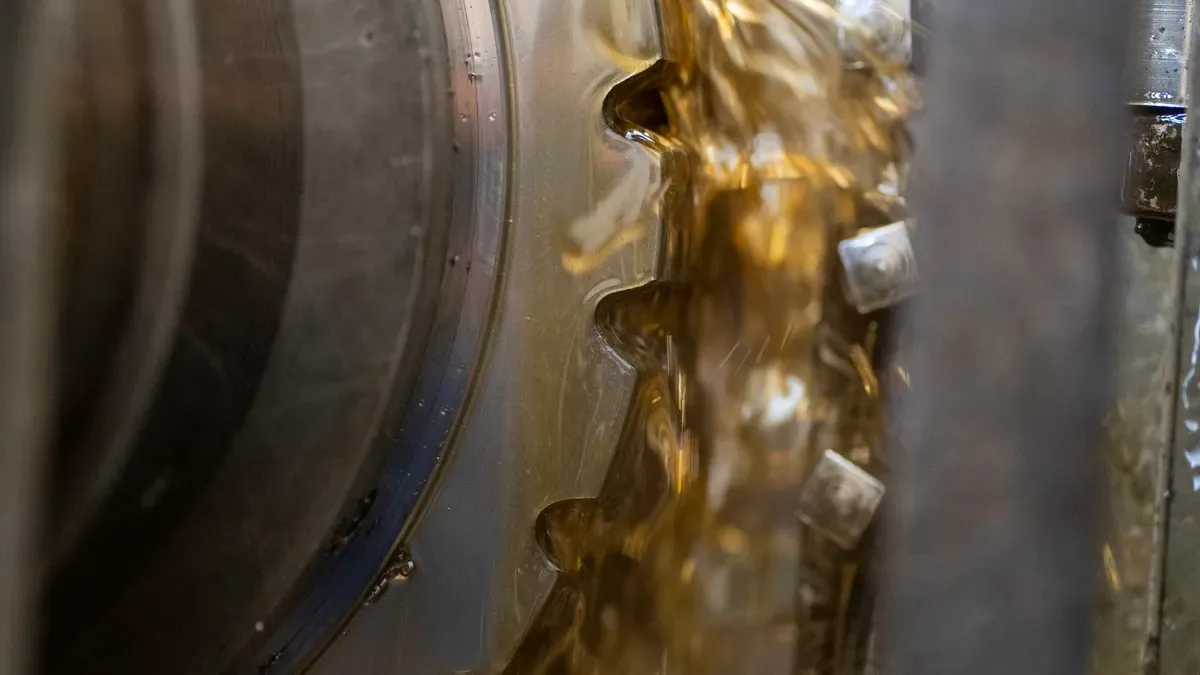
A manual knife gate valve is a linear-motion isolation valve. A sharp-edged gate moves up and down with a handwheel. This design works well with tough media. Abrasive slurries, fibrous pulp, and solids-laden liquids clog ordinary valves. The knife edge cuts through debris. It clears the path each stroke. These knife gate valves work great in dirty jobs. They control the flow where standard valves fail. Readers will learn how it works, the main parts, and real-world uses. This valve gives simple, reliable performance. It needs no outside power. That makes it a good choice for tough isolation jobs. The compact body fits tight spaces.
Key Takeaways
- Manual knife gate valves deal with thick, messy materials like slurries and pulp. They use a sharp gate that slices through debris.
- The handwheel or lever moves the gate up and down to control the flow, and it does not need any outside power.
- The main parts are the sharp gate, small body, seat, stem, and packing for a tight seal.
- These valves work well in mining, wastewater, and pulp industries for isolation and on/off service.
- Regular checking, cleaning, and oiling keep the valve running well and extend its life.
What Is a Manual Knife Gate Valve?
Definition and Compact Design
A manual knife gate valve is a type of linear-motion isolation valve. Its body is shorter and its gate is thinner than a standard gate valve. The word “manual” means a person turns it by handwheel or lever. No outside power source or actuator is needed. This makes the valve easy to install and use in remote places.
The compact design is what makes this valve stand out. The body is often wafer or lugged style, saving space in tight piping runs. The gate is a thin plate with a sharp edge. It slides up and down through the body to control the flow of materials. This slim shape lets the valve fit where bigger valves cannot.
Size and pressure options change from model to model. Cast stainless steel knife gate valves range from 2 to 48 inches (50 to 1200 mm) with a 150 psi cold working pressure rating. Urethane-lined models also cover 2 to 48 inches and handle 150 or 250 psi. Severe service models go up to 60 inches and ASME Class 150/300, up to 740 psi. Body materials include cast stainless steel, urethane-lined, resilient sleeve, and fabricated alloy options.
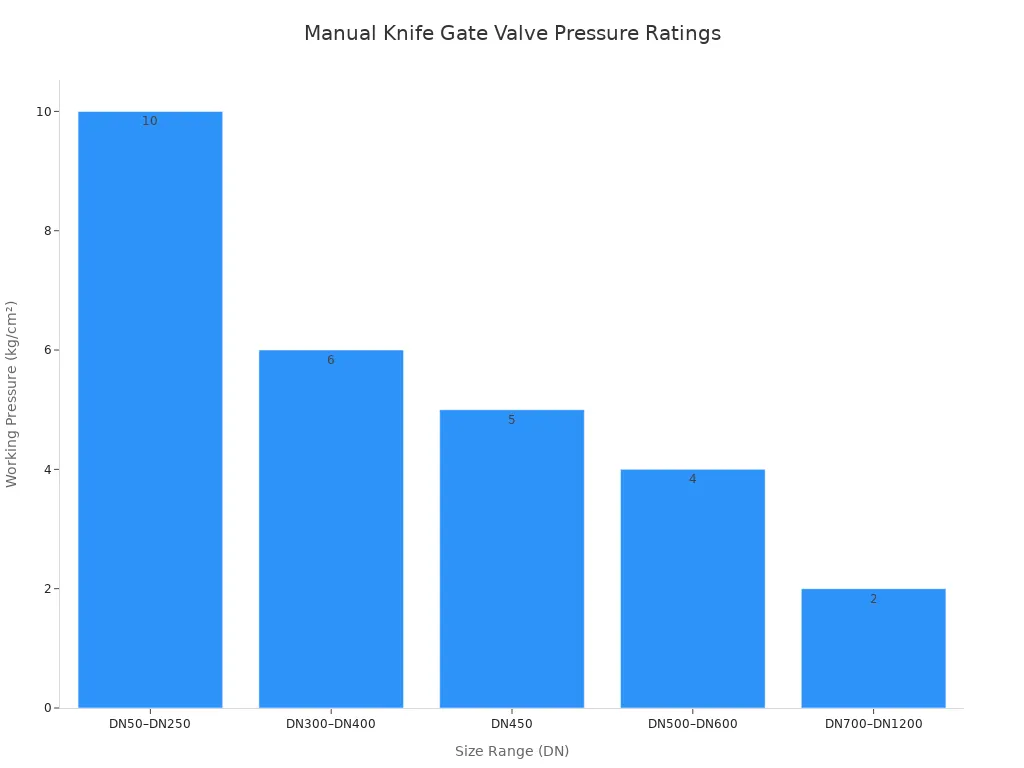
The working pressure gets lower as the valve gets bigger. A DN50–DN250 valve handles 10 kg/cm², while a DN300–DN400 valve handles 6 kg/cm². At DN450, the rating is 5 kg/cm². DN500–DN600 valves handle 4 kg/cm². The largest sizes, DN700–DN1200, work at 2 kg/cm².
How It Differs from Standard Gate Valves
Comparing a knife gate valve to a standard gate valve shows key design differences. A standard wedge gate valve has a thick gate that is wedge-shaped or flat. It is made to handle high pressure in clean fluid lines. A knife gate valve has a much thinner gate with a sharp or beveled lower edge. This edge cuts through debris and solids.
| Design Dimension | Knife Gate Valve | Standard Wedge Gate Valve |
|---|---|---|
| Gate thickness | Much thinner gate with a sharp or beveled lower edge (the “knife”) | Thicker gate, which may be wedge-shaped or flat |
| Body length / size | More compact and lightweight, because the thin gate does not have to handle high pressure | Slightly larger, bulkier, and heavier, because the gate design must handle high pressure |
The thin gate and compact body handle slurries, viscous fluids, and solids-laden media well. Standard gate valves have trouble with these materials. The knife edge pushes aside or cuts through obstructions. This lets the valve control flow where a wedge gate would clog.
Knife gate valves handle materials with high solid content well. Raw sewage, thickened sludge, and rags pass through without blocking the valve. Grinding-circuit slurries and tailings need wear-resistant trim. Wood fiber and high-consistency pulp lines benefit from the sharpened gate, which cuts through fibrous media. Coal dust, lime powder, and flue ash also flow through knife gate valves with ease.
The choice between a knife gate valve and a standard gate valve often comes down to the media. A standard gate valve works for clean fluids. A knife gate valve does best in abrasive, fibrous, or solids-laden service. The sharp edge gives reliable sealing and isolation in tough conditions. This makes the manual knife gate valve a good choice for demanding applications.
How Knife Gate Valves Work: The Working Theory
The Linear Cutting Action
The working theory of knife gate valves starts with simple mechanics. A person turns the handwheel. The handwheel turns the stem. The stem raises or lowers the gate. This straight-line motion moves the knife-edge plate up or down through the valve body.
The gate has a sharp, flat edge. This edge does not just sit in the flow path. It cuts through the material. The beveled edge creates a shearing action. During the closing stroke, the blade slices right through the process media. It pushes blocking material out of the way. The valve body has no cavity or pocket at the bottom. Solids cannot build up there. The gate shears through still fibrous or abrasive material as it closes against the seal.
A knife gate valve is built to cut through heavy solids and liquids using a sharp blade that moves straight across the flow. The cutting edge of the gate cuts through solid or heavy bits in pulps and slurries with ease, giving a tight shut-off with very little leakage.
The open and closed states are easy to understand. The knife-edge plate lifts out of the flow path to open the valve. It lowers to shut off flow. When the gate is all the way up, the valve is fully open. When the gate is all the way down, the valve is fully closed. The position of the gate directly controls the flow of materials through the pipeline.
The sharp edge also stops clogging. It slices through solids in the flow. This action keeps the path clear. In slurry applications, the sharp edge stops solids from building up inside the valve. This keeps flow smooth and performance steady.
Handwheel and Lever Operation
Manual operation comes in two main forms. Each form fits different needs.
A handwheel gives gradual control. The operator turns the handwheel many times to raise or lower the gate. This action takes higher torque. It gives fine adjustment of the gate position. A handwheel works well when the valve needs exact positioning or when the media is thick and heavy.
A lever gives quick action. The operator moves the lever in a quarter-turn style where it applies. This opens or closes the valve fast. A lever fits jobs where speed matters more than fine control.
Both methods turn human effort into gate movement. No outside power source is needed. This makes manual knife gate valves reliable in faraway places or during power outages.
The working theory of knife gate valves centers on this direct mechanical link. The operator turns a handwheel or lever. The stem moves the gate. The knife edge cuts through the material. The valve controls the flow of materials with each stroke. This simple design handles high-solid content materials that would jam other valve types. The valve can handle high-solid content materials because the knife edge clears the path every time it moves.
The open/closed state of the valve depends fully on the gate position. A fully raised gate allows free fluid flow. A fully lowered gate gives complete closure. The sharp edge ensures a tight seal against the seat. This design delivers reliable isolation in the toughest conditions.
Key Components of Manual Knife Gate Valves
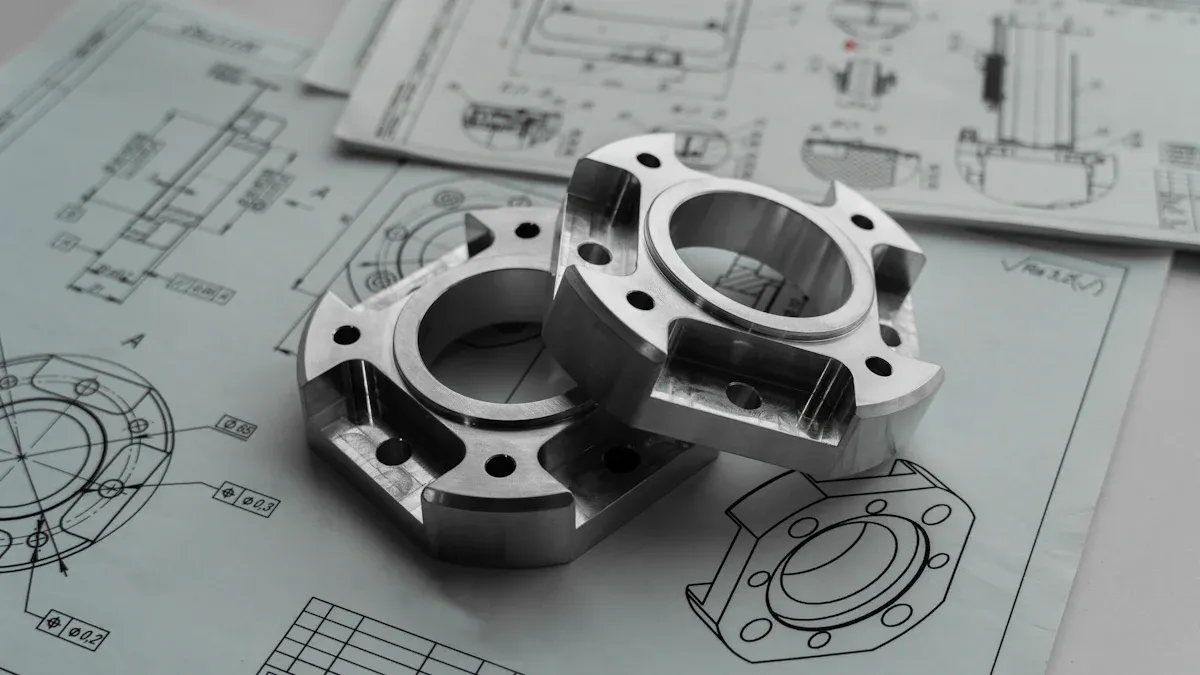
Knife gate valves rely on a few basic parts. Each part has its own job. Working together, they give tight shut-off in harsh conditions.
Gate, Body, and Seat
The gate is a thin plate with a sharp edge. It slides straight through the valve body. This blade cuts through solids and stringy material. The cutting action keeps the flow path clear. It stops clogs before they start.
The body is compact and strong. Wafer and lugged designs fit into tight spaces. The body holds the gate and guides the media. Cast stainless steel bodies fight corrosion and wear.
The seat forms the sealing surface. It presses against the knife edge. Metal seats handle abrasive slurries and high heat. Soft seats, like urethane, seal even tighter. Both options let the gate shut off flow completely. The sharp edge meets the seat in a clean cut. That contact stops leaks.
Stem, Packing, and Manual Actuator
The stem links the handwheel to the gate. This part uses a rising screw design. The operator turns the handwheel. The rising screw moves the gate up or down. This straight motion opens or closes the valve. The threads stay visible during use. Operators can see the valve position at a glance.
Packing wraps around the stem. It keeps media from leaking into the air. Packing material must match the media’s corrosiveness, temperature, and pressure. The packing gland needs careful adjustment. Tightening the gland too much can jam the valve. Stem bellows give extra protection. They keep debris and scale off the stem. This cuts down sealing problems in dirty slurry service.
Standards guide the design and testing of these parts. API 607 covers fire-test rules for quarter-turn valves. ISO 10497 sets fire-test rules for soft-seated valves. These tests check sealing integrity under fire conditions.
Manufacturing follows strict quality control. Precision machining ensures a proper fit. Dimensional checks catch errors early. Performance testing confirms each valve works before shipping. This care keeps knife gate valves dependable in demanding plants.
Benefits and Applications of Knife Gate Valves
Why Manual Operation Works Well
Knife gate valves have clear benefits in tough jobs. The sharp gate edge cuts through debris. This self-cleaning action stops clogs. The full-bore design keeps pressure drop low. The compact wafer body saves space. No outside power source is needed. These features make manual knife gate valves a smart choice for many plants.
Manual operation fits isolation or on/off service. Speed is not vital in these duties. Reliability matters most. A handwheel or lever gives direct control. The operator can see the gate position. No actuator can break down. No air line or electrical supply is needed. This simple design works well in faraway places. It also works during power outages. Manual operation lets workers control the flow of materials with confidence.
Industries and TANGGONG VALVE Solutions
Knife gate valves serve many industries. Each industry faces its own challenges. The table below shows common uses.
| Industry | Usage |
|---|---|
| Mining | Abrasive slurries, tailings, process water |
| Power plants | Ash handling, flue gas desulfurization, cooling water |
| Pulp and paper | Pulp stock, chemical dosing, wastewater |
| Chemical processing | Corrosive fluids, leak-free operation |
| Water/wastewater | Solids and contaminants in treatment plants |
Mining is the largest use area. These valves handle high-solid content materials in tough conditions. Wastewater networks count on them for raw sewage and sludge. Pulp and paper mills use them for fibrous media. Petrochemical plants need them for thick fluids. Power generation uses them for ash and lime slurry. Marine systems depend on them for bilge and ballast lines.
TANGGONG VALVE gives reliable solutions for these industries. Founded in 1990 in Wenzhou, China’s Valve City, the company brings 36+ years of experience. TANGGONG offers 500+ valve series and holds 200+ national patents. The company meets ISO9001, CE, and API certifications. Its products serve customers in 35+ countries. TANGGONG knife gate valves handle high-solid content materials with ease. They control the flow of materials in the toughest conditions. These valves can handle high-solid content materials in mining, wastewater, and pulp applications.
Maintenance Tips for Manual Knife Gate Valves
Routine Inspection and Cleaning
Regular checks keep knife gate valves working well. Check the knife edge for nicks or damage. Clear solids from the seat area. Make sure the stem moves smoothly each check. These simple steps stop small problems from growing.
Flush the valve often, especially in slurry service. This removes debris and dried residue before it builds up. Open and close the valve in high-solids service. This stops material from packing around the gate and seat. Clean the sealing surfaces on bidirectional valves. Rinse the seat area when the gate sticks. These habits protect the seat from damage.
Adjust the packing gland as needed. Lubricate the stem threads so manual operation stays easy. A well-lubricated stem turns with less effort. This makes the valve easier to operate by hand.
| Maintenance Item | Frequency | Recommended Actions |
|---|---|---|
| Packing gland check | Monthly | Check tightness and look for leaks |
| Valve chamber flushing | After each operation | Stop slurry and sediment buildup |
| Gate lubrication | Quarterly | Use high-temperature lubricants or graphite powder |
| Full leak test | Yearly | Test inside and outside seals for leaks |
When to Replace Seats and Packing
Watch for signs that seats and packing need replacement. Leakage at the stem means the packing gland is loose or the packing is worn. Tighten the gland bolts evenly. If leakage continues, change the packing. Leakage through the line means the seat is damaged or debris is stuck between the gate and seat. Look at the seat and replace it if cut.
Stiff handwheel operation also signals a problem. Worn or binding stem threads cause this issue. Clean and replace lubricants to restore smooth movement. Visible wear, corrosion, or damage on the gate, stem, and sealing elements means replacement is due. Replace worn parts soon to keep the valve working well.
A simple schedule helps. In abrasive service, inspect quarterly. This valve type can handle high-solid content materials, but regular care extends its life. TANGGONG VALVE offers replacement parts and technical support for its knife gate valve lines.
The manual knife gate valve is simple to use, shuts off dependably, and handles solids and slurries well. The sharp gate slices through debris, which keeps the path open and the seal tight. Pick a valve that matches the material, pressure, and pipe size of your job. Decide if you need hand or powered operation for your duty. For abrasive or high-solid content materials, use wear-resistant parts and bidirectional sealing. In mining, wastewater, and pulp lines, these valves control the flow of materials. They also manage high-solid content materials, keeping flow steady. Talk to a supplier or an engineer before buying. For industrial valve solutions, TANGGONG VALVE is a trusted company.
FAQ
What media can a manual knife gate valve handle?
These valves work best with abrasive slurries, fibrous pulp, and liquids full of solids. The sharp gate edge cuts through debris that would clog other valves. They handle high-solid content materials in mining, wastewater, and pulp lines. Clean fluids also pass through without trouble.
How do knife gate valves control the flow of materials?
The handwheel turns the stem. The stem moves the gate up or down. A raised gate lets material pass. A lowered gate stops it. This simple action lets operators control the flow of materials with each turn. The knife edge clears the path every stroke.
What are the working principles behind the cutting action?
The gate has a sharp, flat edge. This edge slices through solids as it closes. The body has no pocket at the bottom. Debris cannot collect there. The blade shears through fibrous or abrasive material. This gives a tight seal and keeps the line clear.
Why choose manual operation over an actuator?
Manual operation needs no electricity or air supply. A handwheel or lever gives direct control. Operators can see the gate position at a glance. This design works well in remote locations or during power outages. It suits isolation duties where reliability matters more than speed.
How do knife gate valves control the flow in slurry service?
The full-bore design keeps pressure drop low. The sharp edge cuts through thick slurries. This self-cleaning action stops clogs before they start. Operators control the flow with simple handwheel turns. The valve handles tough media that would jam standard gate valves.