
Compressed air goes into the actuator of a pneumatic knife gate valve. It pushes the piston. That straight movement moves the stem and gate to open or close the valve. Pick a double-acting or spring-return actuator; this choice changes how the valve acts when air pressure drops.
A pneumatic operated knife gate valve works through a simple force chain. Air pressure pushes the piston, exhaust leaves the other chamber, and the rod drives the stem. This article covers the air path, key parts, operating steps, and selection factors for pneumatic operated knife gate valves. Analysts expect growth from USD 341 million in 2025 to USD 640 million by 2035. Choose the right knife gate valve.
Key Takeaways
- Compressed air pushes a piston to move the gate and control the flow.
- Pick a double-acting or spring-return actuator based on your safety needs.
- Keep the air supply clean and dry to prevent damage and ensure reliability.
- Pneumatic knife gate valves work with hard materials in mining and wastewater.
- Proper upkeep and the right choice of valve make it last longer and work better.
How Pneumatic Operated Knife Gate Valves Work
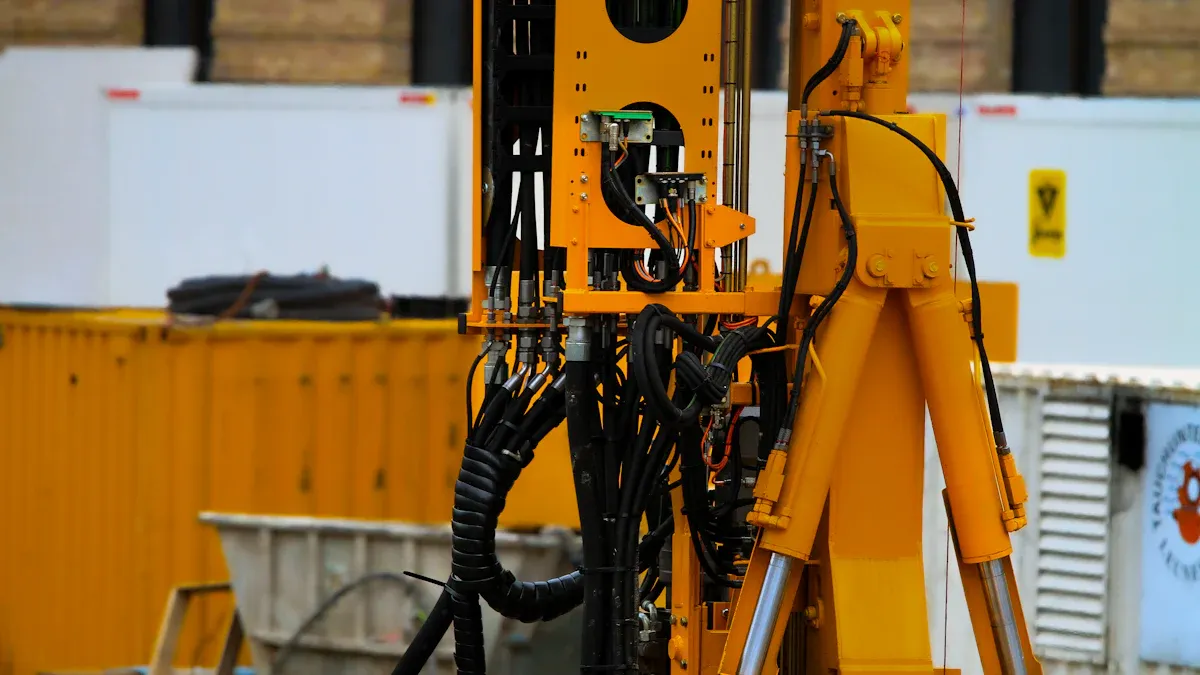
To see how pneumatic operated knife gate valves work, you must track the air from the supply line to the gate. The working principle of double-acting pneumatic actuator operation is a chain of simple mechanical events. A control signal from a PLC or control system starts the actuator. Compressed air flows through pipes into the opening chamber of the double-acting actuator, which is usually the lower chamber. The incoming air pressure pushes the piston upward. That upward movement drives the valve stem and knife gate to rise, putting the valve in the open position. At the same time, air in the opposite closing chamber is let out. This exhaust lets the piston move smoothly without resistance.
Working Principle of Double-Acting Pneumatic Actuator
In a double-acting pneumatic actuator, air pressure controls both open and close strokes. Compressed air drives the gate open, and compressed air drives it closed. A 5/2-way solenoid valve is the standard control component. It sends air to alternate sides of the piston. If the air supply is lost, the gate stays in its current position. It does not fail to a default state. This behavior sets a double-acting unit apart from a single-acting spring-return actuator. A limit switch box confirms the valve position and signals it back to a PLC. A positioner supports modulating control by balancing air on both sides of the piston to hold intermediate positions, such as 45% open. An FRL unit (Filter, Regulator, Lubricator) conditions the air supply. Clean, dry air is essential to prevent seal failure.
Air Supply and Force Transmission
The action of compressed air depends on pressure and piston area. You can calculate the force with a simple equation: F = P × A, where F is force in pounds, P is pressure in PSI, and A is piston area in square inches. For example, a 4-inch piston has a radius of 2 inches. Its area is 3.14 × 4 = 12.56 square inches. At 80 PSI, the force is 80 × 12.56 = 1004.8 pounds. This force moves the stem and gate linearly. For retract force, the effective area is an annular ring. You subtract the rod area from the piston area because the rod blocks part of the piston. Consider a 63 mm bore cylinder with a 20 mm rod. The rod-side area is 3,117 − 314 = 2,803 square millimeters. At 0.6 MPa, the rod-side force is 1,682 newtons. That roughly 10% difference between extend and retract force matters when you need equal force in both directions. The compressed-air actuator must therefore match the gate load and the available supply pressure.
Key Components of Pneumatic Knife Gate Valves
Gate, Body, Seat, and Stem
The moving blade that controls flow is the gate. A knife gate valve has a thin gate with a sharp edge that cuts through the material as it closes. This design keeps the valve from clogging on fibrous materials, liquids with solids, and slurries. You will find this valve in mining, pulp and paper, wastewater treatment, and dry bulk transfer lines.
Body material choice depends on how corrosive and abrasive your material is. Common choices are cast iron FG260, carbon steel WCB, and stainless steel CF8 or CF8M. Gate materials are often stainless steel AISI 304, 316, 316L, 317, or 317L. The stem or screw spindle often uses stainless steel AISI 410, 304, or 316.
The seat design sets how well the valve seals. You can pick from several sealing styles:
Knife gate valve seats come in three styles: soft sealing with non-metallic materials like rubber and PTFE, hard sealing with metal-to-metal contact, or composite sealing.
Actuator and Air Connections
Pneumatic actuators for knife gate valves bolt directly onto the yoke. A double-acting cylinder has two air connections: one at the front and one at the rear. Compressed air must switch between the two sides.
A 5/2 solenoid valve controls this switching. In one position, air flows to one side while the other side releases exhaust. The actuator moves forward. When the valve shifts position, the air paths switch, and the actuator moves backward. This lets your control system move the valve both ways with no return spring.
A 3/2 solenoid valve instead works for single-acting actuators. This valve has three ports and one working air connection. The 5/2 valve is still the standard choice for pneumatic actuated knife gate valves that need controlled movement in both directions.
Step-by-Step Operation of a Pneumatic Knife Gate Valve
Opening and Closing with Compressed Air
Here is the full operating sequence in a few clear steps. A control signal turns on the solenoid valve. The cylinder’s opening chamber gets compressed air. Air pressure moves the piston, creating straight-line push. A rod or stem carries that push to the valve stem. The stem is attached to the gate. As the piston moves in a straight line, the gate moves up or down. This movement opens or closes the valve.
Closing works the same way, only in reverse. The solenoid valve changes position. The closing chamber gets air. The piston goes the other way. Air from the opening chamber leaves as exhaust. Air pressure powers both opening and closing in a double-acting pneumatic knife gate valve. No spring pulls the gate back. You control both directions fully.
The stem design changes how you check position. See the two common styles:
| Stem type | Connection | Position shown |
|---|---|---|
| Rising stem | Threaded stem joins the gate and moves up/down with it | You can see the gate position |
| Non-rising stem | Threaded stem joins the actuator; gate motion is hidden | You need a visual indicator |
A rising stem gives a direct visual check. A non-rising stem needs a separate indicator, like a limit switch box. Pick based on checking locally or a compact setup.
Fail-Safe Behavior and Applications
What happens when air pressure drops depends on the actuator type. A double-acting pneumatic actuator keeps its last position. The gate stays there. No spring moves it. This suits processes where a sudden change would disrupt flow or damage equipment.
A spring-return actuator is different. When air pressure falls, a mechanical spring moves the gate to a default state. You can pick a spring-to-close or spring-to-open design. Spring-to-close units are common in safety applications. If the air supply fails, the valve shuts off flow. This protects your system from uncontrolled release.
Your application decides. For normal on/off control with steady air, a double-acting pneumatic knife gate valve works well. For emergency shutdown duties, a spring-return unit fits. Think about your process risk. Ask what happens if the air line breaks. The answer points to the right actuator.
A pneumatic operated knife gate valve also needs clean, dry air. Moisture or debris can damage seals and make parts stick. An FRL unit conditions the air. Good filtration extends valve life. Lubrication cuts friction on moving parts. These steps keep it working for many cycles.
Pneumatic actuated knife gate valves serve mining, wastewater, and pulp lines. The sharp gate cuts through solids. Fast stroke times help automated sequencing. You get reliable shutoff without manual effort. That also explains their wide use in tough industries.
TANGGONG VALVE Pneumatic Operated Knife Gate Valve Solutions
Every pneumatic knife gate valve from TANGGONG VALVE uses over 36 years of valve design experience. The company offers more than 500 valve series and has ISO9001, CE, API 6D, and API 607 certifications. Customers in over 35 countries use its valves. You can see the full product details at https://www.tg-valves.com/.
Selecting the Right Valve Configuration
Your application sets the actuator type. A double-acting pneumatic actuator suits large-diameter or high-torque knife gate valves. It also fits thick or abrasive fluids that need more torque. A single acting pneumatic knife gate valve with a spring-return actuator fits safety duties. If air pressure fails, the spring moves the gate to a default position. Think about these points before choosing:
- Fail-safe needs: pick spring-return for fail-open or fail-closed action.
- Torque needs: calculate breakaway, running, and end torque with a safety factor.
- Air supply pressure and surrounding conditions.
- Control add-ons: solenoid valves, limit switches, and positioners.
- Operating frequency and duty cycle.
- Initial cost versus total lifetime cost.
Match seat and gate materials to your material. Elastic seats work for low pressure and tight sealing. Metal-to-metal seats handle high pressure and high temperature. A sharp-edged gate cuts stringy or thick material. Duplex steel SAF2205 resists high chloride conditions. Stainless steel 304 or 316 suits wastewater and chemical service.
Air Supply and Maintenance Best Practices
A pneumatic actuator-operated knife gate valve needs clean, dry air. Your compressed air network must provide the right pressure and volume. Moisture or dirt can harm seals and make parts stick. An FRL unit filters, regulates, and lubricates the air. Good lubrication lowers friction on moving parts. Check air quality on a regular basis.
Pick a maker you trust for dependable performance. A good pneumatic actuated knife gate valve can handle tough jobs. TANGGONG VALVE builds pneumatic actuators and gate valves with pneumatic actuator combinations for mining, wastewater, and pulp lines. Check seals, stems, and air connections regularly to extend the valve’s life. Use the right valve with good air treatment, and you get fast, automatic shutoff for years.
Compressed air goes into the actuator, pushes the piston, moves the stem, and lifts or lowers the gate. That order of steps is what a pneumatic knife gate valve does.
Your actuator choice affects safety. A double-acting pneumatic actuator uses air to open and close, and it holds its position if pressure drops. A spring-return unit moves the gate to a fail-open or fail-closed state.
How well it works depends on matching the knife gate valve’s seat and body to your media. Pneumatic operated knife gate valves need clean, dry air. Run by compressed air, they give fast, automatic shutoff. Pneumatic actuators make the pneumatic operated knife gate valve dependable in tough environments, which makes these pneumatic knife gate valves a reliable choice.
FAQ
What is a pneumatic operated knife gate valve?
It uses air pressure to move a sharp gate. An actuator mounts on top of the valve. Air pressure pushes the piston. The piston moves the stem and gate up or down. This opens or closes the flow path.
How does a pneumatic knife gate valve work?
Pneumatic operated knife gate valves follow a simple sequence. A control signal opens the solenoid valve. Air enters the actuator’s opening chamber. This air pushes the piston in a straight line. The piston rod drives the stem. The stem lifts or lowers the gate. Exhaust air leaves the opposite chamber.
What happens when the compressed air supply fails?
If air pressure drops in a knife gate valve, the behavior depends on the pneumatic actuators installed. A double-acting unit holds its last position. The gate stays where it stopped. A spring-return unit moves the gate to a default state. Choose fail-open or fail-closed for safety.
Where should you use pneumatic actuated knife gate valves?
These pneumatic knife gate valves suit tough media. They handle slurries, wastewater, and pulp lines. The sharp gate cuts through stringy or thick materials. The fast stroke time supports automated sequencing. You get reliable shutoff from a knife gate valve without manual effort.
Why does the air supply need to stay clean and dry?
Moisture and debris damage seals and make parts stick. An FRL unit filters, regulates, and lubricates the air. Good lubrication cuts friction on moving parts. Clean air extends valve life and keeps the actuator response reliable.