An electric knife gate valve is a linear shut-off valve that uses a motor-driven actuator to raise and lower a sharp-edged knife gate. That cutting blade sits at the heart of the design. The knife gate slices through thick, solids-laden media instead of pushing the material aside. This article explains the working theory, the key components, and the typical applications in plain language. You will see how the actuator strokes the blade, how the seat seals the line, and where these valves fit in real pipelines. No prior valve knowledge is needed to follow the explanation. The result is reliable isolation for tough media.
Key Takeaways
- An electric knife gate valve uses a motor to move a sharp blade up and down. This blade cuts through thick slurries and solids without clogging.
- The valve only works for on/off isolation. You cannot use it to control flow. The blade must be fully open or fully closed.
- A soft seat presses against the blade to make a tight seal. This stops all flow when the valve is shut.
- Electric operation lets you control the valve remotely and automatically. You can easily connect it to your plant’s control system.
- This valve works well with thick and messy materials like slurry, pulp, and wastewater sludge. It is a great fit for industries such as mining, power, and wastewater treatment.
What Is an Electric Knife Gate Valve?
Definition and Basic Design
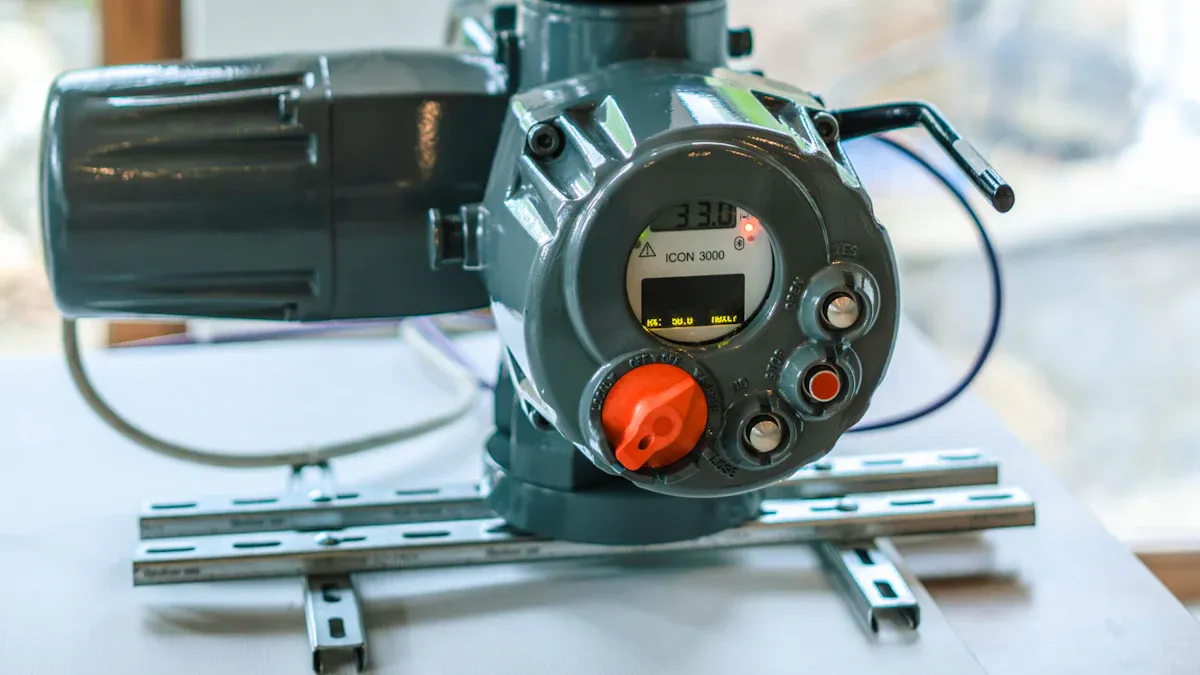
An electric knife gate valve is a special kind of isolation valve. It uses straight-line motion to stop or start flow in a pipeline. A sharpened gate, powered by an electric motor, moves up and down to cut through the media. This design makes the valve great for tough jobs. The knife gate slices through solids, pulp, mud, and fibrous materials without clogging. The blade has a slanted, sharpened bottom edge. When you close the valve, this edge cuts through thick slurries and heavy sludge. The design has no bottom pocket. The knife pushes past the seats to clear its own path. Displaced solids drop out of the bottom port. This makes it a self-cleaning isolation valve.
You must remember one key rule. This valve works only for isolation or on/off service. It is fully open or fully closed. You cannot use it to control or throttle flow. The full bore passage allows for low pressure drop when the valve is open. The simple structure, small size, and lightweight design make it easy to install. The operating pressure is usually up to PN10. The valve gives good sealing performance and corrosion resistance.
How It Differs from Standard Gate Valves
A standard gate valve and a knife gate valve look alike at first glance. But they have big differences in design and use. A knife gate valve has a much shorter body length. The gate is thinner and has a sharp edge. A standard gate valve has a wider body and a thicker gate. The seat design is also different. A knife gate valve uses an elastomer seat. This soft seat presses against the blade to make a tight seal. A standard gate valve uses a metal seat. Metal seats cannot get the same tight shutoff with thick or abrasive media.
The table below shows the main differences.
| Comparison Attribute | Knife Gate Valve | Conventional Gate Valve |
|---|---|---|
| Opening/Closing Parts | Blade with simpler structure | Gate |
| Structure | Simplified, compact | Relatively complex |
| Applicable Media | Slurry, viscous media, fluids with suspended solids | Clean, low to medium viscosity fluids |
| Flow Direction | Often designed for unidirectional flow | Designed for bidirectional flow |
| Weight | Typically lighter | Usually heavier |
A knife gate valve often has no bonnet. When you open the valve, the flat steel gate rises all the way out of the valve body into the open air. It passes through a multi-layer packing gland. This gland wipes the fluid off the blade. A standard gate valve has a bonnet. This is a sealed, pressurized steel cover that holds the gate inside. The open or closed state of a knife gate valve is easy to see because the gate is exposed. The thin gate profile and compact body make knife gate valves lighter than standard gate valves. This weight difference matters for installation and support structures.
Working Theory of Knife Gate Valves with Electric Actuation
How the Electric Actuator Moves the Gate
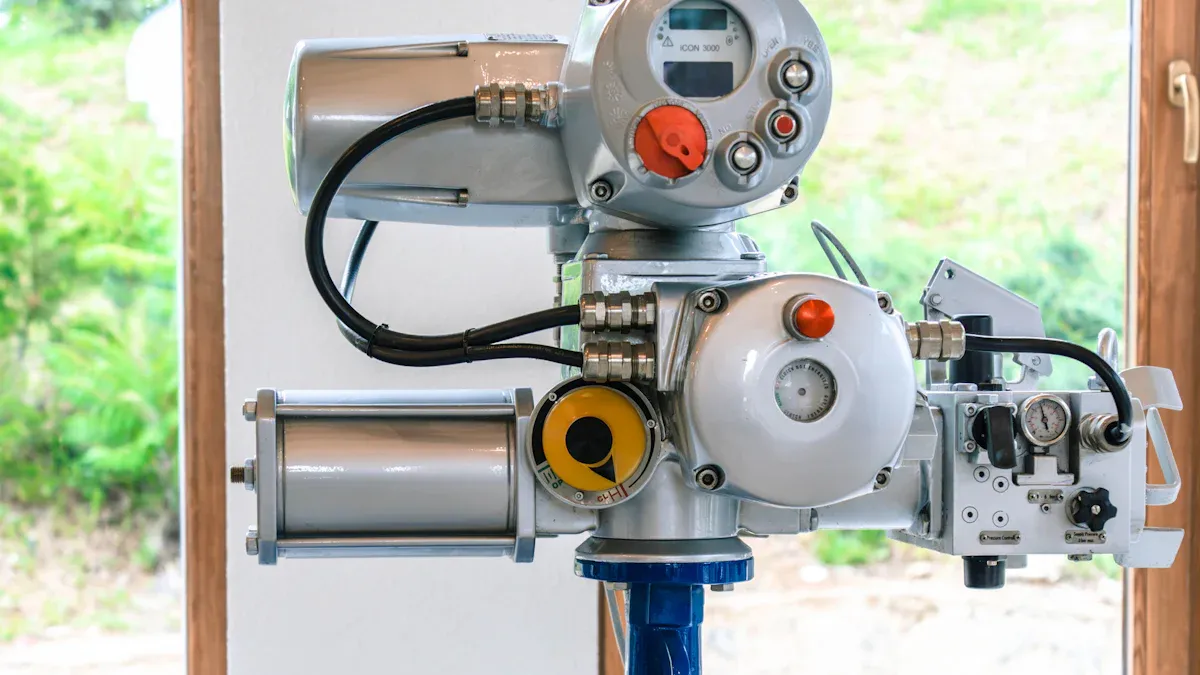
The working theory of knife gate valves begins with the electric motor. This motor spins a stem, which is a threaded rod. The stem is connected to the knife gate. As the motor turns, the stem rotates. This spinning motion changes into straight-line movement. The knife gate travels up or down in a straight path. A spindle raises the gate by pushing or pulling the blade. This actuating mechanism lets you control the gate position very precisely.
The motor stops when the gate is fully open or fully closed. Limit switches inside the actuator signal the motor to stop. This keeps the valve from getting damaged. The electric actuator can create a large force. This force is strong enough to cut through thick media. The actuator works in two directions. It can push the gate down to close and pull it up to open.
Electric actuation makes remote control and automation possible in industrial pipelines. You can run the valve from a control room. You do not need to send a worker to the valve location. This is a big advantage in dangerous or hard-to-reach areas.
The Cutting and Sealing Action
The cutting action is the center of how a knife gate valve works. The bottom edge of the gate is sharp. This sharp edge slices through slurry, solids, or fibrous material. The blade does not push the material to the side. It cuts through it like a knife. This stops clogging. The gate moves straight down through the media. Any solids in the path are cut or pushed into the flow stream. The valve clears its own path with every stroke.
The sealing action takes place when the gate reaches the fully closed position. The elastomer seat presses against the blade. This forms a tight seal. The seat material is soft. It shapes itself to the blade surface. This stops all flow through the valve. For soft-seated valves with elastomer or PTFE seats, the seat test with water at 40 psi shows no visible leakage. This is called bubble tight. MSS SP-81 permits 40 cc/inch/min for metal-to-metal seats only. This allowance does not apply to elastomer seats. So the typical leakage rate for an elastomer-seated knife gate valve under MSS SP-81 is zero visible leakage at 40 psi water. Some electric-actuated knife gate valves use EPDM or PTFE elastomer seals. These valves are designed and tested per MSS SP-81. Their seat leakage is specified as API 598 Class V. Hydro testing is done at 1.5 times nominal pressure for the shell and 1.1 times nominal pressure for the seat.
Smart Electric Knife Gate Valves for Industrial Automation
Electric knife gate valves connect with modern control systems. They support multi-voltage input such as AC220V, 380V, or DC24V. They come with a 4-20mA or 0-10V signal feedback system. This allows smooth integration with PLC or DCS control systems. They also integrate Modbus RTU communication protocol for remote monitoring and predictive maintenance.
| Category | Details |
|---|---|
| Remote Control Signals | Passive dry contact (short pulse/inching), Passive dry contact (long pulse/hold), Active DC24V, Active AC220V, Remote DC4-20mA |
| Feedback Signals | Open/close/stop signals, Fault signal, Valve position signal (DC4-20mA, DC1-5V, DC0-10V), Remote control signal |
| DCS Remote Control | Passive dry contact, DC24V; Analog: DC4-20mA |
| Communication Protocols | Modbus RTU, PROFIBUS-DP V0/DP V1, HART, FF, DeviceNet (optional) |
Electric gate valves are adaptable and can be integrated into various control systems, be it PLCs, DCS, or SCADA, offering seamless operation across diverse applications.
This level of integration makes the working theory of knife gate valves practical for modern plants. You get reliable isolation and full automation in one package.
Key Components of a Knife Gate Valve
The design and parts of a knife gate valve are simple. Each part of a knife gate valve has one job. The body, gate, and seat handle the media; a motor provides the motion. Together they give dependable isolation.
Body, Gate, and Seat
The body is the housing. It guides the media and holds the gate. A knife gate valve uses a wafer body between pipe flanges. It fits tight spaces where a standard valve will not. Its light weight lowers structural load and pipe support needs. Two workers can install it without heavy machinery.
The gate is the sharpened plate. It cuts through slurry and solids as it closes. The elastomer seat presses on the blade. It gives a bi-directional, bubble-tight seal for tight shutoff. Most plants use a knife gate valve with an elastomer seat. For tough service, the material options are:
| Component | Material options |
|---|---|
| Body | 304, 316, 317, 254-SMO, 2205 Duplex Stainless Steel, Hastelloy C 276 |
| Gate | 304, 316, 317, 17-4, 254-SMO, 410, 2205 Duplex Stainless Steel, Hastelloy C |
| Seat | Metal, resilient, or soft seats |
These options tailor the design and parts of a knife gate valve to your medium. The working principle stays the same.
Electric Actuator and Unidirectional Knife Gate Valves
The electric actuator is a motor-driven unit. It moves the gate up and down. Set it for on/off or automated control. Sizing the drive requires care. Match the thrust to the slurry service. Keep a safety margin for viscosity changes. An undersized unit cannot cut thick media. An oversized unit can damage the gate. Large diameters or high pressure need a drive with greater thrust. These rules apply to motorized knife gate valves.
Unidirectional knife gate valves permit flow in one direction only. The seat sits downstream for a better seal. Verify the flow direction during installation. Wrong mounting can ruin the sealing surface. Keep the stem vertical and motor above. Leave enough clearance for gate travel. Provide support to avoid pipeline stress.
TANGGONG VALVE has made knife gate valves since 1990. Its catalog includes over 500 valve series.
Applications and Advantages of Electric Knife Gate Valves
Common Industries and Media
Knife gate valves show up in lots of heavy industries. Oil and gas plants use them to shut off lines that carry rough slurries. Petrochemical sites count on them for thick, sticky liquids. Power plants use them in systems that move ash. Marine and mining work depends on them for hard jobs. Wastewater plants use them on sludge lines. Pulp and paper mills use them to get stock ready. Every industry needs the same thing: a shutoff that works on media normal valves cannot handle.
The media these valves deal with often has solids in it. Slurry, pulp, mud, and stringy materials all move through knife gate valves. These fluids would jam a normal gate valve. The sharp knife gate cuts right through the material instead. This keeps the line running with no clogs. You get low pressure drop isolation when the valve is all the way open. The full bore design lets media flow through freely. This makes the valve perfect for lines that carry floating particles.
Why Choose Electric Over Manual or Pneumatic
Electric actuation gives you clear wins over manual or pneumatic operation. You can run an electric knife gate valve from a faraway spot. This keeps workers out of dangerous places. The actuator gives exact positioning for accurate open and close cycles. You can hook it into your plant’s automation system with ease. Electric units do not need a compressed air supply. This cuts down on infrastructure costs and upkeep.
TANGGONG VALVE has made knife gate valves since 1990. The company holds ISO, CE, and API certifications. Its products serve customers in more than 35 countries. This track record gives you trust in the equipment. An electric knife gate valve from a proven maker gives dependable service. You get low-pressure drop isolation and reliable performance in tough applications. The knife gate design handles solids without clogging. Electric operation brings automation and safety together in one package.
An electric knife gate valve is a shut-off valve run by a motor, made for tough media.
The actuator moves the knife gate up and down in a straight line. Its sharp edge cuts through slurry and solids without clogging. A soft elastomer seat presses against the blade to make a bubble-tight seal.
You get a simple design: body, gate, seat, and motor. These parts give you reliable isolation. You can run the valve from far away and hook it to your automation system. You do not need a compressed air supply. This knife gate design handles tough solids with ease.
This valve will keep playing a key role in industrial flow control wherever harsh media must be stopped.
FAQ
Can you use an electric knife gate valve for flow control?
No. This valve only works for on/off isolation. You cannot throttle or control flow with it. The gate must be fully open or fully closed. Partial positions damage the seat and the blade edge. Use a control valve instead when your line needs exact regulation.
What media can an electric knife gate valve handle?
You can run slurry, pulp, mud, and fibrous material through it. The sharp gate cuts through solids without clogging. Wastewater sludge, mining tailings, and paper stock all work well. Clean fluids also pass through, but the design shines with tough, particle-heavy media.
Does mounting direction matter for a knife gate valve?
Yes, for unidirectional models. The seat sits on the downstream side for a better seal. Check the flow arrow before you install the valve. Wrong mounting can ruin the sealing surface. Bidirectional designs exist, but verify the model before you order.
How do you size an electric actuator for a knife gate valve?
Match the actuator thrust to your slurry service. Keep a safety margin for viscosity changes. An undersized unit cannot cut thick media. An oversized unit can damage the gate. Large diameters or high pressure need a drive with greater thrust.